
Interview by: Merima Aranitović //
On the occasion of Francophonie Month, the French Institute in Novi Sad presents the exhibition “Engaged Women, Exceptional Women: The History of Women’s Rights and the Fight Against Violence in France” by Hélène Coupé. Through a selection of key moments and influential figures, the exhibition traces the long and complex history of the struggle for women’s rights in France, while also opening up timely questions about equality and the visibility of women today. The realization of the exhibition in Novi Sad was initiated by Marija Kalafatić, who describes herself simply as an “ordinary” woman, a mother of Sofija and Marko, and an employee of the municipality of Saint-Maurice. It was thanks to her initiative that, after its presentation in France, the exhibition was also brought to Novi Sad.
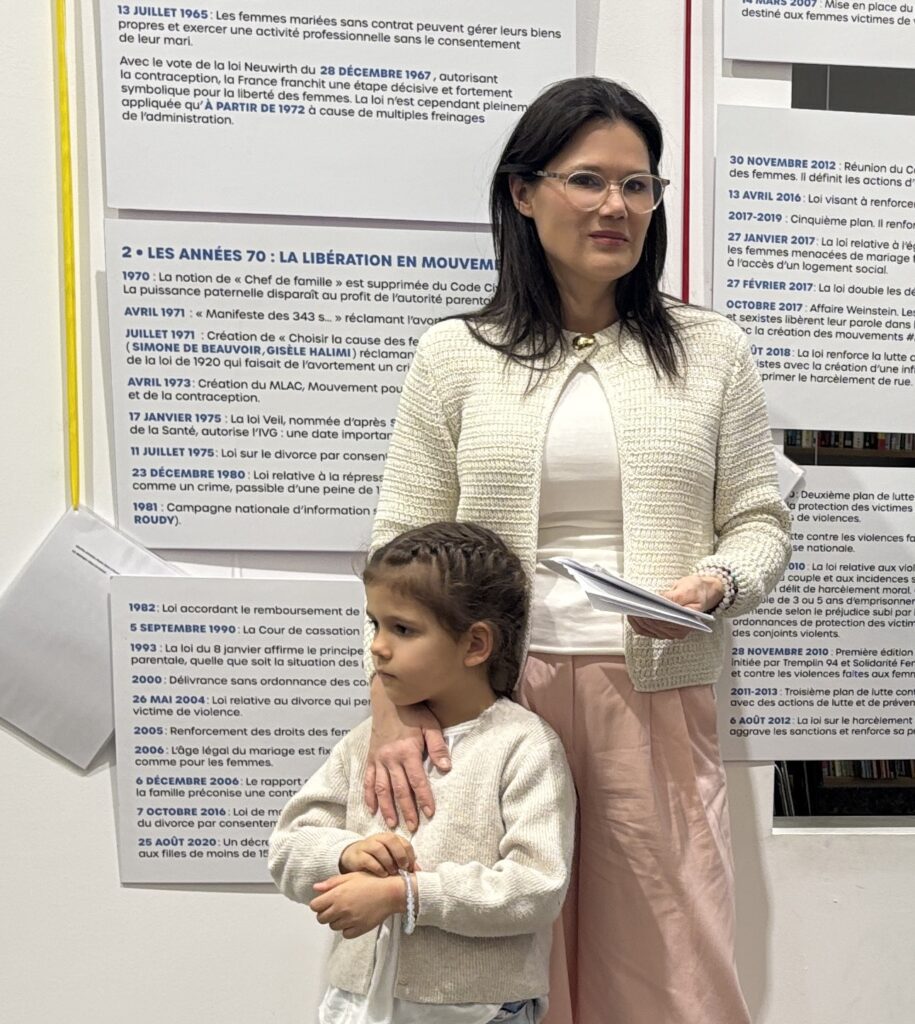
How did Hélène Coupé’s exhibition end up being presented in Novi Sad?
It was a great honor for me, with the support of the French Institute, to present Hélène Coupé’s exhibition in Novi Sad. For me, it carries strong personal symbolism, as it connects the city where I was born and raised with France, the country where I have lived and worked for many years.
France has an exceptionally rich tradition of feminist thought and artistic activism, and the French Institute in Novi Sad was a natural choice for presenting a project like this, as it connects the local cultural environment with the broader European context in which the struggle for women’s rights has developed.
Could you tell us more about Hélène Coupé, the author of the exhibition?
For me, Hélène Coupé is not only the author of this exhibition but also a friend whose work I greatly admire. She is a writer and a retired professor of French language and literature. Still, she is also very active as a municipal representative (deputy mayor) in the municipality of Saint-Maurice, where she is responsible for citizenship affairs, mediation, and the fight against violence against women.
In fact, we first met in the municipality’s mayor’s office. What particularly inspires me about her is the combination of professionalism and personal dedication. In every project, it is clear how deeply she cares about the issues she addresses. Her long-standing commitment to combating violence against women and working to increase their visibility in society strongly motivates me, both professionally and personally.
Although she was unable to attend the exhibition opening in Novi Sad, Hélène is looking forward to visiting Serbia and meeting the audience. The plan is for the exhibition to be presented in other places as well, since it was conceived as both an educational and a traveling project.
You are realizing this project in collaboration with Ljiljana Maletin Vojvodić. How did that collaboration come about?
Great and invaluable support in realizing the exhibition came from Ljiljana Maletin Vojvodić, a writer from Novi Sad and my former literature teacher at the Karlovci Grammar School. Her belief in this project and her willingness to support it meant a great deal to me. I am also grateful to Simon Schönbrodt, the director of the French Institute, whose support made it possible for the exhibition to be presented at the French Institute in Novi Sad.
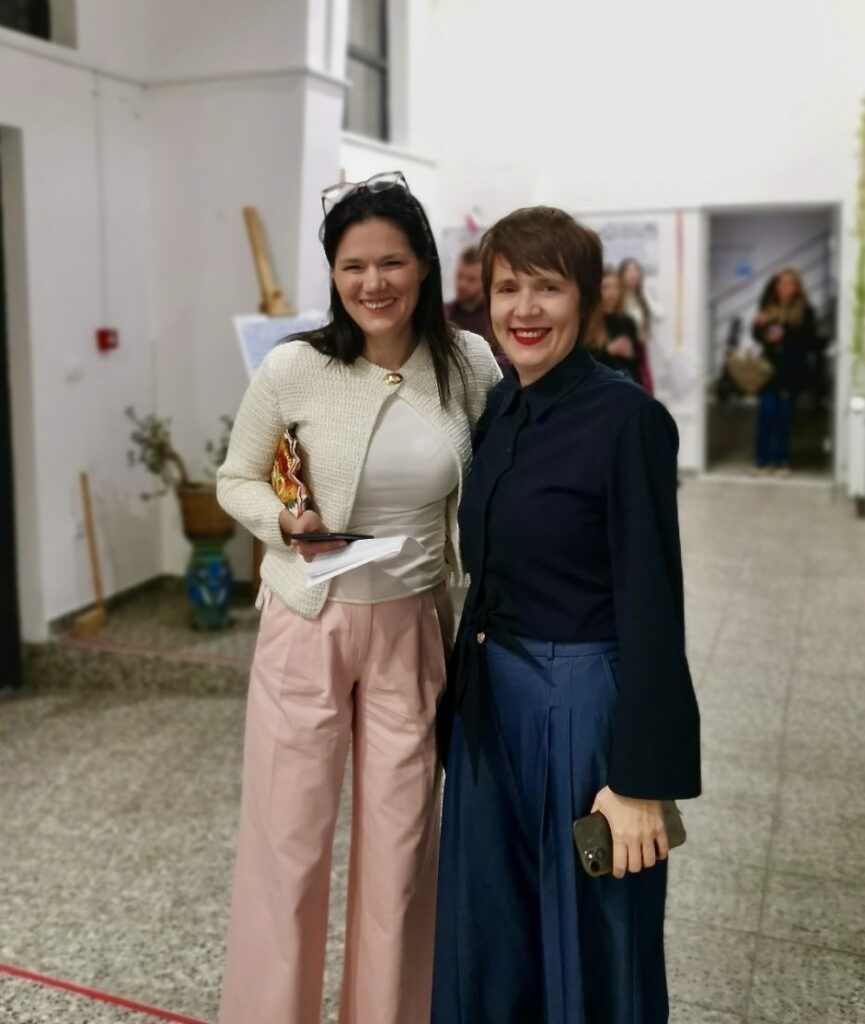
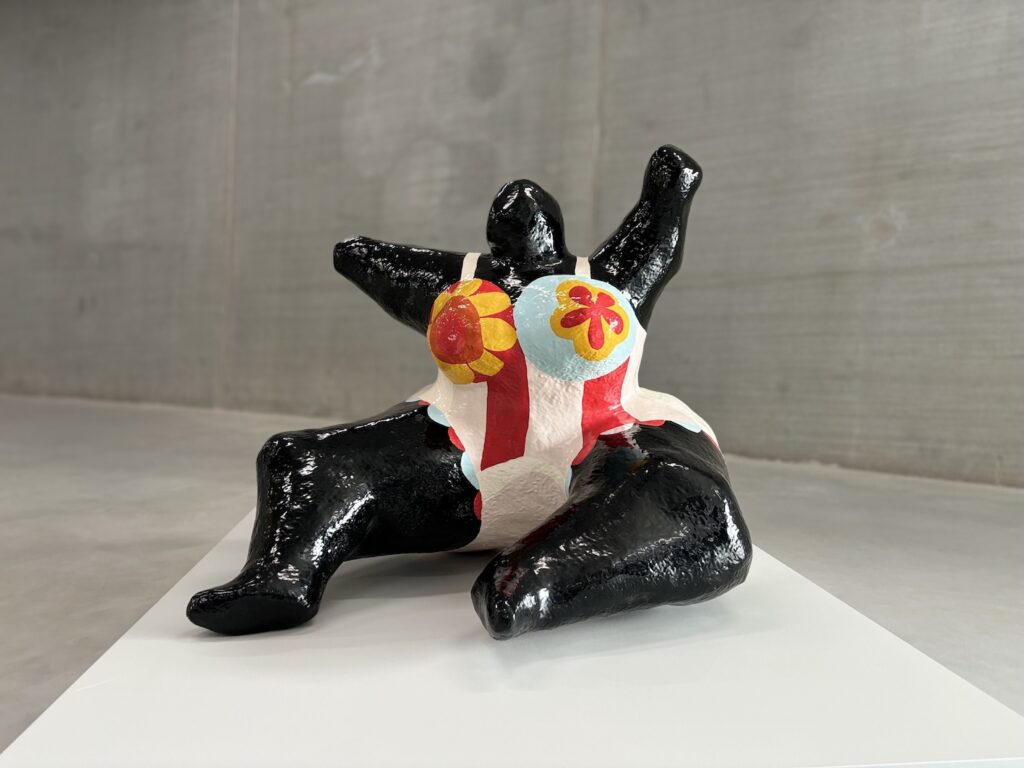
Ljiljana spent time in an artist residency in France last summer, and we met again in Paris. We talked about everyday life, as well as the Niki de Saint Phalle exhibition at the Grand Palais, the feminist Marguerite Durand Library, and Hélène Coupé’s project. The topic of women’s rights is important to both of us, so the idea of presenting the exhibition in Serbia emerged almost spontaneously from that conversation. I experienced that meeting as a symbolic moment in which different paths came together — those that connect Serbia and France, as well as those that link the past and the present.
How important and personal is the topic of gender equality for you?
The topic of gender equality has always been important to me, but it gained an even stronger personal dimension when I became a mother. I have lived in France for 26 years, and for the past 16 years, I have been a single mother, carrying most of the responsibility for raising my children on my own. This experience has made the issue feel much more deeply and personally to me.
The birth of my children, as well as the experiences I have had as a woman, have made me even more aware of how important it is to build a society based on equality and mutual respect.
It is essential that new generations — both girls and boys — grow up in an environment where violence and discrimination have no place.
This exhibition has shown how important and inspiring collaborations can be. What would you like the audience to take away from this story about women’s struggles?
Any space that opens the possibility for dialogue and the exchange of ideas is valuable. We will see where Hélène Coupé’s exhibition will travel next, which audiences it will reach, and how it might influence them.
The exhibition reminds us that the path toward equality has been long and complex — from the first demands for education and political rights to today’s struggles against violence and discrimination. It speaks about well-known French women who have marked history. Still, it also encourages us to think about women from every community whose contributions often remain insufficiently visible — both the renowned and the “ordinary” women who sustain their families and society as a whole every day.
This exhibition is also important to me because the topic of women’s rights and violence against women is still too often trivialized, dismissed, or reduced to something insignificant. Equality is not only a subject we discuss at exhibitions; it is a value that we must all continue to defend and support together.
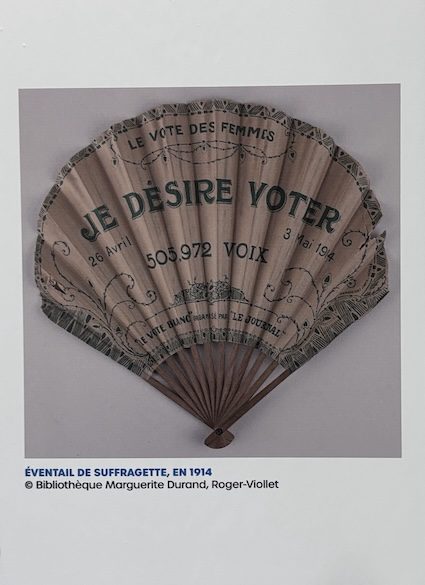
In everyday life, women still too often face messages such as: “Be quiet, let it go, endure.” What particularly troubles me is the fact that women still have to fight for rights that should have long been taken for granted. This is exactly what awakens in me a sense of resistance and the need to speak even more openly about these issues, as well as to remind others, through a historical perspective, how much we owe to the women who dared to raise their voices on our behalf. Thanks to them, we have rights today that did not come by themselves, but were won through a long and difficult struggle — and precisely for that reason, these rights must continue to be defended and protected.
The time for messages such as “be quiet, let it go, endure” must remain in the past.
Leave a Reply