
Art Box portal //
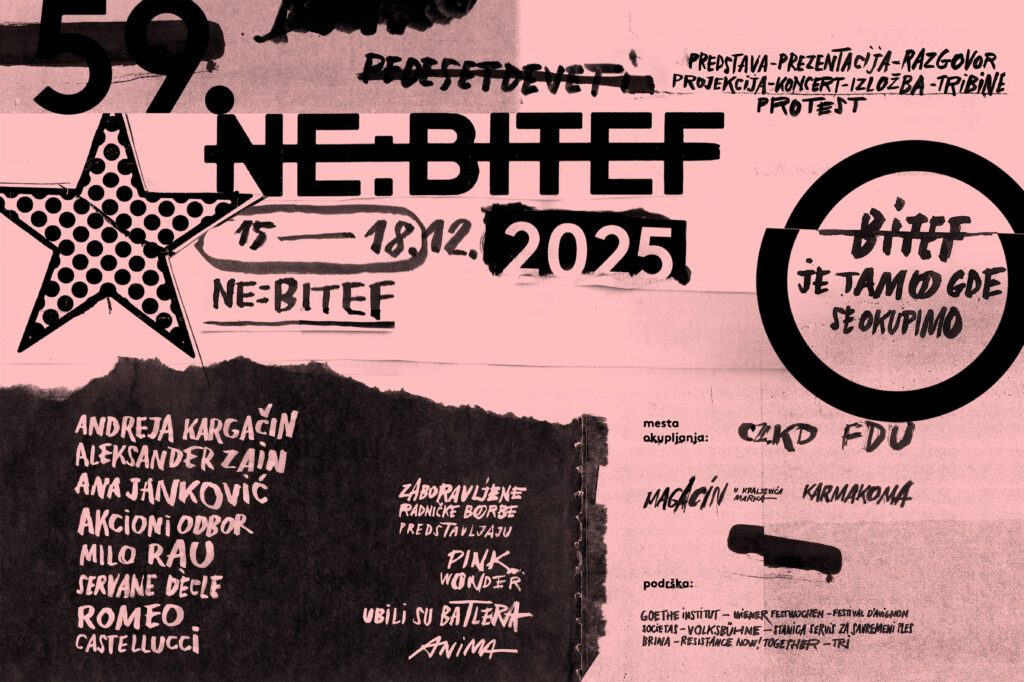
Bitef (The Belgrade International Theatre Festival), Serbia’s largest and oldest international theatre festival, is not taking place this year — at least not in its institutional form. However, under the slogan “Bitef is wherever we gather,” this year’s ne:Bitef will be held from December 15 to 18 at several locations across Belgrade.
Through a series of wrong and unprofessional decisions, a drastic budget cut, the abolition of the artistic director’s position, and finally, open censorship of the program, the founder has taken every step necessary to ensure that Bitef does not take place this year. First, the city authorities stripped it of its autonomy and resources, then postponed and reshaped it, and ultimately attempted to silence it—because even after almost six decades, it has remained free-spirited, critical, loud, and defiant.
But instead of silence and retreat, a determined response came from an informal group of citizens—artists and cultural workers — who are organizing the festival ne:Bitef from December 15 to 18 under the slogan “Bitef is wherever we gather.”
“The smarter one doesn’t yield; the smarter one organizes — a lesson we learned from the student movement. Reacting strongly to the censorship of Bitef, we decided not to accept the erasure of an important history and the living legacy of critical theatre. ne:Bitef is at once a ‘no’ to censorship and a non-institutional, independent Bitef — a continuation of a festival that belongs to the community, not to any secretariat, board, or government,” states the program text accompanying this edition of ne:Bitef.
“The censored Bitef program has become a gathering place: around it, numerous cultural workers, organizations, allies, audiences, and concerned citizens have united. Without funding, with very few resources, but with great enthusiasm, solidarity, and unpaid labor, we are taking responsibility to keep the festival alive — guerrilla-style, across several locations in the city, from December 15 to 18, 2025. In doing so, we show that the scene does not accept censorship and refuses to remain silent about it — as Gisèle Pelicot would say: ‘Shame must change sides.’”
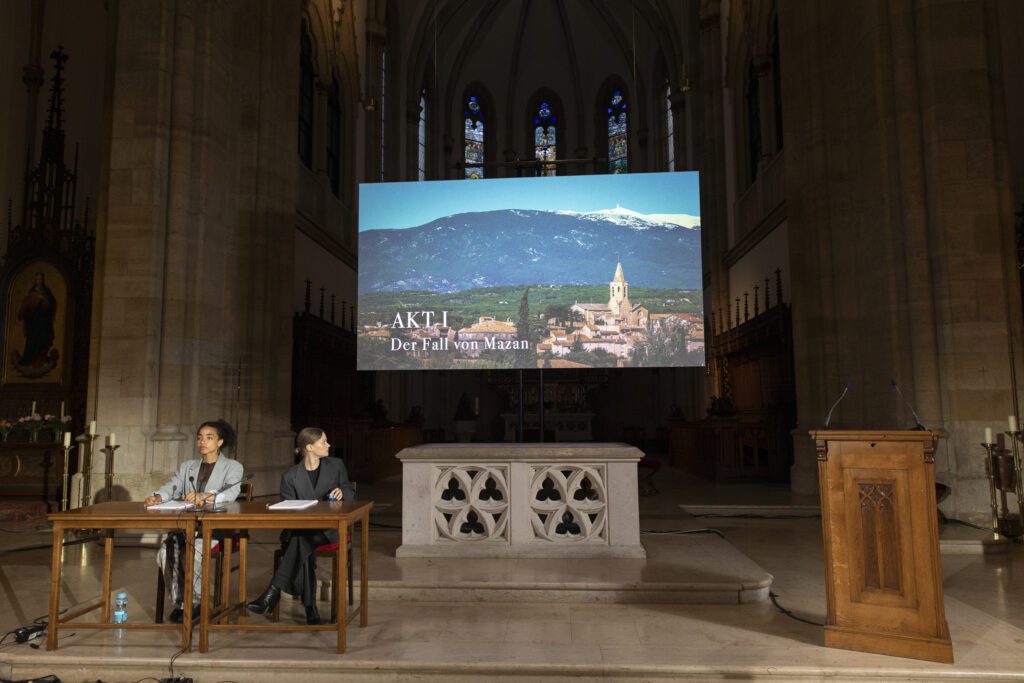
ne:Bitef will officially open on December 15 at 6 p.m. at the Faculty of Dramatic Arts with the performance The Pelicot Trial, created by Milo Rau and Servane Décloux. Through raw documentary theatre based on reading transcripts from a recently concluded court case that shocked the public, the performance exposes a system that allows domestic violence to go unnoticed. Gisèle Pelicot, a 72-year-old French woman who, while unconscious, was raped over the course of several years by her husband together with fifty men he found online, decided to open the trial to the public and “make shame change sides.”
This co-production of the Vienna Festival and the Avignon Festival will be presented in Belgrade by nearly 30 local actors, cultural workers, and activists, known to the public not only for their professional achievements but also for their engagement in the struggle for a better society.
Earlier that day, starting at 12 p.m., the same venue will host a discussion as part of the international campaign Resistance now! Together, launched by the Vienna Festival. Swiss director Milo Rau, the initiator of the campaign, will speak with representatives of the local cultural scene about the repression faced by the cultural sector for resisting autocracy and participating in the fight for social change.
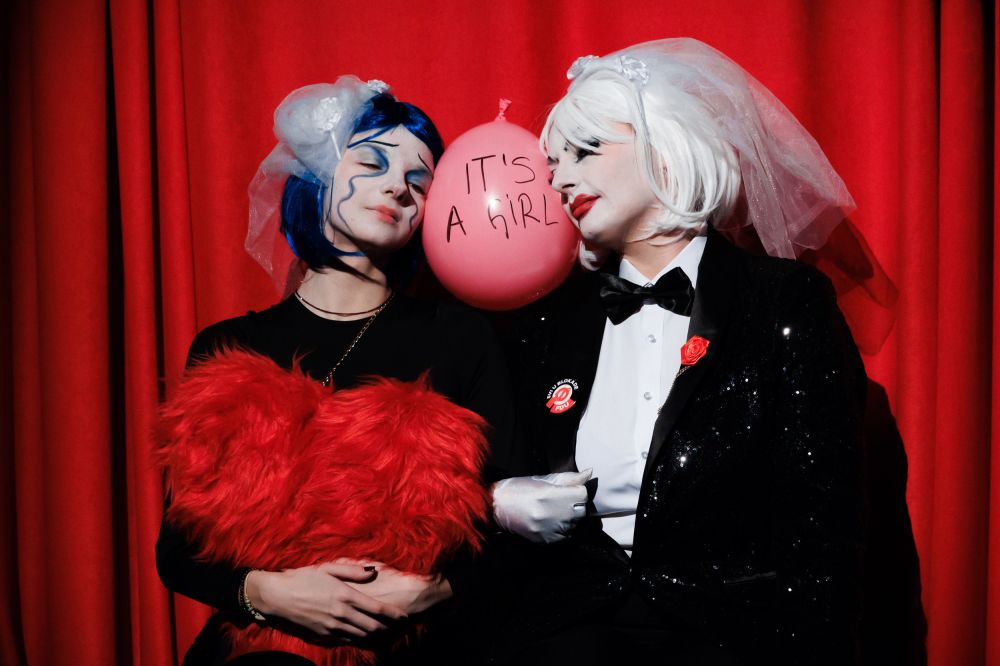
The second day of the festival, December 16, will take place at Magacin in Kraljevića Marka Street under the title They Are Coming, and will be dedicated to young authors whose works the domestic and international public should have encountered during the 59th Bitef. Due to the censorship of the program and the cancellation of the official festival, these young artists have once again—albeit temporarily—been deprived of the opportunity to present their work.
Nevertheless, their works continue to find various paths toward realization and audiences. Starting at 6 p.m., Magacin visitors will be able to see the following performances:
-
Dora, or Who Will Stitch the Vests?, an original project by Andreja Kargačin
-
Tension, a dance and choreographic research project by Aleksander Zain
-
Suicide as a (Social) Fact, directed by Ana Janković
-
The Society of the Spectacle: Self-Management Diversions, an original project by the Action Committee, a collective of students from the Faculty of Dramatic Arts
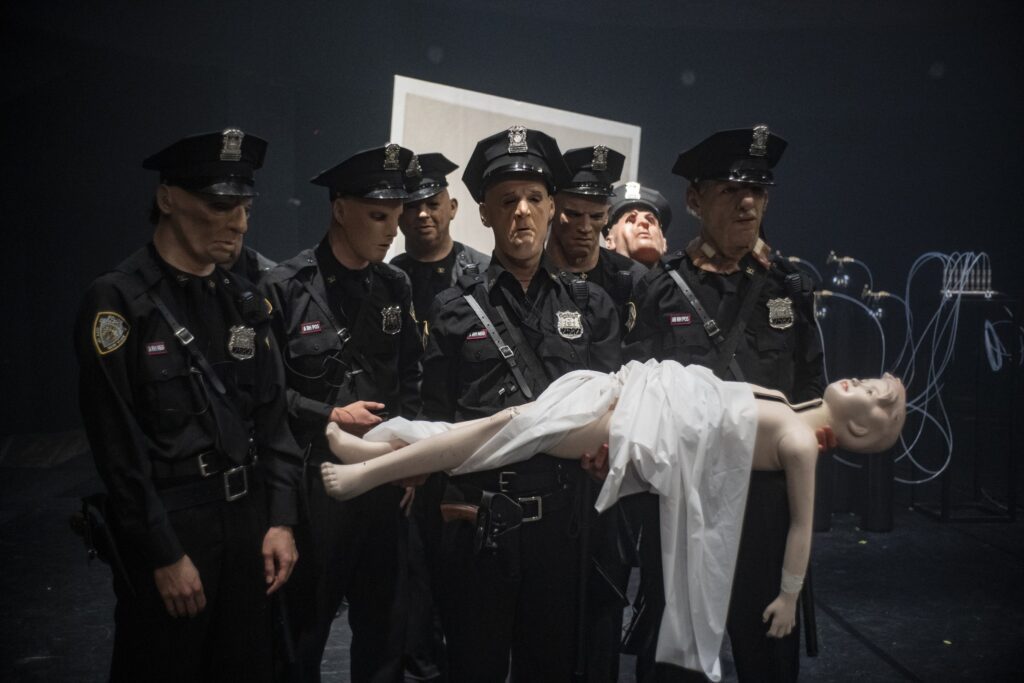
On the following day, December 17, at the Centre for Cultural Decontamination, the audience will be able to watch a screening of Bratija (Bros) by Romeo Castellucci and Scott Gibbons, starting at 6 p.m. Bratija addresses police brutality — more precisely, the phenomenon of mass, male, institutionalized violence. Working with both professional performers and non-professionals, Castellucci once again employs techniques of nonverbal theatre, creating a complex symbolic work composed of rich, poetic images that allow for multiple interpretations. On the occasion of presenting the recording of Bratija, the director will address the audience via video message.
Following this, at 7:30 p.m., a panel discussion titled „Justice and/or Punishment: Toward an Abolitionist Future“ will take place. In light of the current social upheavals in Serbia, as well as those in many other parts of the world, the question arises whether the pursuit of a more just society also requires a radical reform—or even a complete renunciation—of the desire for punishment and retribution. Along the same lines, one may ask whether feminist and other progressive movements should rely on the state’s repressive apparatus, the police, and the prison system in their pursuit of justice, or whether they should instead focus on the politics of care, violence prevention, and empowering marginalized groups to confront violence should it occur.
The third festival day will conclude with a punk concert and accompanying exhibition, starting at 8 p.m. at Karmakoma. ne:Bitef and the stage technicians’ band of Berlin’s Volksbühne will present something a bit different—a raw, furious, high-energy punk concert titled Forgotten Workers’ Struggles, dedicated to significant labor achievements from our history. The punk night arrives in Belgrade thanks to collaborations with local bands and student partners. Alongside a mini-exhibition and performances by three bands—the German Pink Wonder and the local acts Ubili su Batlera and Anima—all attendees are invited to share collective histories, experiences, memories, and rage. Tickets for this event will be available for purchase at the entrance to Karmakoma.
On Friday, December 18, the ne:Bitef program returns to the Centre for Cultural Decontamination, where at 6 p.m., the panel Art: Withdrawal and/or Resistance will be held. It will gather artists, curators, cultural workers, and activists who have, over the past year, acted against censorship and autocratic cultural policies. Starting from the obstruction of this year’s Bitef, the discussion will address whether critique is still possible within art institutions, or whether their abandonment—withdrawal, refusal, temporary “non-maintenance”—constitutes the strongest gesture of resistance today. The audience is also invited to participate in collective reflection on possible strategies of struggle, solidarity, and reclaiming space for artistic freedom.
The festival will officially close at 9 p.m. with a warm meal — celebrating togetherness and solidarity—followed by an informal gathering in the courtyard of the CZKD.
More detailed information about the program will soon be available on the official website www.nebitef2025.rs.
Leave a Reply