
By: Ljiljana Maletin Vojvodić //
While staying this summer at an international artist residency in the unusually named place of Ii, near the city that is this year’s European Capital of Culture (Oulu, ECoC 2026), I had the opportunity to write in a truly unusual local library — a space where you can sit and spend time even outside regular opening hours, and where, in addition to books, you can even borrow, for example, a boat. Spaces like this clearly show how, in Nordic countries, libraries are conceived as broader social and communal resources, not just places for borrowing literature.
In northern Finland, in the North Ostrobothnia region, at the mouth of the Iijoki River on the Bothnian Bay, lies the municipality of Ii — a place with the shortest name in Finland, and one of the shortest in the world. With around 9,800 residents, Ii is a small community that invests heavily in culture, education, and sustainable development. The town hosts the international ART Ii Biennale, dedicated to environmental and sculpture art, and aims to become one of the world’s first zero-waste communities without the use of fossil fuels.

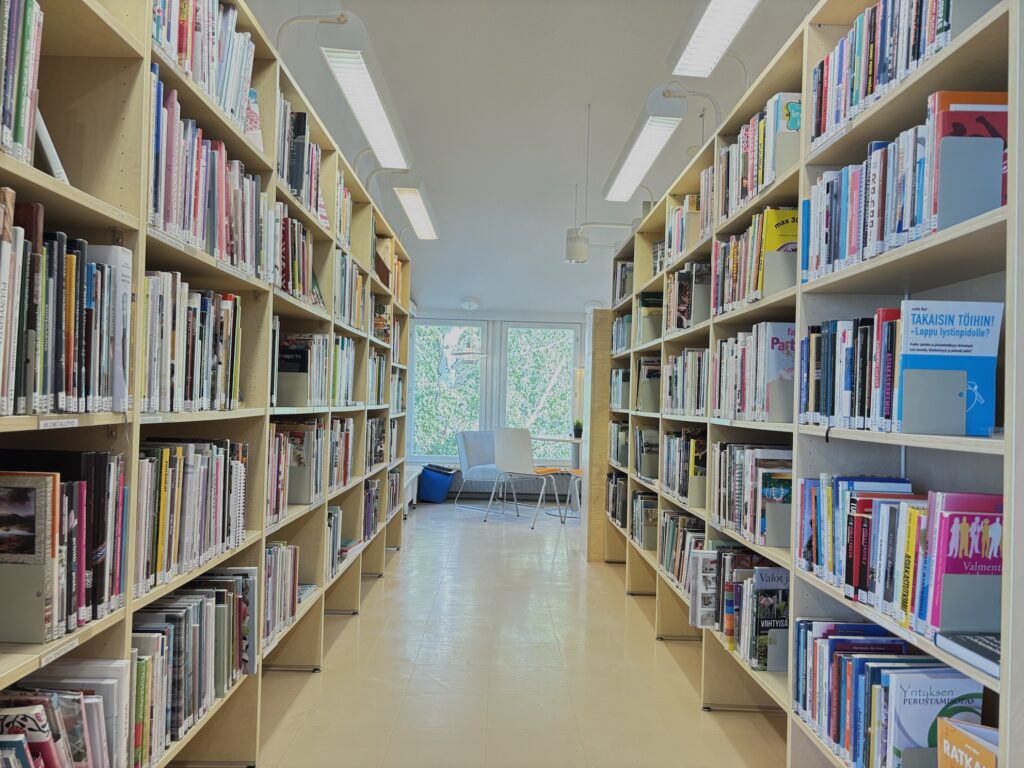
Within this context, the municipal Ii Library holds a special place, having functioned for decades as an important cultural and social hub. The library building was completed in 1985 and, in addition to library services, regularly hosts art exhibitions and cultural programs. The library is part of the regional OUTI library network, which connects municipalities in the wider Oulu area and enables a shared collection, material exchange, and digital services.
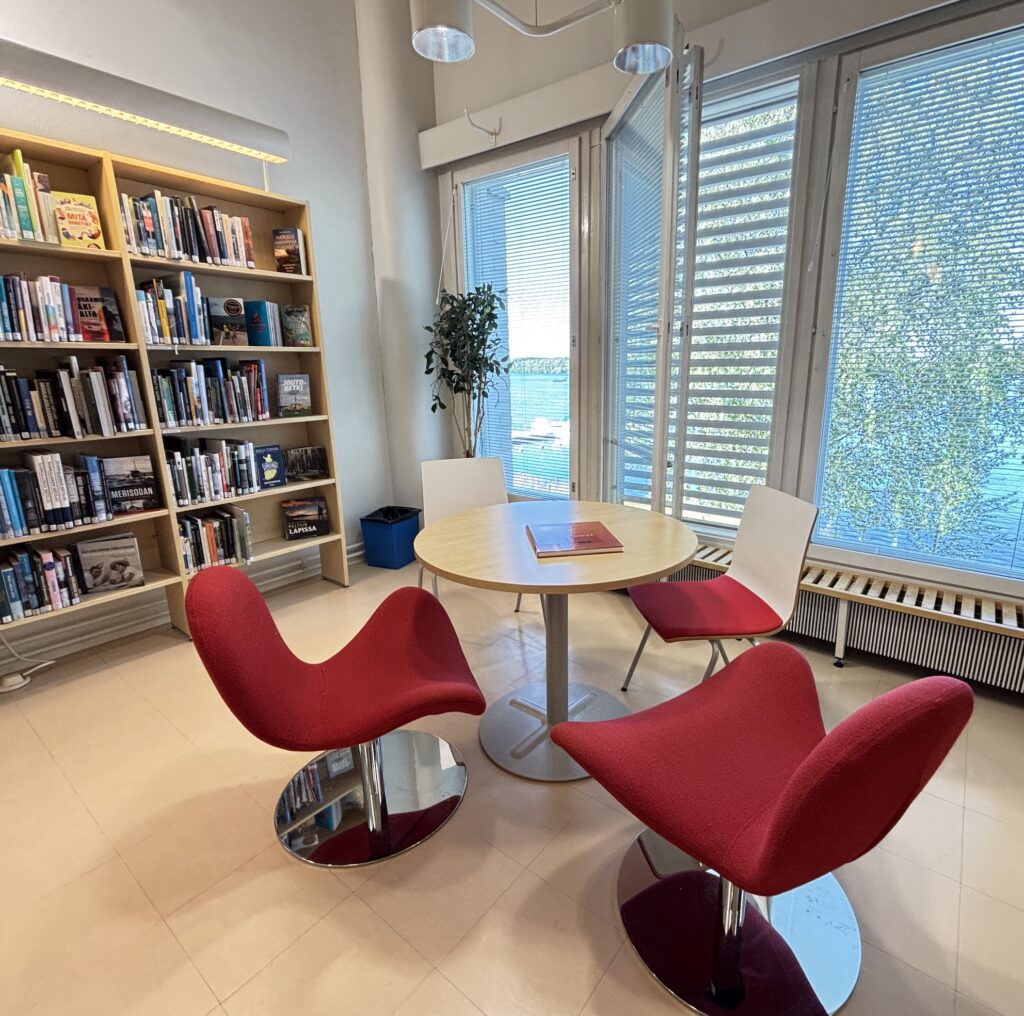
The library includes children’s and adult departments, a reference collection, a reading room, and dedicated spaces for listening to music or reading fairy tales. The library space is carefully organized to respond to the needs of different users — from children to students and researchers, to senior citizens.
A Tradition Longer Than 150 Years
Ii Library was founded in 1859 and began operating in early 1860. It was originally located in the parish house, while funds for new books were collected through local initiatives and voluntary donations. Throughout its history, the library changed locations while growing alongside the community. Services in more remote and sparsely populated parts of the municipality are provided through the Akseli mobile library, which regularly visits village schools and kindergartens, bringing books and educational materials.
Self-Service Library and Contemporary Models of Access
One of the key features of the Ii Library is its self-service model, allowing users to access the library even outside regular working hours. With a valid OUTI library card and personal PIN code, users can enter the space, borrow and return books, use computers, read newspapers, and access wireless internet — even when no staff are present.
During self-service hours, users are responsible for the space, while security is ensured through video surveillance. This model is especially important in smaller communities, as it extends access and adapts to the daily rhythm of local life.
Accessibility and Inclusion
Ii Library places strong emphasis on accessibility and equal access to knowledge. Membership is free for all users, and the space is adapted for people with disabilities, including accessible entrances, toilets, and adjustable service counters. Reading aids such as magnifiers and reading glasses are available, and assistance dogs are welcome.
The library also cooperates with the national Celia Library, which produces and distributes literature in audio and Braille formats for people who cannot read printed texts due to illness or disability. Users can also access Celia’s online audiobook services.
For those unable to visit in person, the library offers home delivery services, intended for elderly users and people with health difficulties.
Libraries and Education in Finland
In Finland, libraries play a central role in society and education. They are not only places for borrowing books, but public spaces for learning, working, and community gathering. More than half of the population actively uses libraries, and the library network is closely connected to the education system, literacy development, and digital skills education.
The Finnish model is based on the idea that access to knowledge is a fundamental public right. Libraries are free, widely accessible, and funded by the state and local municipalities, with strong support from the Ministry of Education and Culture. This system is often cited as one of the key reasons for Finland’s high levels of functional literacy and public trust in institutions.
A Small Town, A Big Idea
In a place with only two letters in its name, the Ii Library shows how a local institution can be much more than a space for books. It is an extension of education, a cultural center, a meeting place, and an example of how knowledge and culture can be made accessible to everyone, regardless of the size of the town or its distance from major cities.
Leave a Reply