
Art Box portal //
Housed in the imposing building of the former Gare d’Orsay railway station, constructed for the 1900 World’s Fair, the Musée d’Orsay has, since 1986, been one of Europe’s most important art museums, attracting around 3 million visitors annually. Focusing on the period from 1848 to 1914, the museum preserves masterpieces of Realism, Impressionism, Symbolism, and early Modernism. At the same time, it is not immune to strategic repositioning — an example of a contemporary museum balancing between its cultural mission and global tourism, between the pressures of mass visibility and the algorithmically shaped expectations of its audience.
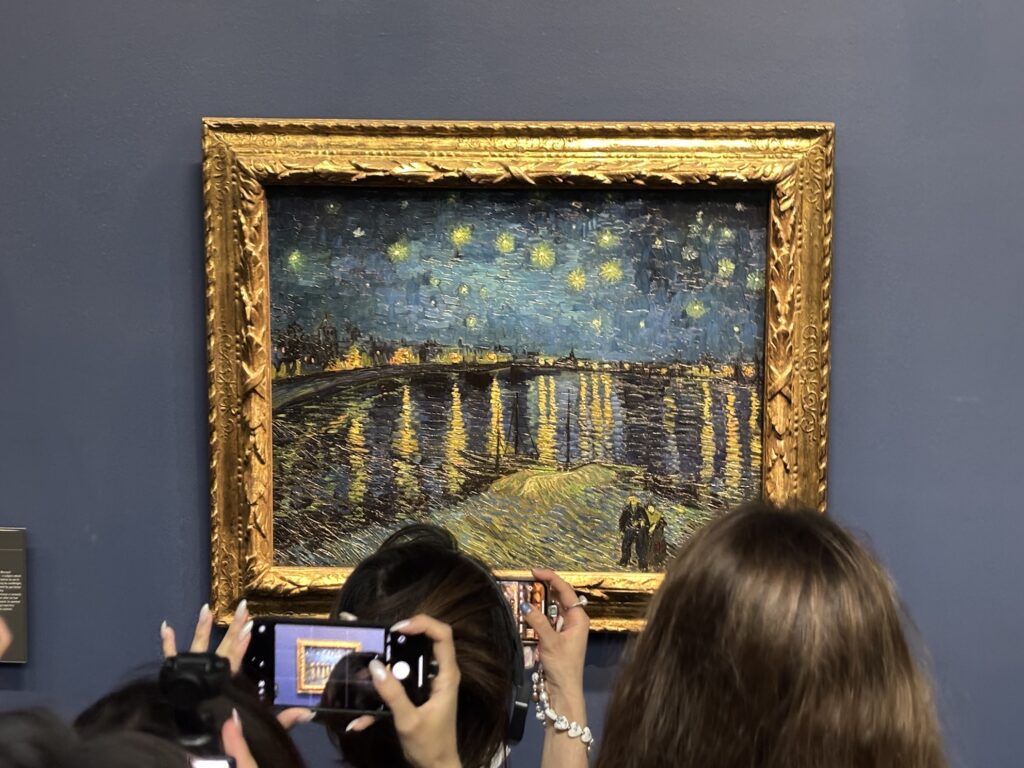
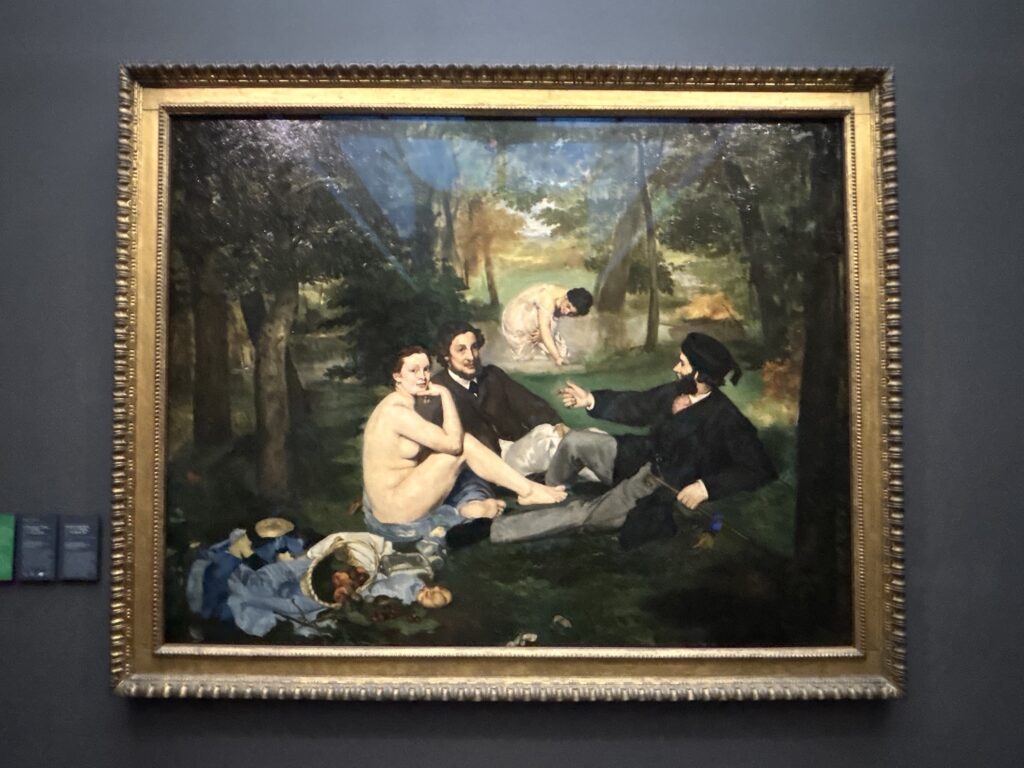
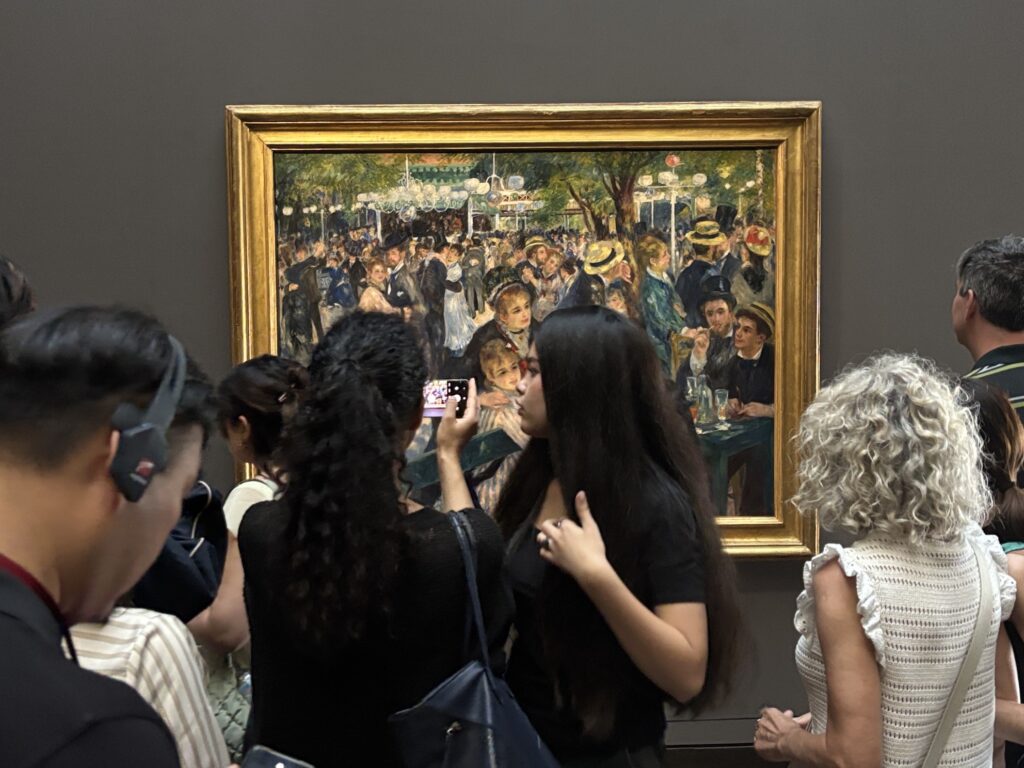
The Musée d’Orsay houses works such as Édouard Manet’s Olympia and Le Déjeuner sur l’herbe, Vincent van Gogh’s Bedroom in Arles and Self-Portrait, Claude Monet’s Blue Water Lilies, Pierre-Auguste Renoir’s Dance at Le Moulin de la Galette, as well as important works by Gustave Courbet, Paul Cézanne, Paul Gauguin, Pierre Bonnard, Toulouse-Lautrec, and Rodin’s sculptures. In addition to its permanent collection, the museum regularly hosts temporary exhibitions, guided tours, and educational programs.
The Musée d’Orsay is not only a gallery of paintings and sculptures — it also houses an excellent bookstore with carefully selected editions, catalogues, and publications that provide additional context and a deeper understanding of the artistic movements and individual artists represented in the permanent collection.
Naturally, there is also a gift program, which, as is the case in all major museums, both popularizes and trivializes the permanent collection, since motifs from the exhibited works are reproduced on tote bags, pencils, and mugs.

In addition, several restaurants and cafés located inside the museum offer a chance for a break or a moment of reflection on the artworks you have just seen, all within the interior of the former railway station.
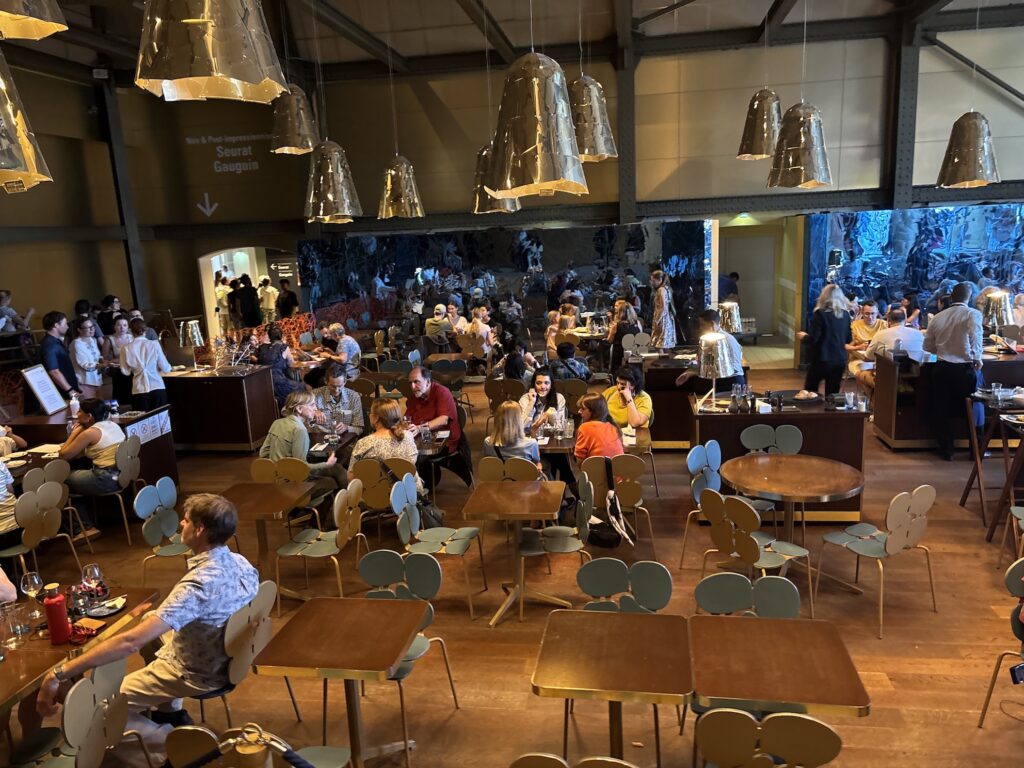
The contemporary experience of the Musée d’Orsay comes with a price. The enormous number of tourists — often rushing to take a selfie or “check off” another must-see location from their list — brings a sense of superficiality to the interaction with art. The artistic experience is frequently reduced to buying souvenirs, sitting in the museum café or restaurant, and, above all, an obsession with photographing, without any real pause or reflection.
The Musée d’Orsay is not an exception but rather a paradigm of the global reality in the age of “instant” tourism — driven by trends and social media, with little deeper engagement with culture, history, or local life. Artworks are “skimmed through” while people take photos for Instagram, which inevitably changes the museum’s dynamics and the way the works are experienced.
However, if you choose to, you can resist the imperative of speed — the Musée d’Orsay can still be an opportunity to slow down — a moment to contemplate an important work of art and understand its creation, as well as the dialogue it establishes not only with the past but also with the present.
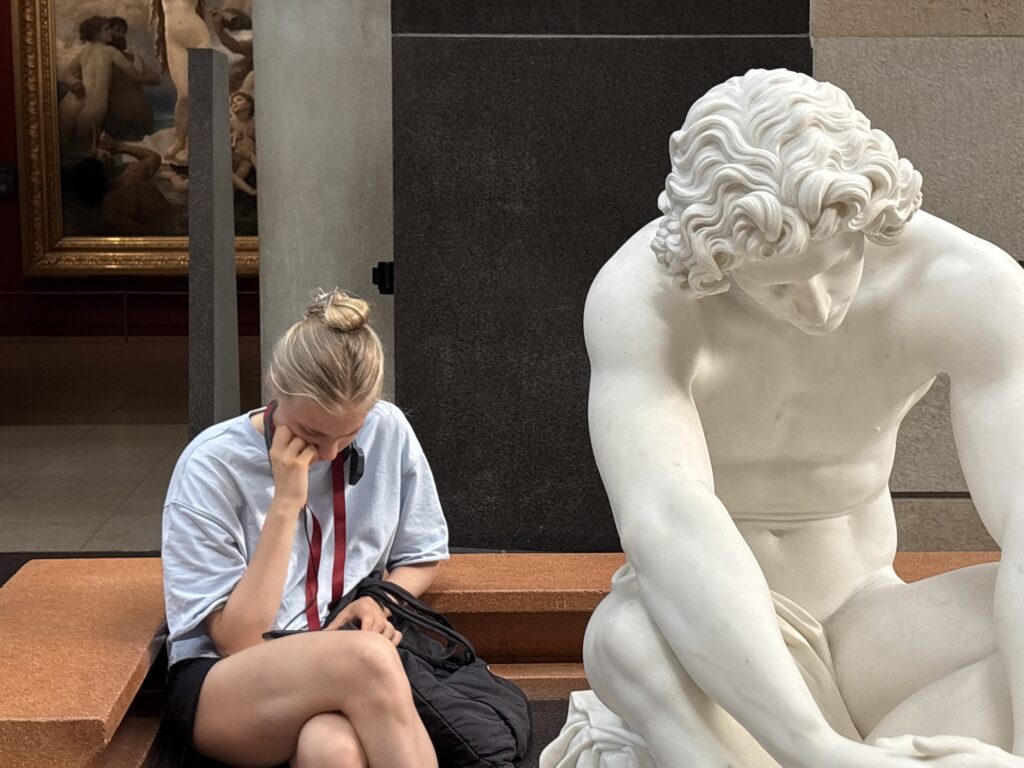
Musée d’Orsay is a paradigm of the contemporary art museum: carefully curated, historically considered — yet at the same time deeply immersed in the logic of planetary culture, the attention economy, and the increasingly visible regimes of technofeudalism.
In an era when cultural institutions are becoming hubs of transnational flows of audiences, capital, and cultural consumption, the Orsay cannot escape the pressures of hypertourism, the commodification of experience, and a platformized cultural system.
It remains an important site of encounter with art in the French capital — a city visited by up to 30 million tourists a year — yet it is also a symptom of a world in which cultural institutions navigate between the emancipatory power of art and the demands of the market.
Leave a Reply