
Interview by Ljiljana Maletin Vojvodić
I first met Ariane Lugeon (1974) a few years ago at an artist residency in Sweden. Originally from Switzerland, she’s a contemporary artist who believes in the power of creative energy and artistic exchange. Ariane now runs Space a+Lu in Hoi An, Vietnam, a residency built on the idea of Slow – Flow – Grow, where artists can take their time, experiment, dive into their process, and connect with a completely new cultural environment.
You’ve participated in residencies across Europe and Iceland, and now run your own, Space a+Lu, in Hoi An, Vietnam. How have these experiences shaped your artistic journey, and what inspired you to start a residency in Vietnam?
Artist residencies have always been an important part of my practice. They allow me to meet international artists, experience my work within different cultural contexts, and gain inspiration from new environments. For me, residencies are not only professional opportunities but also a kind of “soul food”— they provide space for reflection, experimentation, and creative renewal.
For the past two years, I have also been working as a residency manager. This role is very different from being an artist, and I am still learning every day. Managing a residency involves a lot of communication — answering emails, supporting artists, and organizing the practical aspects of the house. It is a different type of creative work.
Because I have participated in several residencies myself, I understand both the strengths and the challenges artists may encounter. In my experience, what artists need most is time and space. That is exactly what I try to offer at Space a+Lu. Sometimes my role is also to reduce the pressure artists put on themselves. I always tell them: this is your time. You can experiment, explore new ideas, and there is no pressure to produce a final result.
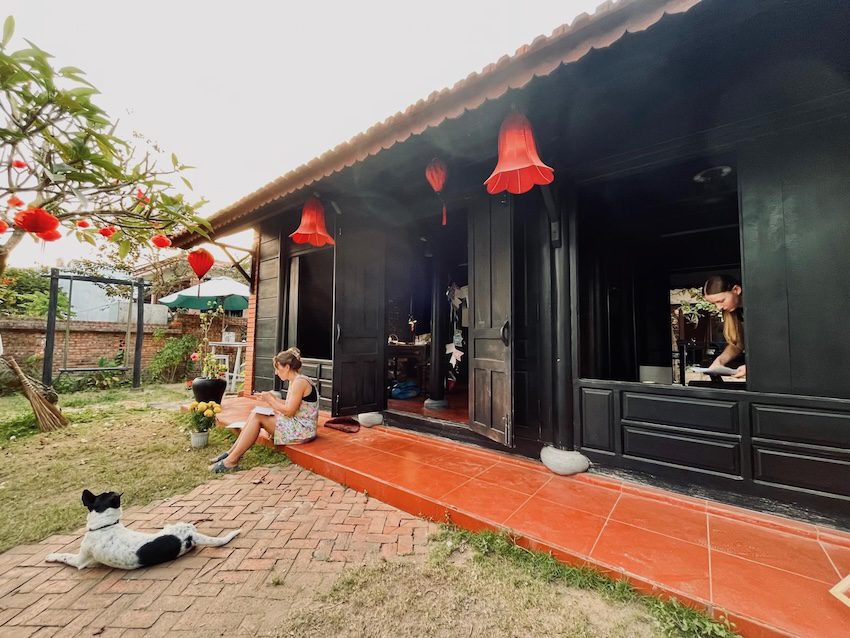
Interestingly, creating an art residency in Vietnam was not part of my original plan. I initially came to Vietnam while traveling through Asia for five months. During that time, I discovered the house in Hoi An and immediately fell in love with it. It was much larger than I needed for myself, so I decided to start a six-month pilot project. The response from the artists who participated in Space a+Lu was very positive, and the project grew from there.
The main reason I continue this residency is that I strongly believe in creative energy and in the value of artistic exchange. Through my own experiences with artistic processes, I have gained knowledge that I am happy to share with other artists— if they wish to receive it.
Your work includes photography, installation, performance, and mixed media, with a strong focus on ideas and materials. For over twenty years, you have used hand embroidery, often in surprising or provocative ways. What led you to choose this medium, and what does it mean in your work?
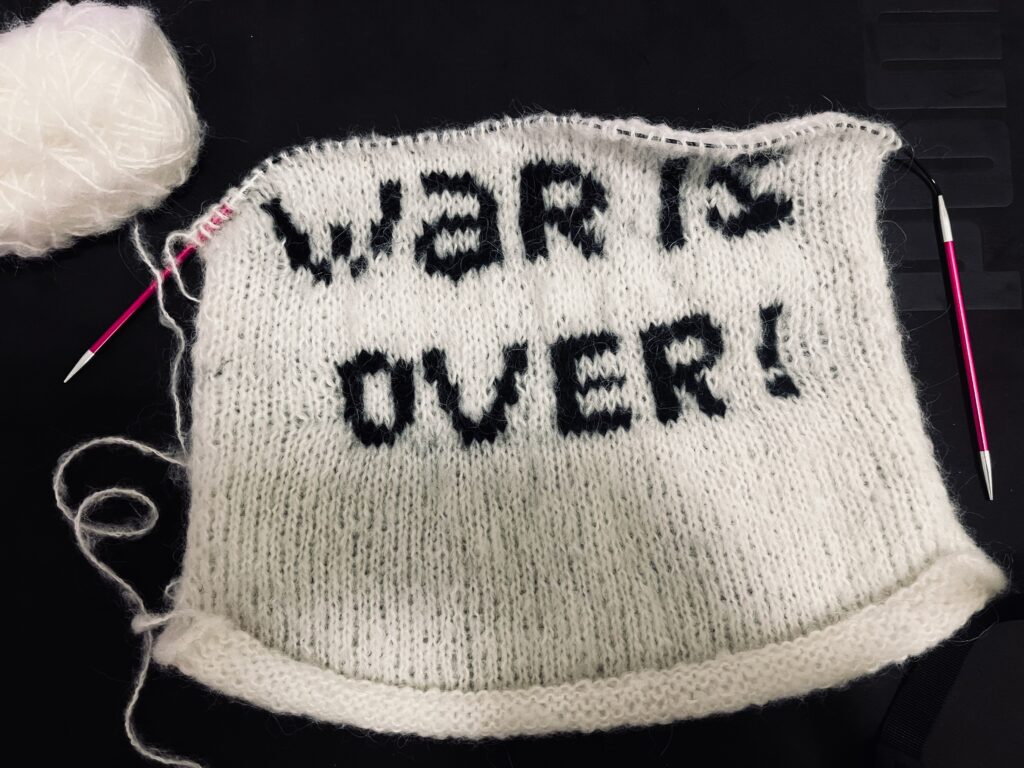
For me, a stitch is very similar to a pixel. Because of that, digital imagery and contemporary themes can easily be translated into textile work. I enjoy this connection between the digital world and traditional craft techniques.
Embroidery is also a very slow process, and I am drawn to slow ways of working. The repetitive action of stitching allows time for reflection, and the process itself becomes part of the meaning of the work.
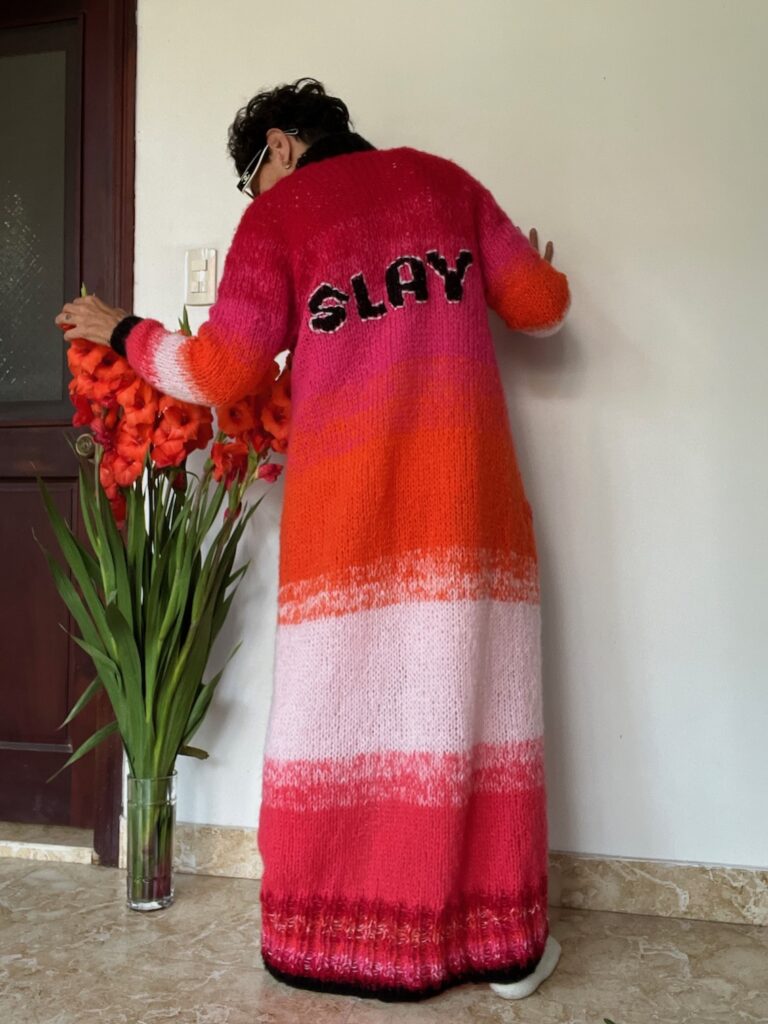
I think my artistic language naturally contains a certain level of provocation. Textile is a very familiar material—we are surrounded by it and wear it almost 24 hours a day. Because of this familiarity, it becomes a powerful medium for contrast. When I embroider an explosion, feel an AK-47, or knit simple words onto a soft mohair sweater, the message becomes stronger. The softness and intimacy of the material stand in tension with the harder or more provocative imagery.
This contrast between comfort and confrontation—the soft and the harsh—is something I am very interested in exploring in my work.
As a self-taught female artist, have you ever faced marginalization or particular challenges within the art world?
In textile art there is still a noticeable double standard. When a man works with techniques such as knitting, embroidery, or crochet, people are often surprised and tend to see it as something innovative or conceptually interesting. When a woman uses the same techniques, it is much more likely to be perceived as a hobby or associated with domestic or “housewife” work. This difference reveals how strongly gendered perceptions still shape the way artistic practices are valued.
At the beginning of my career, I also experienced situations that reflected the power dynamics within the art world. When I was a very young artist, an older gallerist once suggested that I could have a solo exhibition in his gallery if I slept with him. I declined. Two years later, the same gallery invited me to participate in a group exhibition.
For me, experiences like this highlight that the art world is not automatically a progressive space. Like many other fields, it still carries certain hierarchies and gendered expectations. At the same time, these experiences strengthened my determination to build my own path and to maintain independence in my work and decisions.
Your residency program, Space a+Lu, follows the concept: Slow – Flow – Grow. Could you tell us more about this approach and how it shapes the residency experience?
It is a gentle reminder that creativity isn’t a race; it’s a journey. In slowing down, we find the rhythm that allows ideas to flow freely, like a river carving its way through the landscape. Growth happens not in a rush, but in the patience of allowing things to unfold in their own time.
Space a+Lu embodies this philosophy—it’s the perfect space for artists to embrace the slow flow of their process and experience true growth.
And let’s be honest: rushing is for deadlines, not masterpieces!
How is the residency usually structured? What kind of artists have participated in your residency in Vietnam so far? Is there a specific profile of artists you tend to attract? What does a typical stay look like, and what is generally expected from artists during their time there?
The residency at Space a+Lu is intentionally simple and flexible. Each artist has a private room, while the workspace, kitchen, and garden are shared. The idea is to create both personal space for focused work and communal areas for exchange and conversation.
At the beginning of a stay, artists have the option to give a small artist talk, and at the end, we can organize an open studio. Both are completely optional, as the residency is meant to respect the individual working rhythm of each artist.
So far, I have hosted artists from many disciplines, including papermakers, textile artists, painters, illustrators, animators, photographers, video artists, dancers, sculptors, and technology-based artists. Some come to produce new work, while others use the time mainly for research and developing ideas for future projects. In the future, I would also love to welcome more sound artists and writers.
Space a+Lu is a self-funded and self-directed residency program, and artists can apply for stays between one and three months. A residency fee is required, and I can provide an official confirmation letter so artists can apply for grants in their home countries.
During their stay, artists are free to organize their time as they wish. The main expectation is simply a respectful atmosphere within the house and toward the surrounding culture. At the end of the residency, artists are asked to leave their room and workspace clean for the next participant.
One of the most valuable aspects of residencies is the opportunity to experience a different cultural environment. In Vietnam, how do artists engage with local traditions and daily life? How do you see this cultural exchange influencing artists and their creative processes?
The cultural exchange grows with every artist who joins the residency. Over time, I have built a small network with local artists and craftspeople, and visiting artists often connect with them during their stay. Sometimes they visit workshops and create their own connections.
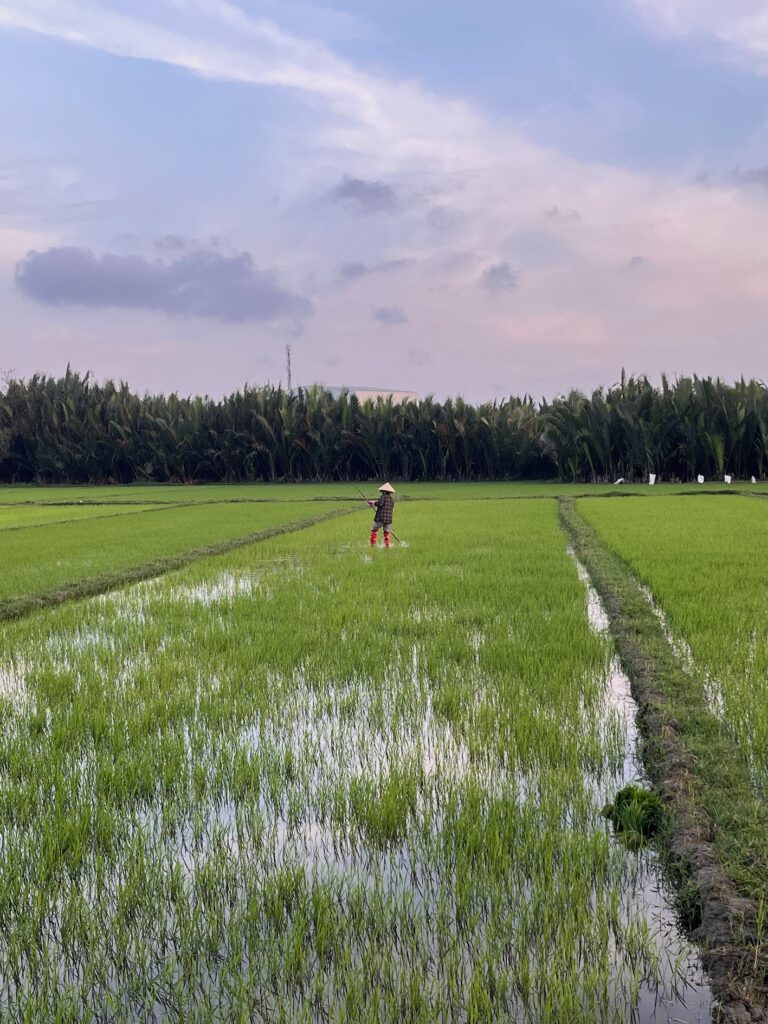
Hoi An has a long tradition of craftsmanship, including tailoring, pottery, and papermaking, and many artists become curious about these local practices while they are here.
During open studios, local friends and artists often visit to see what the residents have been working on. These moments create informal but meaningful exchanges — art can be a natural bridge between cultures.
One of my long-term goals is to secure funding to invite Vietnamese artists and international artists to participate in the residency together. I believe this would create an even deeper dialogue. But this is a future project — something that will also follow the idea of slow, flow, grow.
Finally, could you tell us more about the application process? What should artists know if they are interested in applying for the residency in Hoi An?
Artists can find detailed information about the residency, Hoi An, and the application process on the website: www.spaceaplus.lu. To apply, they simply need to fill out the application form there.
Applicants usually receive a response within two to six weeks.
If artists have any questions, they are always welcome to contact me by email.
At the moment, there is an open call for summer and autumn 2026. Winter does not really exist in Hoi An — the temperature is usually around 20°C, even during the rainy season.
Leave a Reply