
Written by: Dragan Vojvodić //
While democracy is increasingly articulated — both locally and globally — through crisis, protest, and social unrest, Iceland, with Reykjavík as its political and cultural center, remains a key reference point in analyses of peaceful societies and functional democratic models. The city’s urban culture, shaped by American and British musical influences throughout the twentieth century and interwoven with a strong Icelandic tradition and a distinctive natural environment, has produced a unique and vibrant scene in which music — and, closely connected to it, record stores — occupy a central place.

At the intersection of one of the most striking natural environments on the planet and a small Icelandic community, with Reykjavík at its center, an art of authentic expression has emerged. It is enough to mention Björk, Múm, and Sigur Rós; the writer Sjón; visual artists Olafur Eliasson and Ragnar Kjartansson; and film director Baltasar Kormákur — figures whose work grows out of a local context yet operates within a global cultural space, shaping a scene that is at once intimate and internationally relevant.
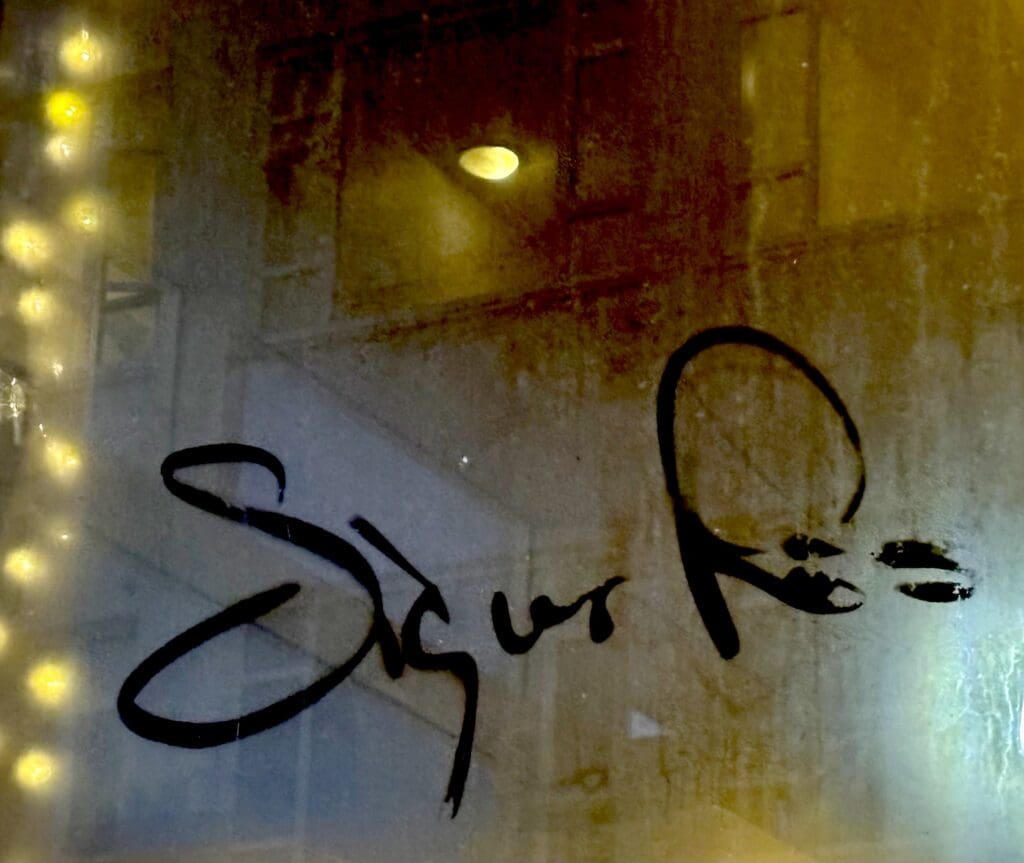
Today, Reykjavík is recognized as one of Europe’s significant music hubs — not only because it has produced artists such as Björk, Múm, and Sigur Rós, but also because its unique spirit has inspired numerous musicians and creators from around the world. Within the context of the city’s music scene and popular urban culture, symbolic locations and record stores hold a special place, with two of them enjoying cult status.
Lucky Records
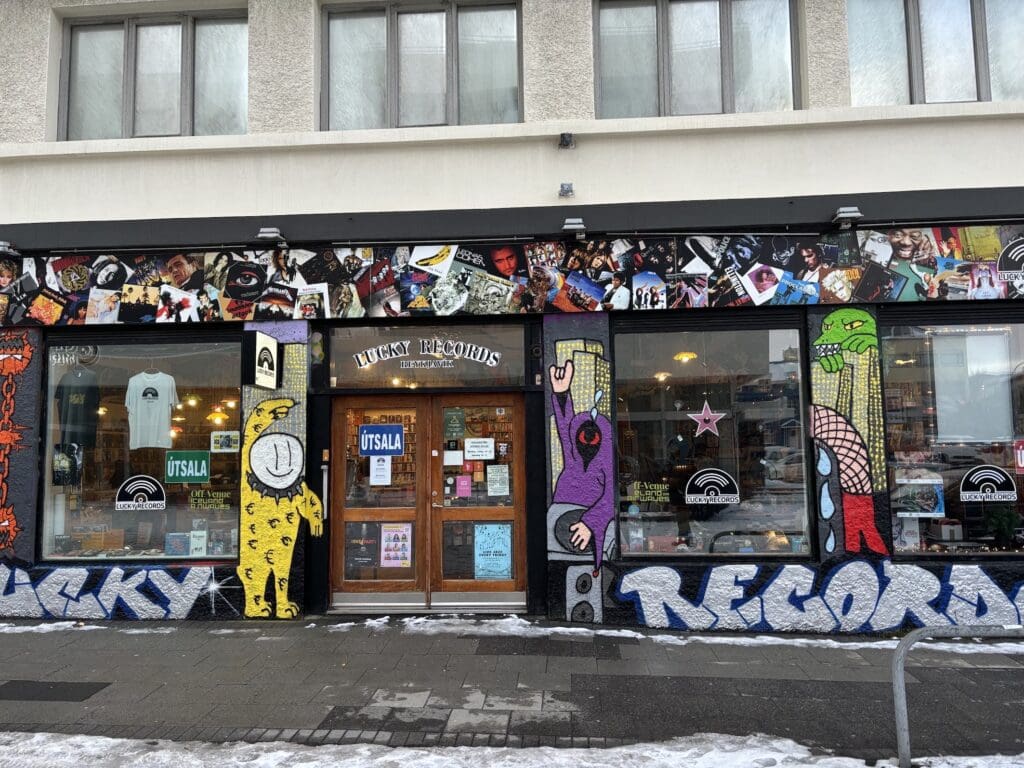
The youngest yet also the largest record store in Reykjavík — Lucky Records — has been in existence since 2005. According to its official website, it offers more than 50,000 records spanning a wide range of musical genres.
Icelandic music holds a special place in all of Reykjavík’s record stores, and at Lucky Records it enjoys an almost cult status — not only among local listeners, but also among the many tourists who come to the city eager to discover the authentic sound of Iceland.

Alongside the latest releases, which are constantly updated, the store also offers a rich selection of second-hand vinyl. It is precisely for this reason that Lucky Records attracts true vinyl enthusiasts, who, in a relaxed atmosphere — with the option of enjoying a free cup of coffee — can patiently hunt for rare editions from past decades.
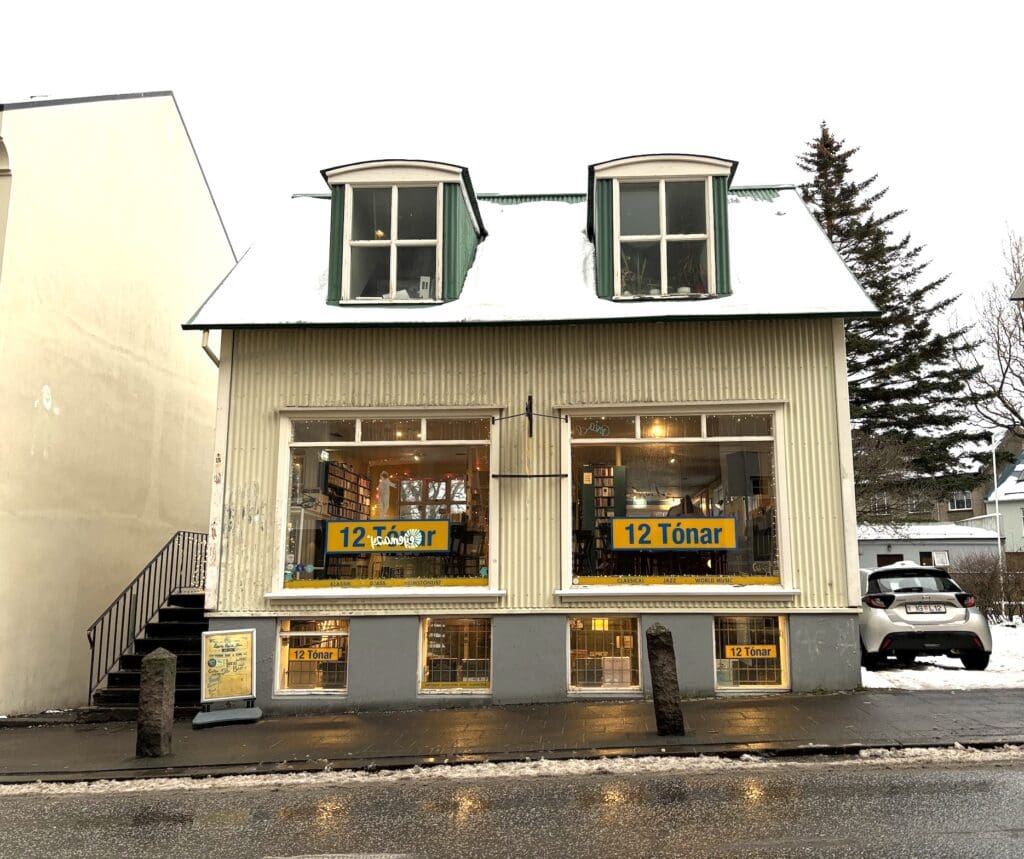
Perhaps the most beloved local attraction among Reykjavík’s record stores is 12 Tónar — a place known for its relaxed atmosphere, making it ideal for exploring music. The staff are always ready to recommend artists, so time spent in the shop often turns into conversation, discovery, and listening.
Since its founding in 1998, 12 Tónar has earned the status of one of the city’s most influential music hubs. As early as 2003, it launched its own record label, specializing in releasing albums by young, promising artists. This independent production house has played a key role in the careers of some of the most important contemporary Icelandic musicians: Academy Award–winning composer Hildur Guðnadóttir, two-time Oscar nominee Jóhann Jóhannsson, and pianist Víkingur Ólafsson, named Artist of the Year by Gramophone magazine.
The reputation of 12 Tónar is recognized beyond Iceland as well-prestigious international media often cite it as a must-visit destination for anyone in Reykjavík who wants to experience the soul of the city’s music scene.

The 12 Tónar record store is located in the very center of Reykjavík, housed in a traditional Icelandic building that once served as a residential home.
Today, this type of architecture can be found only within the strictly protected area of the old city core. After the major economic crisis that shook Iceland in 2008, this part of the city has increasingly come under pressure from waves of new construction and architecture shaped by globalization—a trend that gradually erases the local, the authentic, and the distinctive qualities that once made Reykjavík unique among European capitals.
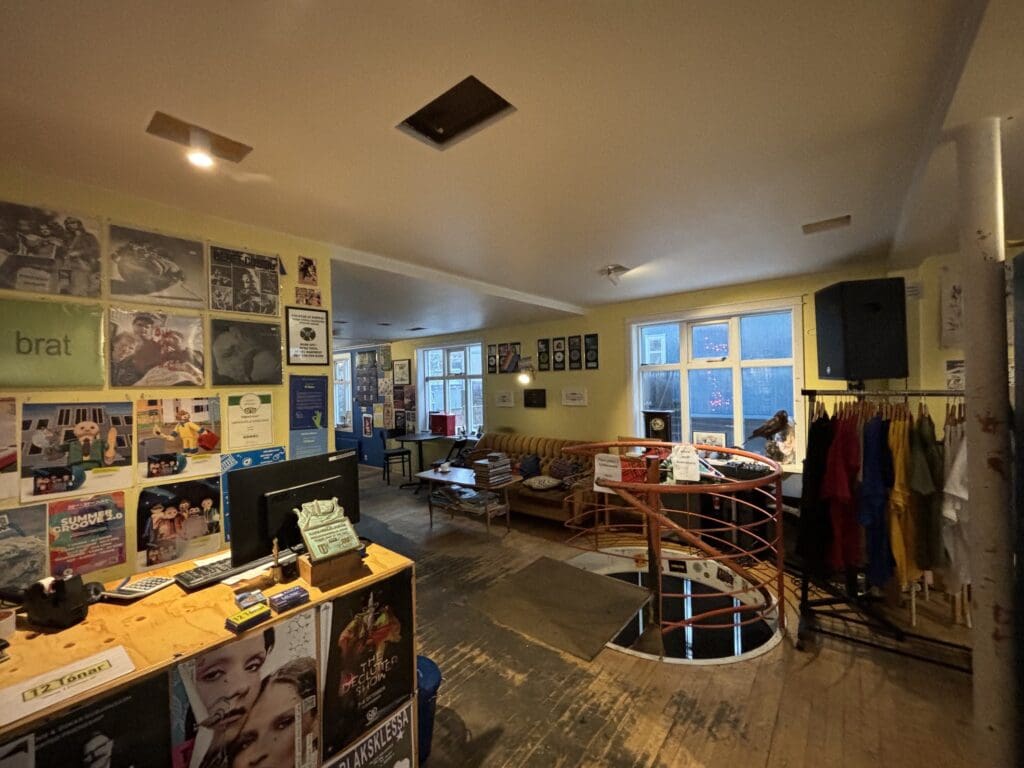
In addition to its rich selection of records, 12 Tónar has also become known as one of Reykjavík’s favorite cafés. Local tourist guides regularly recommend it as one of the best places to relax and an ideal starting point for an evening out.
Furthermore, 12 Tónar occasionally hosts intimate music events and concerts, actively participating in the life of the local scene and further strengthening its status as a cultural meeting point — where music, community, and the city intersect.
Bad Taste Gallery / Smekkleysa
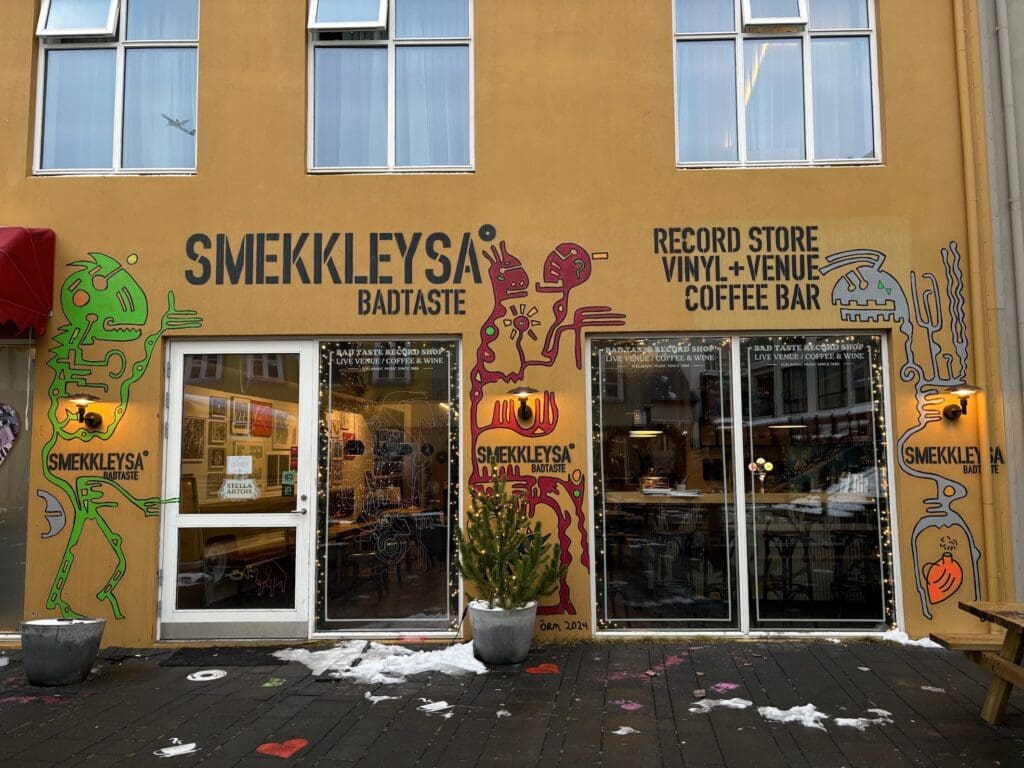
Smekkleysa is a cult landmark in the history of Reykjavík’s popular music scene. It was founded in 1986 by the musicians of Iceland’s then-most successful band, The Sugarcubes, who were the first Icelandic group to step onto the international music stage. The band’s singer at the time, Björk, is today a globally recognized artist and icon.
Originally, Smekkleysa operated as a store for the local independent label Bad Taste (Gram), where, in addition to records, low-budget literary publications, art books, and fashion items were also available.
The store was initially located on Laugavegur, the main pedestrian street, and over the years moved several times before settling today on nearby Hverfisgata, not far from its original location.
Like 12 Tónar, Smekkleysa is now much more than a record store — it also serves as a popular café, a meeting place for music enthusiasts, and a venue for promotions, parties, and concerts. It frequently supports local artists and bands by organizing new release promotions and live performances.
The atmosphere at Smekkleysa is relaxed and unconventional, and one indication of its importance for the Icelandic alternative scene is the fact that Björk occasionally performs DJ sets there. This is no coincidence, as Bad Taste has been a key platform for the promotion of independent and alternative music in Iceland, and the place where Björk’s career began.
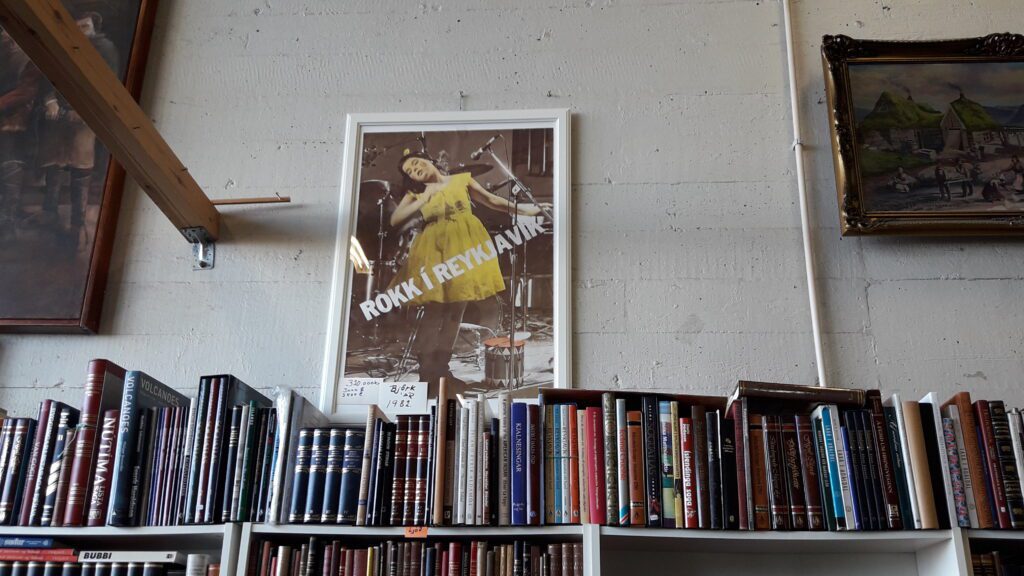
Whether you are searching for rare vinyl, the latest releases, or simply want to explore the Icelandic music scene, record stores in Reykjavík are essential destinations. They do more than sell music: they enrich the city’s cultural life by creating spaces for socializing, exchanging ideas, and conversations among lovers of (Icelandic) music. In a city that may be small but is highly interconnected, these shops remain places where cultural identity is both archived and continually re-produced.
Leave a Reply