
Art Box Portal //
With Transforming Energy (Marina Abramović: “Transforming Energy”), Marina Abramović (b. 1946) entered the history of visual art on May 6, 2026, as the first living woman artist to be honored with a major exhibition at the Gallerie dell’Accademia in Venice. The exhibition is curated by Shai Baitel, Artistic Director of the Modern Art Museum (MAM) in Shanghai, in collaboration with the artist. This is not the first time Abramović has pushed the boundaries of gender visibility in the art world, having already been awarded the Golden Lion at the 1997 Venice Biennale for Balkan Baroque, marking one of the most significant recognitions of performance art in the history of the Venice Biennale.
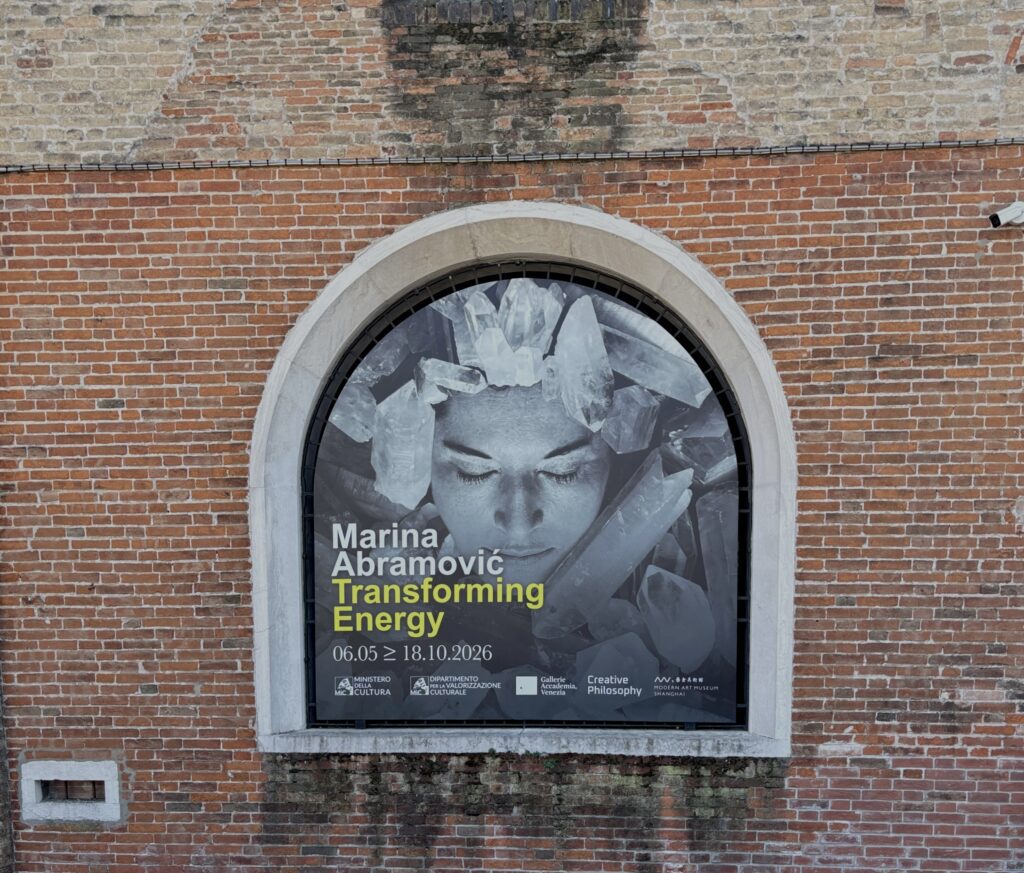
Presented alongside the 61st Venice Biennale, the exhibition marks Abramović’s 80th birthday and establishes a dialogue between her pioneering performance practice and the Renaissance masterpieces that define Venice’s cultural identity.
Abramović’s connection to Venice and the Biennale dates back to her childhood, when she first visited the exhibition at the age of 14, travelling from Belgrade with her mother by train. She has often described this early encounter as formative, recalling her deep impression of the city upon arriving at the train station.
The exhibition also marks her return to Venice as a major figure in contemporary art, following her Golden Lion award at the 1997 Biennale for Balkan Baroque, a work whose geopolitical and emotional resonance continues to echo today. That year, amid the complex post-Yugoslav context, Abramović’s presentation became one of the defining works of the Central Exhibition.
Transforming Energy unfolds across both the permanent collection galleries and temporary exhibition spaces of the museum — a first in its institutional history — embedding Abramović’s work within the core of Venetian cultural heritage. At its centre, the exhibition stages a meeting between past and present, material and immaterial, body and spirit. Visitors are invited to engage with a series of interactive “Transitory Objects” — stone beds and crystal-embedded structures — by lying, sitting, or standing on them, activating what Abramović describes as “energy transmission.” The use of mobile phones is prohibited, and photography is not allowed.
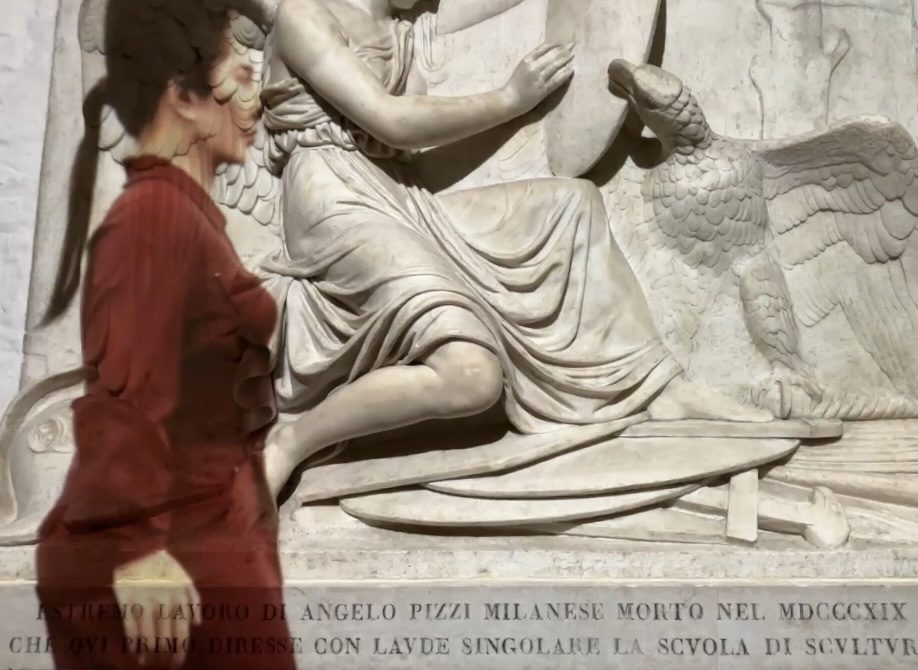
In selected sections of the exhibition, a digital avatar of the artist appears, conceived as her virtual double and an extension of the “Abramović Method,” expanding notions of presence, embodiment, and performance into the digital realm.
“In 1988, Marina Abramović and her long-term collaborator Ulay walked the entire length of the Great Wall of China. During this journey, Abramović spent nights in nearby villages, where she was introduced to traditional Chinese medicine. She became particularly interested in crystals and their relationship to energy and the human body. Over the past three decades, she has continued to explore these energy-based practices, resulting in a body of work titled Transitory Objects. These interactive works aim to connect the human body with the Earth and represent a central curatorial focus of Transforming Energy at the Gallerie dell’Accademia di Venezia,” explains curator Shai Baitel. “Although their energy originates in deep geological time and mineral formations, Abramović activates them through human presence and direct physical contact — standing, sitting, or lying on them. These investigations of transformation, life force, and anatomy connect her practice to early modern understandings of the human body as a site of inquiry and transcendence. Artists such as Leonardo, Michelangelo, and Titian approached the human figure not merely as anatomy, but as a vessel of spiritual, emotional, and poetic meaning, in ways that resonate across time with the metaphysical aims of the Transitory Objects.”
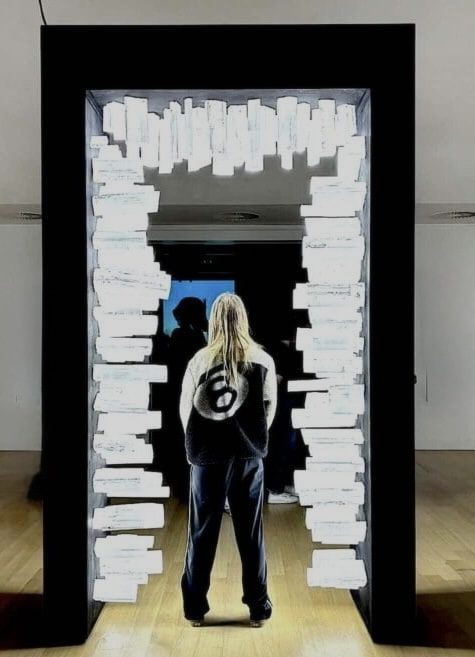
In Venice — a city historically shaped by the circulation of cultures, trade, and rare materials — Abramović’s use of quartz, amethyst, and other natural elements echoes both the Venetian tradition of mosaic and the Renaissance pursuit of material and metaphysical transformation. By placing the visitor’s body at the centre of the work, the exhibition proposes a durational form of attention grounded in presence, participation, and the possibility of inner change.
Iconic works such as Rhythm 0 (1974), Balkan Baroque (1997), and Carrying the Skeleton (2008) are presented alongside early performance documentation, while new works created for this occasion further extend her decades-long exploration of endurance, vulnerability, and transformation.
A key focus of the exhibition is Pietà (with Ulay) (1983), shown in dialogue with Michelangelo’s Pietà (c. 1575–1576), his final, unfinished work completed by Palma Giovane. This historic pairing, marking the 450th anniversary of Titian’s Pietà, reframes Renaissance ideas of grief, transcendence, and redemption through a contemporary lens, highlighting the enduring presence of the human body as a site of both suffering and spiritual elevation.
The exhibition runs until October 19, 2026.
Leave a Reply