
Art Box Portal //
This year’s Japanese Pavilion at the 61st Venice Biennale has become a viral sensation and one of the most visited destinations in the Giardini, thanks to Grass Babies, Moon Babies, an exhibition by Ei Arakawa-Nash (b. 1977), the acclaimed Japanese-American performance artist. In this project by the queer artist, who was born in Fukushima and moved to the United States in his youth, the Japanese Pavilion is populated by baby dolls. Visitors soon discover that there are exactly 108 of them, each weighing precisely four kilograms—the average weight of a three-month-old infant.
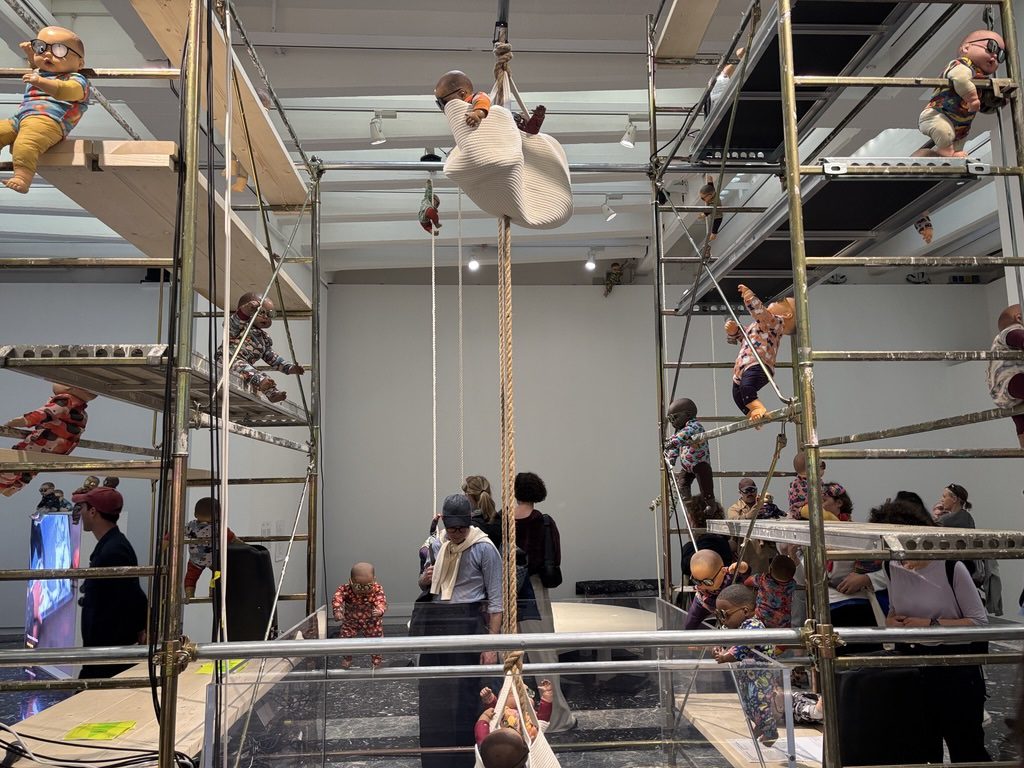
The exhibition Grass Babies, Moon Babies breaks with tradition on several levels. Japan has made a historic decision: for the first time in the nation’s history, the entire team behind its Biennale presentation—the artist as well as curators Lisa Horikawa and Mizuki Takahashi—belongs to the Japanese diaspora, living and working outside Japan. It also marks the first time that an openly queer artist has been chosen to represent Japan with a solo presentation.
Arakawa-Nash found the inspiration for the project in his own life. In 2024, he and his partner became parents to twins through surrogacy. Confronted with the challenges and responsibilities of parenthood, he developed a work that examines contemporary notions of family, surrogacy, same-sex parenting, and collective care.
And how does he do it? By filling the Japanese Pavilion with baby dolls and transforming the act of viewing art into an exercise in shared responsibility—a participatory ritual of rocking infants, changing nappies, and caring for others.
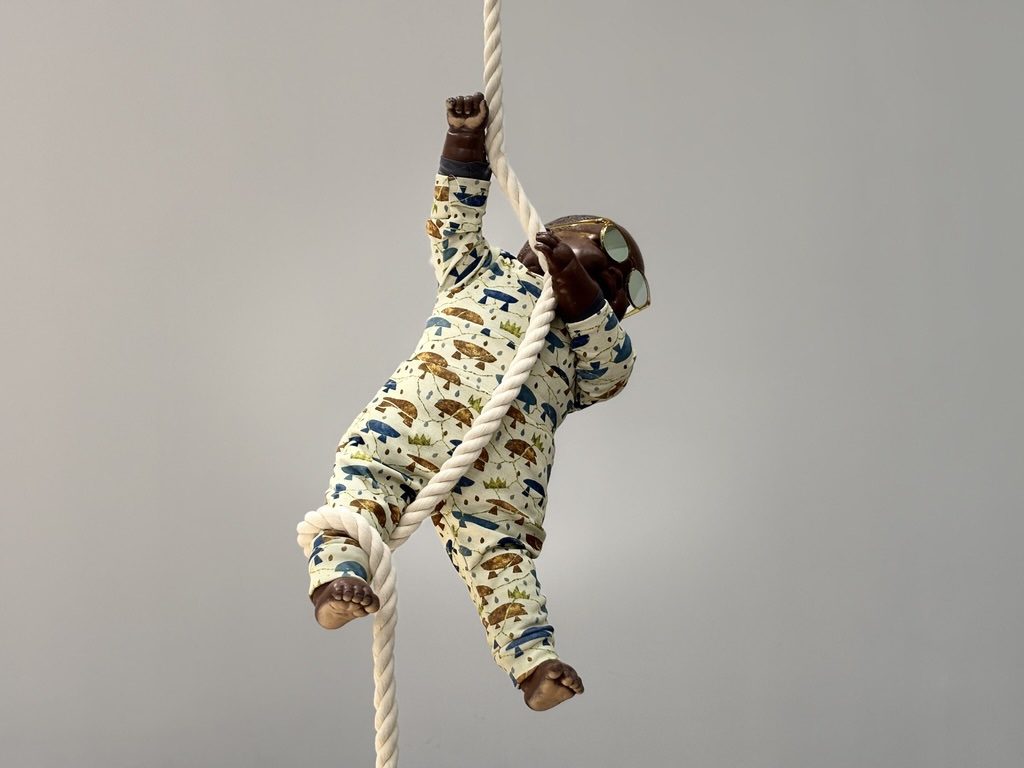
Regardless of the project’s context and underlying message—which is significant in its exploration of collective care in an increasingly atomised world—it is the exhibition’s interactive concept that has drawn crowds to the Japanese Pavilion at the 61st Venice Biennale.
The moment you pick up one of the dolls, your visit ceases to be an act of passive observation. Moving through the pavilion becomes a more mindful experience: your pace slows, your movements grow more deliberate, and your arm instinctively tightens around the “child” you are carrying. What begins as an artwork gradually turns into a subtle exercise in responsibility, care, and attentiveness.
At the same time, as you move through the exhibition space, an unusual scenario unfolds all around you: other baby dolls hang from structures and ropes, “climb” scaffolding, or “stare” at television screens. In one corner, there is a changing table where visitors can read “diaper poems,” while scanning a QR code reveals the individual “birth date” of each baby.
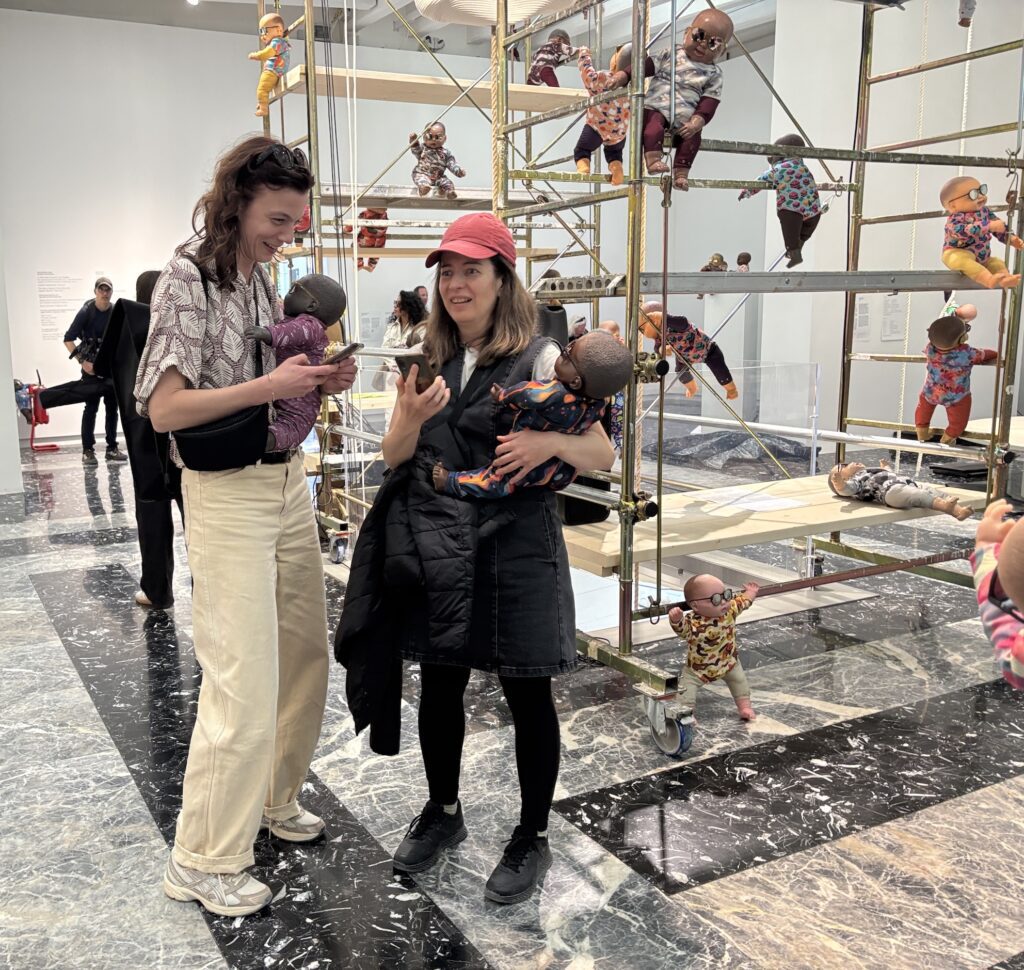
Behind this witty, absurd, and seemingly playful aesthetic lies a sharp critique of contemporary society. By turning visitors to the 61st Venice Biennale into temporary parents or caregivers, the Japanese Pavilion reminds us that, within the context of isolated urban environments, migration crises, and non-traditional queer families, there are those who most often lack institutional support. The work ultimately raises a pressing question: who cares for those who are arriving, and how is community built when traditional bonds and structures are no longer in place?
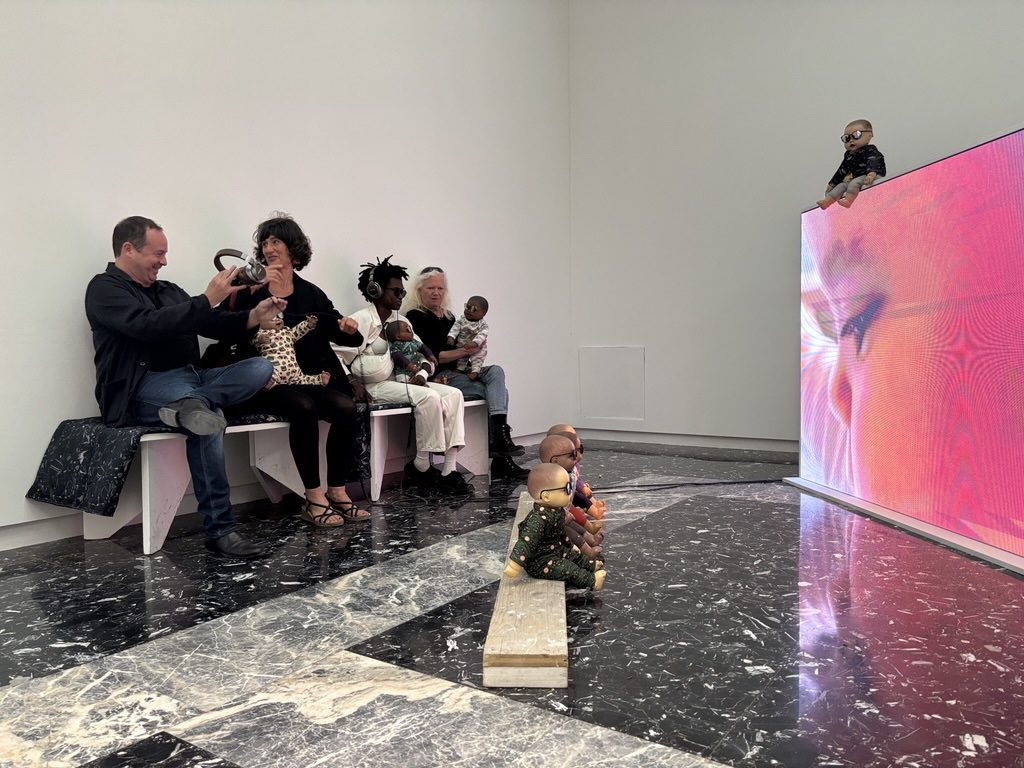
The Japanese artist’s project draws visitors into a performative, interactive narrative in which they are asked, even if only for a brief moment, to assume responsibility for another being. This speaks to one of the most urgent needs of contemporary society—a concern we are, willingly or not, compelled to confront from the very moment we are greeted at the entrance to the Japanese Pavilion by the baby dolls.
Leave a Reply