
Written by: Ljiljana Maletin Vojvodić //
The Royal Academy of Arts Summer Exhibition in London, the 258th edition, once again confirms why it has held a unique position on the London and international art scene for more than two and a half centuries. It has been held continuously since 1769, and this year’s edition runs from 16 June to 23 August 2026. The curator of the exhibition, which explores, under the theme “Interconnectedness,” the relationships between people, nature, technology, and contemporary society, is the internationally acclaimed artist and Royal Academician Ryan Gander.
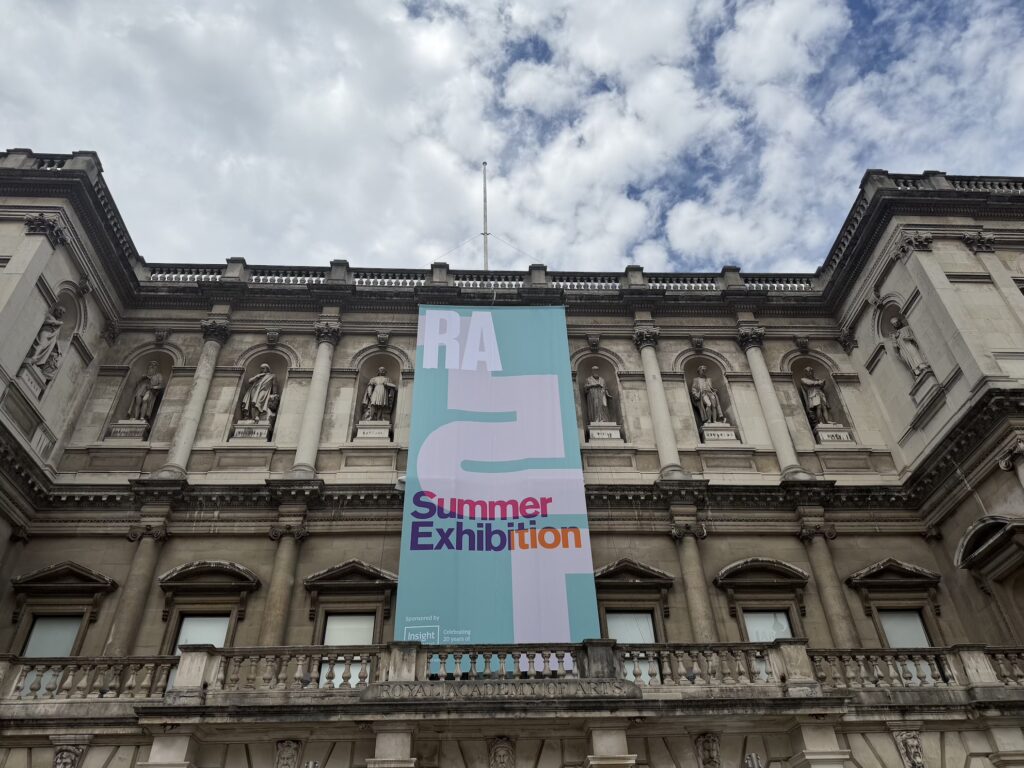
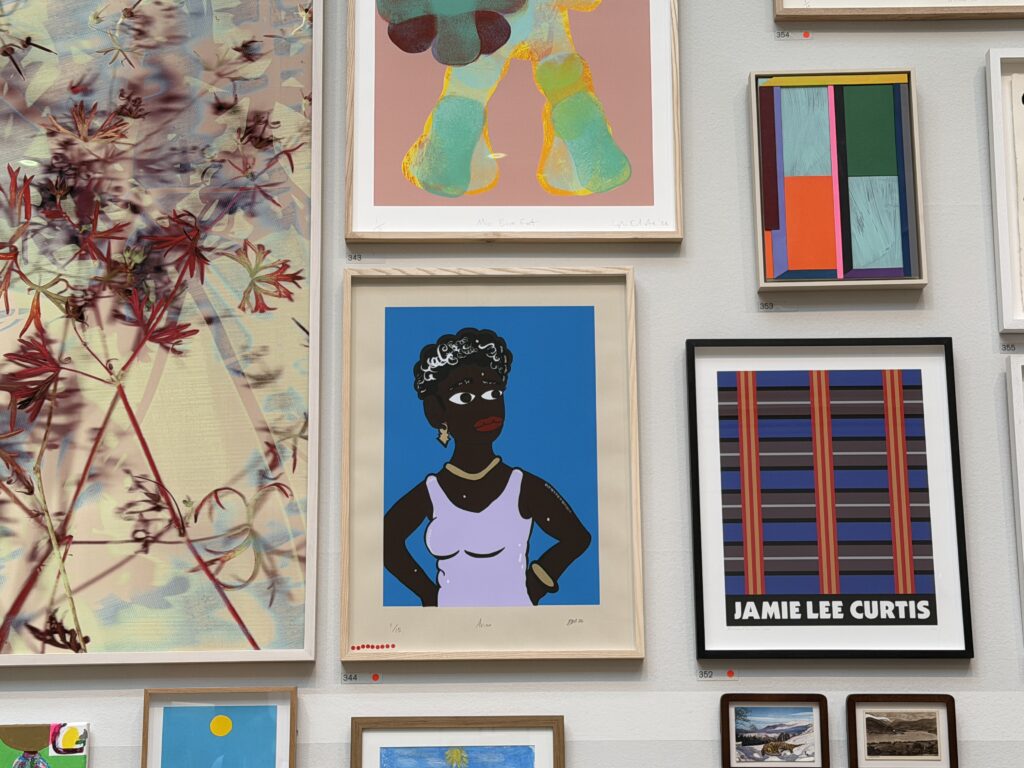
A total of 18,000 submissions from around the world were received for this year’s exhibition. Following a two-stage selection process, more than 1,800 works were chosen, and this is precisely where the greatest value of the exhibition lies: members of the Royal Academy exhibit alongside internationally established artists, emerging practitioners, artists who apply through the open call, and occasionally even well-known figures from other fields.
This year, for instance, Antony Gormley presents a site-specific work Hide (2026), 8.2 metres high, while works by Tacita Dean, Tracey Emin, Anish Kapoor, Grayson Perry, Fiona Rae, Wolfgang Tillmans, Gillian Wearing, and Rose Wylie are also on view. Wylie recently had a solo exhibition at the Royal Academy, which was reviewed by the Art Box portal.
Among the Honorary Royal Academicians exhibiting this year are Joan Jonas, Marina Abramović, the late Georg Baselitz, Jim Dine, William Kentridge, Anselm Kiefer, Mimmo Paladino, and Rosemarie Trockel.
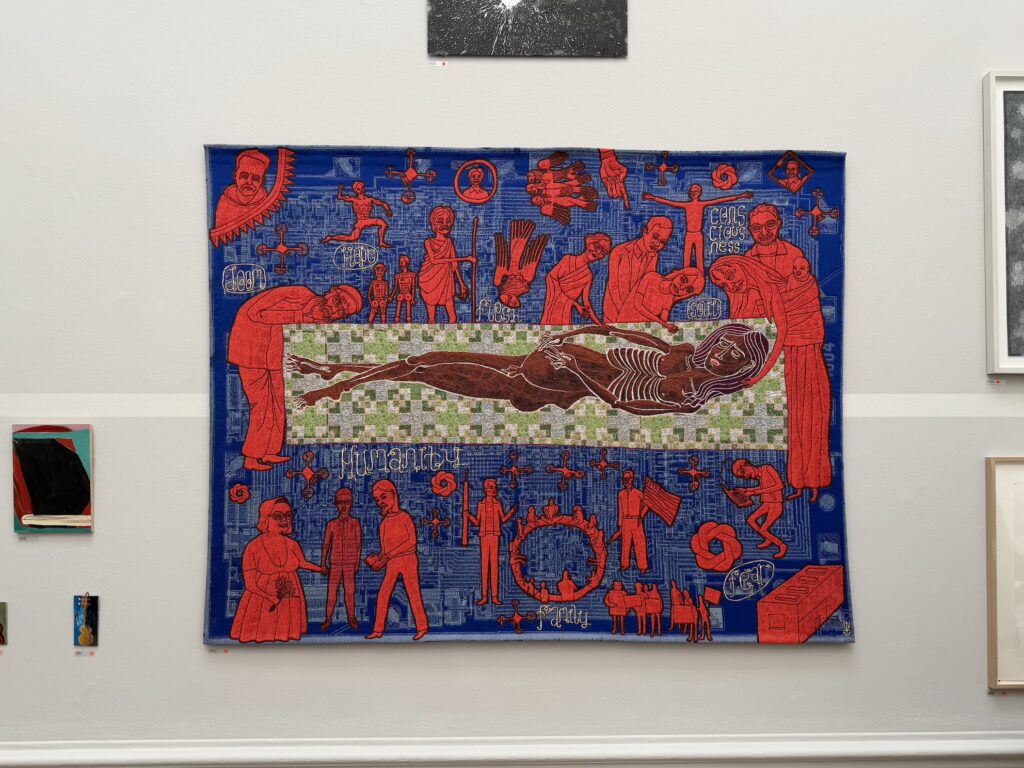
In line with this year’s theme, artworks in a variety of media are arranged so that they enter into dialogue with one another rather than being grouped according to medium. Gander has introduced a unique exhibition device that connects all gallery spaces and contributes to the cohesion of the display: a horizontal line that runs along the gallery walls at eye level. The line is positioned two metres above the floor, with artworks placed either above or below it, and within his curatorial concept there is no hierarchy—major names are shown alongside artists who are only beginning their careers.
However, as the exhibition organisers note, “just as Wimbledon is much more than tennis, and Glastonbury is more than a music festival, art is only one part of the Summer Exhibition experience.” Above all, it is a place of encounter, conversation, and shared experience—a space where visitors come to exchange impressions, spend time together, and take part in a living cultural event, regardless of their prior knowledge of art.
The presence of the public is what makes the Summer Exhibition one of the enduring symbols of British cultural life. Visiting the Summer Exhibition is not only an opportunity to see contemporary art, but also to take a part of that experience home. A large number of exhibited works are available for sale, and many are offered at accessible prices. In this way, the exhibition supports both participating artists and the charitable work of the Royal Academy
This year’s edition also features a rich accompanying programme. The galleries are open late on Saturdays (as well as on Fridays until 9 pm), while the bar within the exhibition space operates from Thursday to Sunday. Every Friday throughout July, from 5 pm onwards, the gallery spaces come alive with DJ performances, creating a relaxed atmosphere in which art can be experienced in a different way.
The Royal Academy Summer Exhibition offers a kind of cross-section of contemporary artistic production in all its diversity of poetics, media, and generations, without the need to impose a single unifying narrative. At a time when art is often presented through closed curatorial frameworks, the Summer Exhibition remains a space where pluralism is a guiding principle of display.
Leave a Reply