
Interviwer: Ljiljana Maletin Vojvodić//
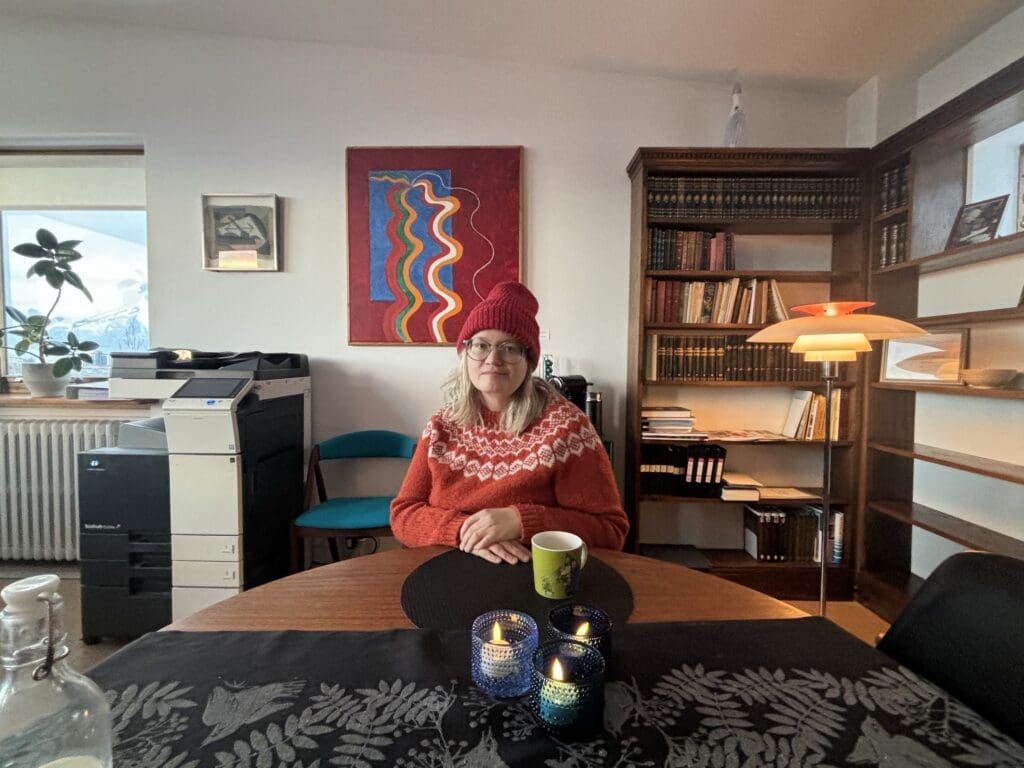
During my stay at the Writers’ Residence in Gunnarshús, Iceland, the home of the Writers’ Union of Iceland, I had the opportunity to speak with project manager Salka Guðmundsdóttir (1981) who shares her first name with a character from the Icelandic Nobel laureate Halldór Laxness’s novel and her surname with arguably the most significant Icelandic artist, Björk (The reason for this is that their fathers’ names are the same, as surnames in Iceland are patronymic). Salka Guðmundsdóttir is a playwright, dramaturg, and translator from Reykjavík, Iceland. She completed a BA in Drama from the University of Wales, Aberystwyth and MLitt in Creative Writing from the University of Glasgow, and an MA in Translation Studies from the University of Iceland. Salka‘s original writing has been published in various forms. In her native country, Salka’s plays have been produced by such companies as Sodid Svid Theatre Company and the Reykjavík City Theatre and her work has also appeared in Scotland, Australia, Germany, Italy, and Denmark.
As a writer and translator, you are deeply connected to the literary scene in Iceland. How has globalization influenced how people consume and engage with literature on the Island today?
I think there are positives and negatives to the influences of globalization. The increased number of immigrants who have joined Icelandic society has boosted the literary scene (and the arts in general), and we now have foreign-born writers creating very exciting prose and poetry in Icelandic as a second language, as well as immigrant writers working in other languages. The cultural scene has grown more diverse as we have moved from a very homogenous society and some of the most interesting developments on the literary scene can be traced directly to this diversification.
The reach of Icelandic literature has also expanded along with easier communication, and dozens of Icelandic writers are being represented in translation in different countries around the world. I think this, too, can foster a dialogue that enriches our literature.
The most challenging and negative effects of globalization, in my opinion, relate to the influence of digital global media on our language. We are seeing a rapid deterioration in the use of Icelandic – partly due to the tourism industry, where English has been put in first place in so many inappropriate ways, totally ignoring the fact that many of our visitors are actually very interested in our language. But this is also due to the fact that English surrounds our children and young people on their gadgets and in the media. They are rapidly losing their Icelandic vocabulary and some even have entire conversations with their friends in English. It has happened extremely quickly, and it is horrifying to compare, for example, older teenagers’ command of Icelandic to that of 13-14 year olds. While there is a lot of public and political discourse about children’s low reading and comprehension skills, politicians rarely seem to connect the dots and realise that putting money into books and other art for children will boost their language skills. So we have this disconnect – endless panicked dialogue about declining reading skills but also disappearing school libraries and a lack of support for children’s literature.
The concept of „Jólabókaflóð“ (the Christmas Book Flood) was a common phenomenon in Iceland. Do you think this tradition still holds today, or have reading habits changed significantly?
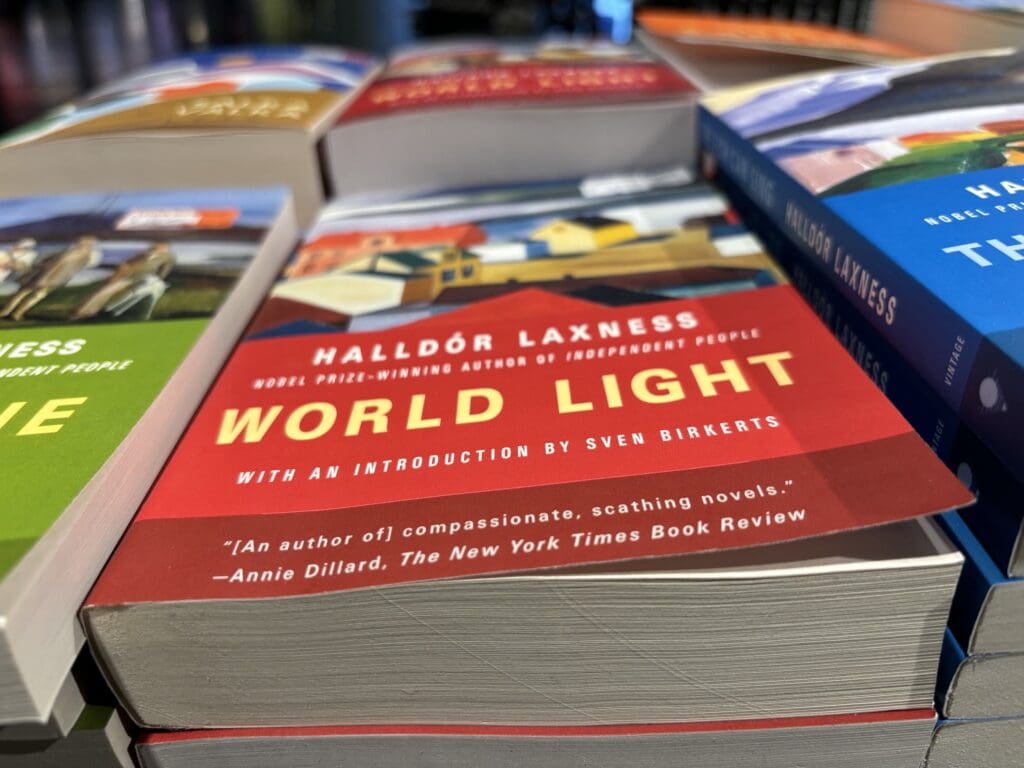
Reading habits have changed as we become more and more fixed to our phones and gadgets, but research shows that people do still read – we want them to read more, of course, but it is still a tradition for very many people to give books as Christmas presents. There is a lot of fairly incorrect information on the jólabókaflóð on international social media, of course, but I do think the interest from overseas might help remind us of its importance. The Christmas season is still our top bookselling period by far and there is a lot of active conversation about books around Christmas. I have been to several family gatherings this January and each and every party has included some discussion about new books, which ones you’ve read, which ones you recommend, what you want to read next, who had a new book out this year … It’s a tradition to keep!
Can you elaborate on the initiatives and activities the Writers Union of Iceland undertakes to promote literature among the local community, especially young people?
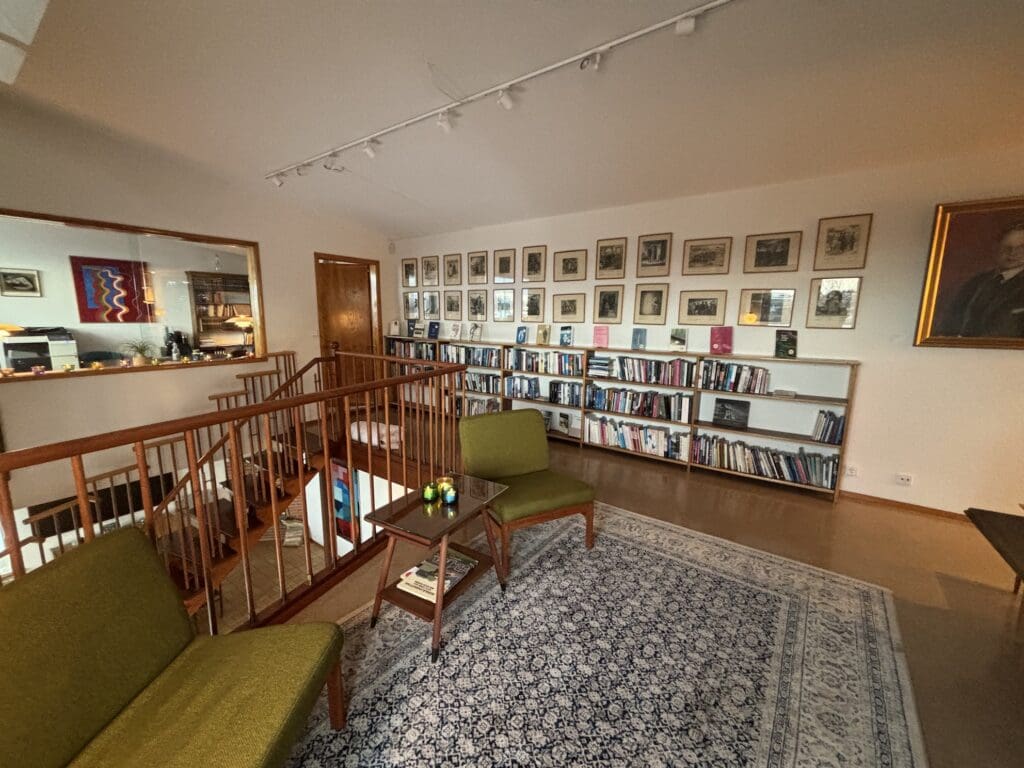
Our focus as a union is to guard our members’ interests, not least when it comes to legal matters, and to create better working conditions for writers. But we also develop initiatives to promote literature in various forms and one project that I manage for the Writers Union is called Writers in Schools (Skáld í skólum). This is something we are extremely proud of. It has been going on for over 20 years now and has brought writers into schools around the country and reached tens of thousands of children and youths. This project involves six authors every year, who work in pairs to create a 40-minute programme that they then take to schools, for different age levels. The focus of the programme is not to promote these writers’ books, but to stimulate the students’ interest in books, literature and creativity.
This year, all our writer pairs were especially keen to encourage the students to use their own voices to write, to create – very inspiring! We emphasise the importance of making the programme available the schools all around the country, and we pay all travel costs for the writers when schools outside the capital area decide to book the programme for their students.
One issue that we are dealing with here in Iceland is access to books – there are large areas of Iceland where no bookstores remain, and where you might only be able to buy a limited selection of books in supermarkets in the weeks before Christmas. School libraries range from fantastically stocked halls to a single shelf in the hallway. Equal access to books, through bookstores and libraries, is one of the points that our current union board is working hard to get across.
In your opinion, what are some of the most pressing themes or styles that dominate contemporary Icelandic literature?
I would say that stylistically, there are highly varied approaches. Some writers are working with the past, some with the present, others are writing into speculative futures. I’ve been reading a lot of the latest releases from 2024, and I have to say it was an excellent year in books, both as regards poetry and prose. I think it’s always difficult to identify themes and currents when you’re in the middle of them, so perhaps in just a few years, I will have a more definite answer to this question!
Does contemporary Icelandic literature now include the voices of immigrants and minorities?
Like I mentioned in the first question, it is finally happening now. The literary scene remained very closed off to new Icelanders for a long time and we were slow to embrace the newcomers. But this is changing, mostly thanks to some excellent initiatives by immigrant writers, whose voices are finally being heard and are playing an important role in the developing literary scene. The Icelandic attitude to language has been characterized by an over-emphasis on “speaking right”, as opposed to using the language creatively. We only recently started hearing people with an accent speak on the radio, for example! Embracing the expression of people using Icelandic as a second language will open a lot of doors.
Iceland has changed immensely over a short period of time and it’s vital that literature reflects all of society, not just a snapshot of a monocultural society that used to be. I think there is a lot of ground still to be gained for various minority groups and the literary scene doesn’t fully reflect all layers of society – for example, I feel that disabled people are very underrepresented when it comes to Icelandic literary fiction. Currently, we have some excellent writers working from a queer perspective and an ambitious new literary festival, Queer Situations, was held for the first time in 2024, bringing both local and international authors to its audience.
Iceland is known as one of the countries with the strongest gender equality standards globally. Is the position of a female writer more challenging compared to that of a male writer, and how much are topics related to feminism, LGBT issues, and minority themes emphasized in contemporary Icelandic literature?
Even though we are statistically speaking one of the most gender equal countries, we still have a long way to go … We can thank several waves of feminist activism for where we are today, but there has also been a backlash recently, both on women’s issues and LGBT+ issues. Like elsewhere, we have both older people and young men being targeted with some quite frightening views on feminism and gender identities. There are many strong feminist strands of writing within contemporary Icelandic fiction.
Just three, four decades ago we had female writers who broke social and artistic barriers by writing about taboo issues such as sexual and domestic abuse, and the reaction was so intense that they sometimes feared for their lives. Today, the scene is very different, and our society has of course changed immensely.
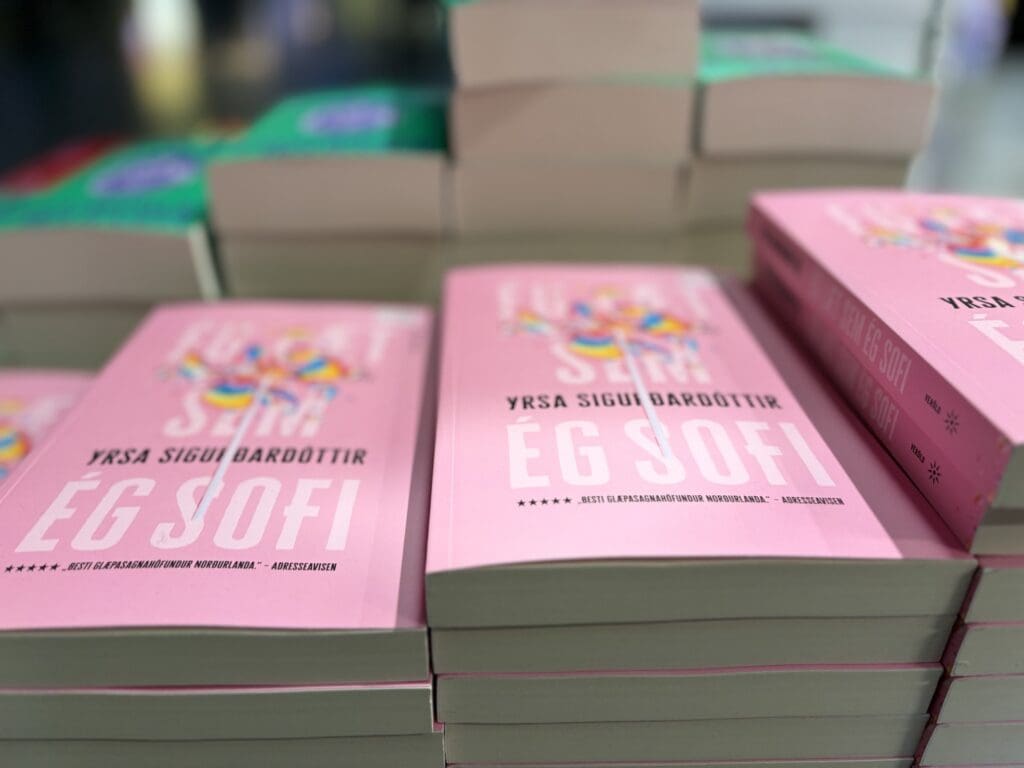
Female writers do face many of the same hindrances as they do elsewhere – there are subconscious biases and established cultural hierarchies that are male-oriented. But our line-up of excellent writers includes a lot of very strong and critically acclaimed women writers, both from older generations and the youngest. Most importantly, the flora of women writers is very diverse; we have women writing crime fiction ranging from hard-boiled to “cosy”, writing autobiographical fiction, poetry, children’s/YA fiction, historical novels, experimental short stories … the list goes on! I think this reflects that fact that women’s voices are strong in Icelandic literature – they are not all singing the same song. In recent years, some of our most interesting new books have dealt with women’s trauma, sometimes in the context of lesbian relationships. I was actually just discussing with a writer friend how we have, in the span of a few years, seen what would once have been compartmentalised as queer writing moving from the fringes to reach a wider audience. We have an annual literary prize here called Fjöruverðlaunin, which is awarded to women and non-binary writers and has played an important part in raising their profile.
Can you tell us a bit about your literary projects?
I have been a member of the Writers Union for around two decades and I first joined because I had been working as a translator since my late teens. I have translated quite a lot of fiction and plays, including Jane Austen’s Emma, Albee’s Who’s Afraid of Virginia Woolf and the musical version of Spring Awakening.
As a writer, I have mostly worked within the stage arts, where I’ve also been active as a dramaturg and producer. I write plays for adults and children; my favourite media is probably the radio play, which is a magical place for me, so full of possibilities while at the same time characterized by creatively helpful boundaries.
Currently, I am not writing much since I have two young children, but those same children are inspiring a lot of stories in my head! My most creative output at the moment is the stories I tell them in bed and at the dinner table, and hopefully, some of those stories will turn into something for a wider audience.
Leave a Reply