
By Dragan Vojvodić //
Seeing The Cure and their iconic frontman Robert Smith live for the first time is, for me, more than an important musical event. As a teenager, I used to listen repeatedly to Faith on a Tosca turntable, at a time when an entire world seemed to be opening up before me. To finally see the band live decades later is therefore also a kind of retrospective—both personal and cultural.
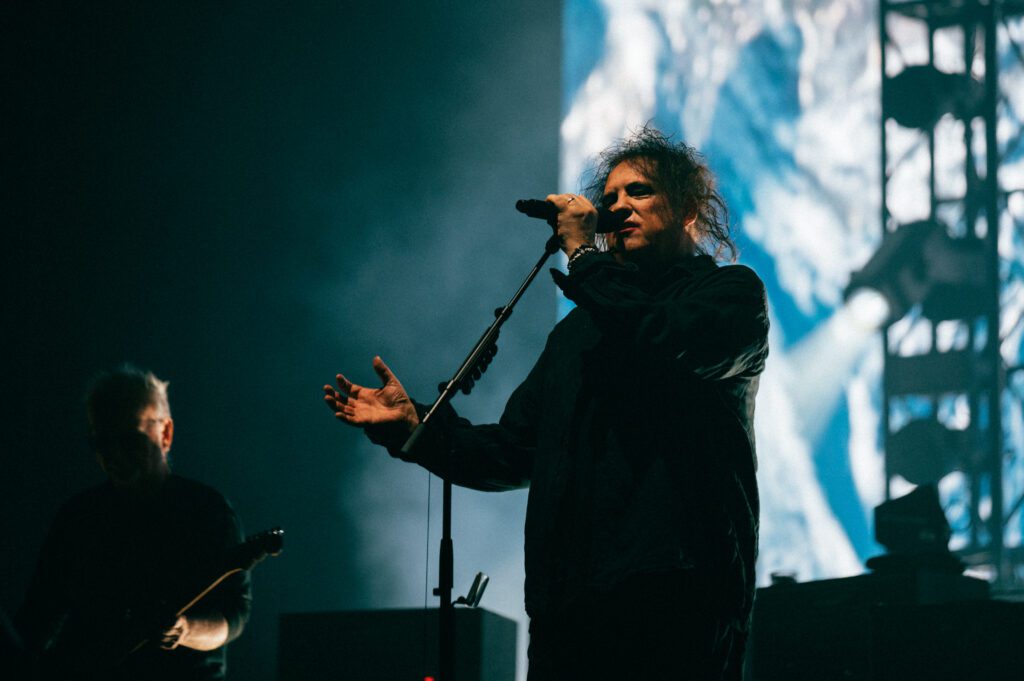
On the second day of the Way Out West festival, The Cure performed as headliners and the closing act on Way Out West’s largest stage, Flamingo, following an outstanding performance by another major figure, Nick Cave. The very positioning of these two acts says a great deal about the influence and significance The Cure still hold after almost five decades.
Unlike Cave, whose energetic performance takes over the entire stage as he runs from one end to the other, descends into the audience and then returns to the stage, Robert Smith remains almost motionless behind the microphone, his gaze fixed somewhere in the distance. He delivers the band’s dark yet melodic hits from the 1980s and 1990s in a voice that is at once dramatic and deeply poetic.
The setlist, carefully shaped for this festival appearance, moved through the key periods of the band’s career—Kiss Me, Kiss Me, Kiss Me, Disintegration, Wish, The Head on the Door, Seventeen Seconds… Although the concert opened and closed with songs from their latest album, Songs of a Lost World, which has received widespread critical acclaim, the selection also demonstrated that The Cure are far from a band that has exhausted its creative potential.
The Cure still sound like the band that, in the 1980s, helped define British dark post-punk through their celebrated trilogy of Seventeen Seconds, Faith and Pornography. It was a period in which they developed slower, more atmospheric compositions, moving away from the mainstream currents of new wave and creating a hypnotic, introspective sound. Smith’s voice, set against minimalist guitar work, created a distinctive atmosphere of alienation, melancholy and existential unease.
Like Nick Cave, The Cure clearly continue to attract new generations who never had the chance to see a young Robert Smith on stage. At first glance, almost nothing seems to have changed in the visual or sonic language of the performance. Smith remains faithful to the look established in the earliest days of the band: red lipstick, black eyeliner and his unmistakably dishevelled hair, all strongly associated with the post-punk and new wave era. Everything that made him one of the most recognisable figures in British—and global—alternative culture is still there.
Watching and listening to The Cure in 2026 at Way Out West is almost a surreal experience. It is difficult to escape the feeling that you are looking at one of the most recognisable figures in rock culture, a man who has been present on stage for almost five decades. Yet Smith now stands before the audience as an almost ghostly version of the androgynous young man from the beginning of his career. It is precisely in this tension between physical appearance and artistic identity that something deeply fascinating emerges. His performance and his voice remain remarkably powerful and unmistakably his own.
Robert Smith is an artistic figure who has survived an entire era and continues to exist as a living relic of his own aesthetic and of alternative culture.
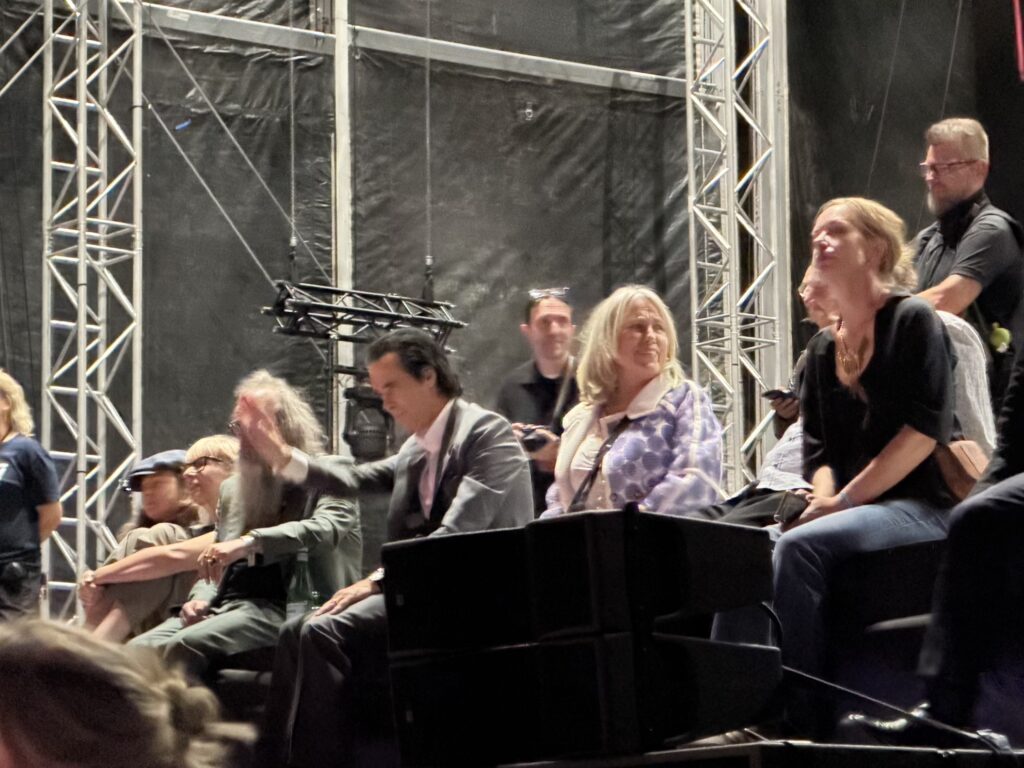
Perhaps the clearest proof of his almost hypnotic appeal and enduring significance came after The Bad Seeds had finished their own performance on the opposite stage. Nick Cave and the entire band remained there for the full 90-minute set, watching and listening to The Cure. Even one generation of alternative music’s defining figures stayed to witness another.
Leave a Reply