
Ljiljana Maletin Vojvodić //
Marking 250 years since the collection’s founding in 1776, Collecting for the Future / 250 Years of the ALBERTINA Museum, presented at the Albertina Museum from 19 June 2026, reopens the story of the ALBERTINA not as a fixed historical narrative but as a living archive whose meanings continue to shift.
What began as a private aristocratic collection today encompasses more than 1.2 million works and ranks among the world’s most significant repositories of graphic art, drawings, prints, and photography. Yet rather than focusing exclusively on institutional grandeur, this exhibition directs attention toward the mechanisms, decisions, and personal relationships behind collecting itself.
While the role of Duke Albert of Saxe-Teschen in founding the collection is well established, the exhibition’s most significant curatorial gesture lies elsewhere: in foregrounding the contribution of Archduchess Marie Christine, the favorite daughter of Empress Maria Theresa, who worked alongside Albert in systematically shaping the collection. By doing so, the exhibition subtly but decisively questions the gendered structures through which museum histories are usually written.
Rather than presenting collecting as an act of neutral accumulation, Collecting for the Future examines it as a form of cultural power: a process shaped by taste, politics, access, and historical circumstance. Which artists entered the collection first? Why were certain names privileged over others? At what moments did key acquisitions transform the identity of the institution itself? These questions remain central throughout the exhibition.
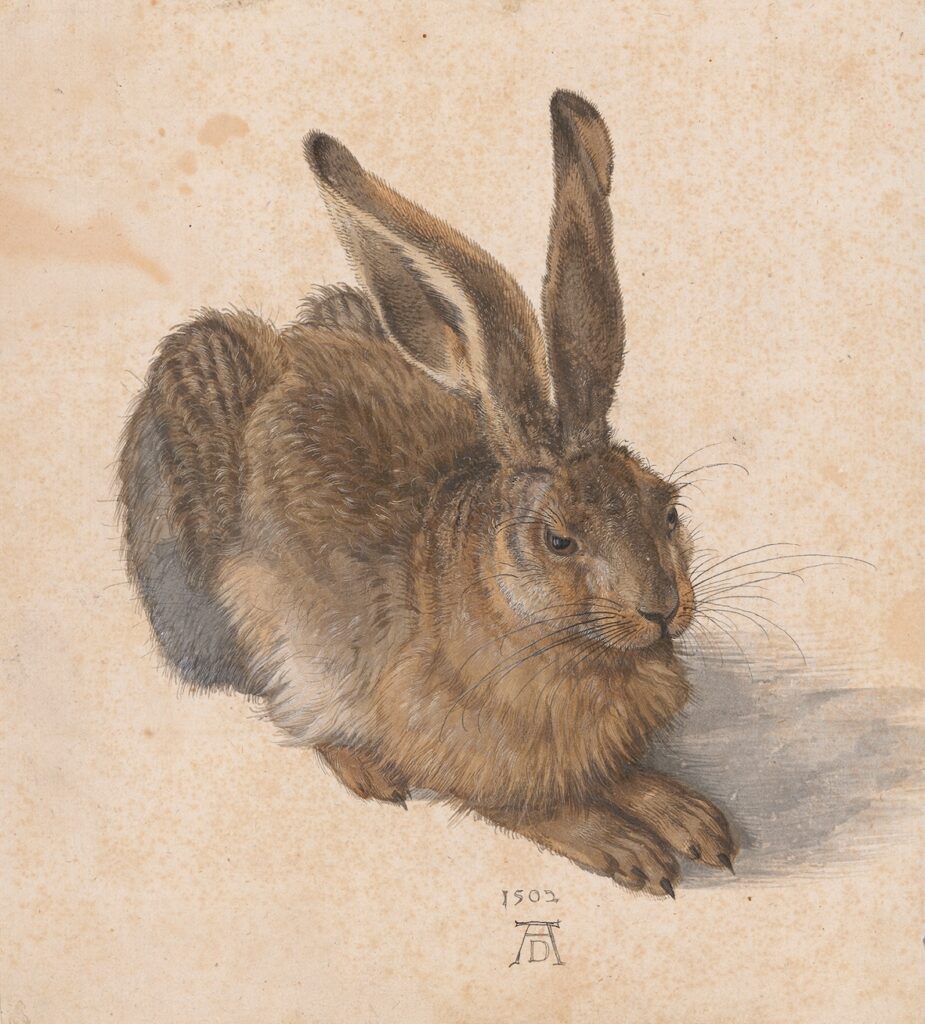
Among the most anticipated works on view is Albrecht Dürer’s iconic Young Hare (1502), rarely exhibited due to strict conservation requirements. Its appearance here inevitably attracts public attention, but the exhibition avoids reducing itself to a spectacle of masterpieces. Instead, works by figures such as Albrecht Dürer and Egon Schiele are positioned within a broader narrative about how collections are constructed, legitimized, preserved, and continuously reinterpreted.
The exhibition’s title, Collecting for the Future, ultimately proves to be more than a commemorative slogan. It suggests an institutional attempt to rethink the museum not only as a guardian of the past, but also as a space capable of confronting its own blind spots. At a moment when major European museums are increasingly reassessing inherited historical narratives, the ALBERTINA’s anniversary exhibition participates in a wider conversation about visibility, authorship, and the politics of cultural memory.
On view until October 11, 2026, the exhibition offers not only an encounter with extraordinary works, but also a rare opportunity to observe how a museum chooses to narrate — and renegotiate — its own legacy.
Leave a Reply