
Art Box portal //
Organized by the European Cultural Centre, the exhibition “Gaza – No Words – See the Exhibit” opened on 9.5. 2026. at Palazzo Mora, curated by Faisal Saleh. The project is an artistic initiative that bears witness to experiences of crisis and destruction through contemporary visual practices.
In the lead-up to the 61st Venice Biennale, protests opposing the festival’s decision to include official pavilions from Israel and Russia were initiated by the Art Not Genocide Alliance, which had previously mobilized hundreds of activists to block the entrance to the Israeli pavilion with banners reading: “No artwashing genocide.”
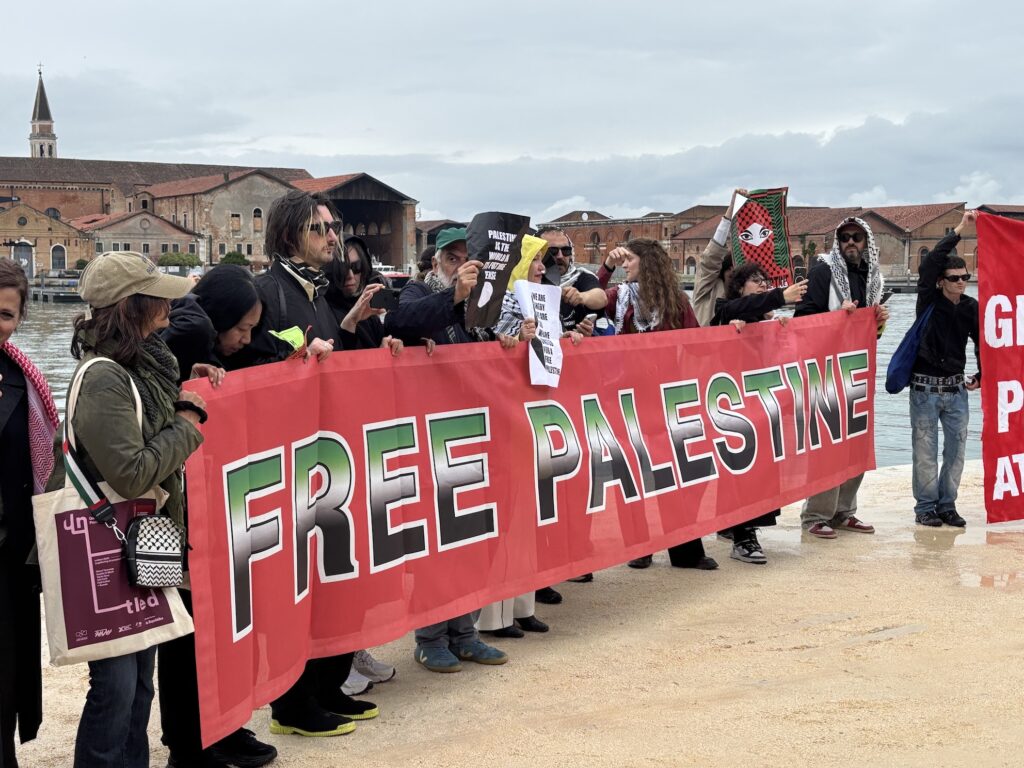
Within the broader framework of the Biennale, a segment of the artistic community also launched an open letter calling for a reconsideration of Israel’s participation in the 2026 edition. According to the same initiative, the letter was signed by several hundred artists and cultural workers, including participants in national pavilions and the main exhibition In Minor Keys, opening one of the key ethical and political debates of this year’s Biennale.
One week before the opening, the five-member Biennale jury resigned, stating that they would not evaluate participants from countries whose leaders are accused of crimes against humanity before the International Criminal Court, including Israel and Russia.
At the same time, Italy still does not recognize the State of Palestine, which is why Palestinians do not have an official national pavilion.
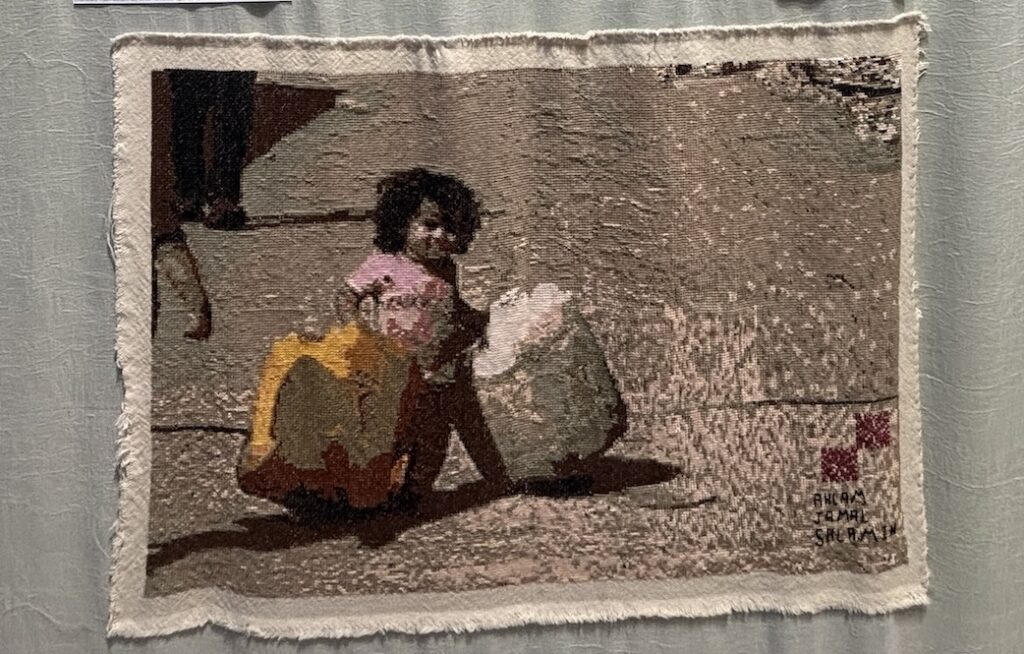
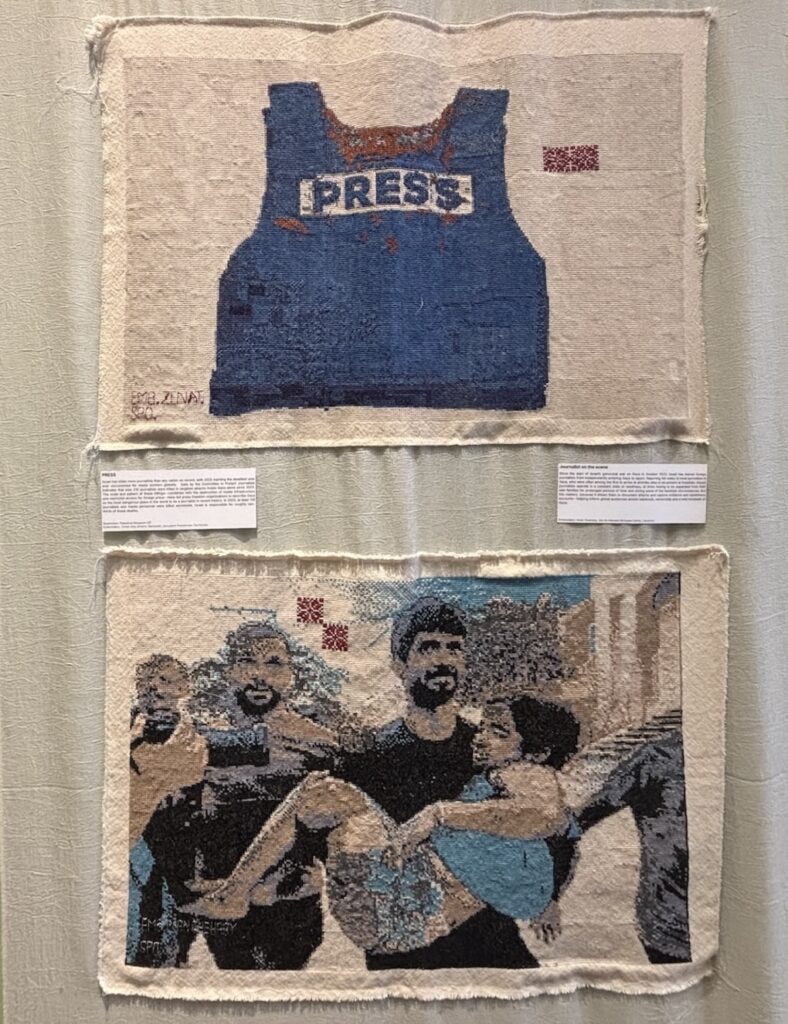
In this context, one of the 31 collateral events of the 61st Biennale places Palestinian voices at its center. The exhibition “Gaza – No Words – See the Exhibit”, organized by the Palestine Museum US, presents 100 works of traditional Palestinian tatreez embroidery in Venice. Each work, created as a reinterpretation of photographs from Gaza, was made by Palestinian women in refugee camps in the West Bank, Lebanon, and Jordan, forming what the organizers describe as a “tapestry of Gaza.”
The project is curated by Faisal Saleh, a Palestinian-American entrepreneur and founder of the Palestine Museum US. Born into a family displaced during the 1948 Nakba, he grew up in Ramallah and later moved to the United States, where he established the first Palestinian museum in the country.
During the opening days of the Biennale, thousands of visitors — including many who did not come specifically for the festival — passed through this free exhibition in the center of Venice. Viewed up close, the intricate embroidery reveals its material structure, while from a distance the works form images based on photographic documentation of war.
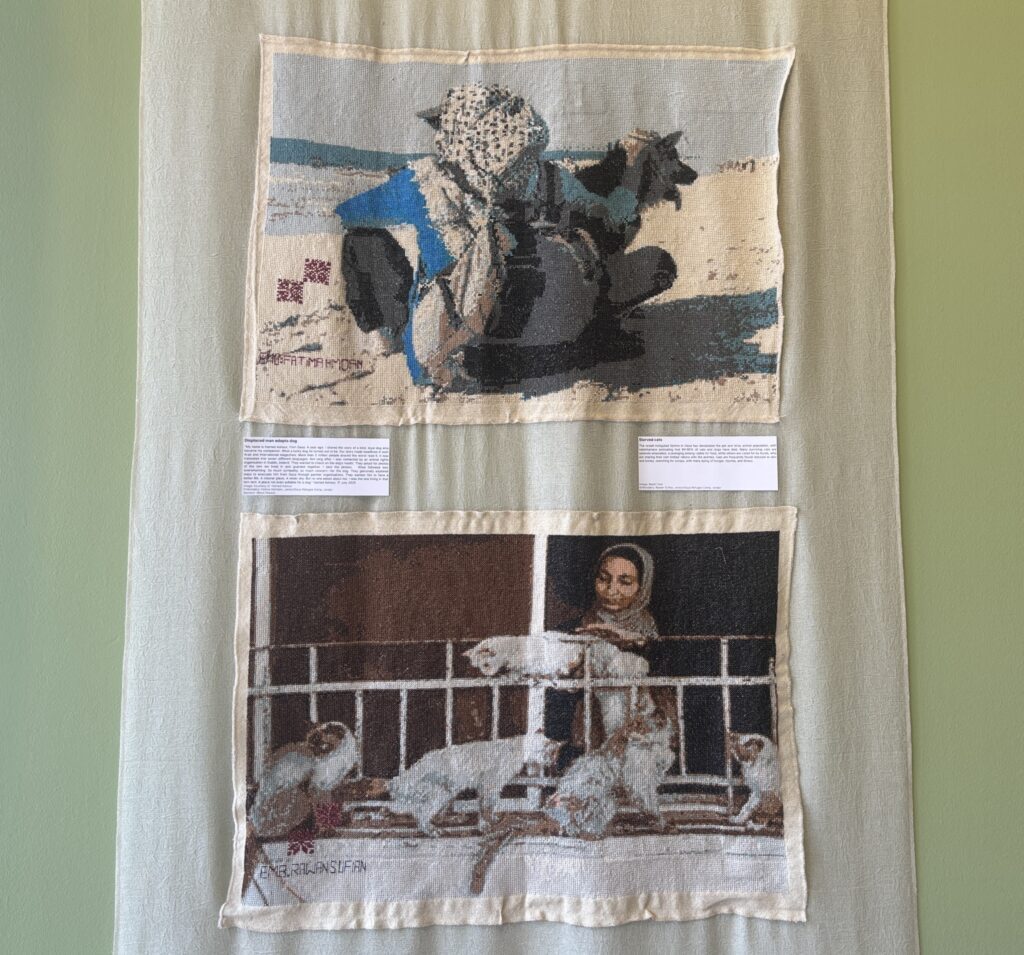
Curator Faisal Saleh emphasizes that the project aims to confront audiences with reality, as well as to insist on memory, accountability, and justice. He explains that the decision not to use direct photography stems from a desire to avoid media saturation and that the embroidery process slows down perception, allowing for a more reflective engagement with the image. Each work contains tens of thousands of stitches and is produced over several months, gradually forming through the labor of handwork.
Within the framework of the 61st Venice Biennale, the opening at Palazzo Mora, organized by the European Cultural Centre, carries a dual dimension — as both an artistic event and a space of intense political and cultural reflection. The exhibition “Gaza – No Words – See the Exhibit” thus positions itself not only as an art project, but also as a testimony within a broader discourse on the role of art in contemporary crisis realities.
The exhibition at Palazzo Mora in Venice, hosted by the European Cultural Centre, will run until November 22, 2026.
Leave a Reply