
Dragan Vojvodić //
The exhibition Helter Skelter: Arthur Jafa and Richard Prince (Fondazione Prada, 9 May – 23 November 2026), located in the Venetian palace Ca’ Corner della Regina, presents a dialogue between the works of two prominent American artists that has not previously been considered in this way. The exhibition is curated by Nancy Spector, former Artistic Director and Chief Curator of the Solomon R. Guggenheim Museum in New York.
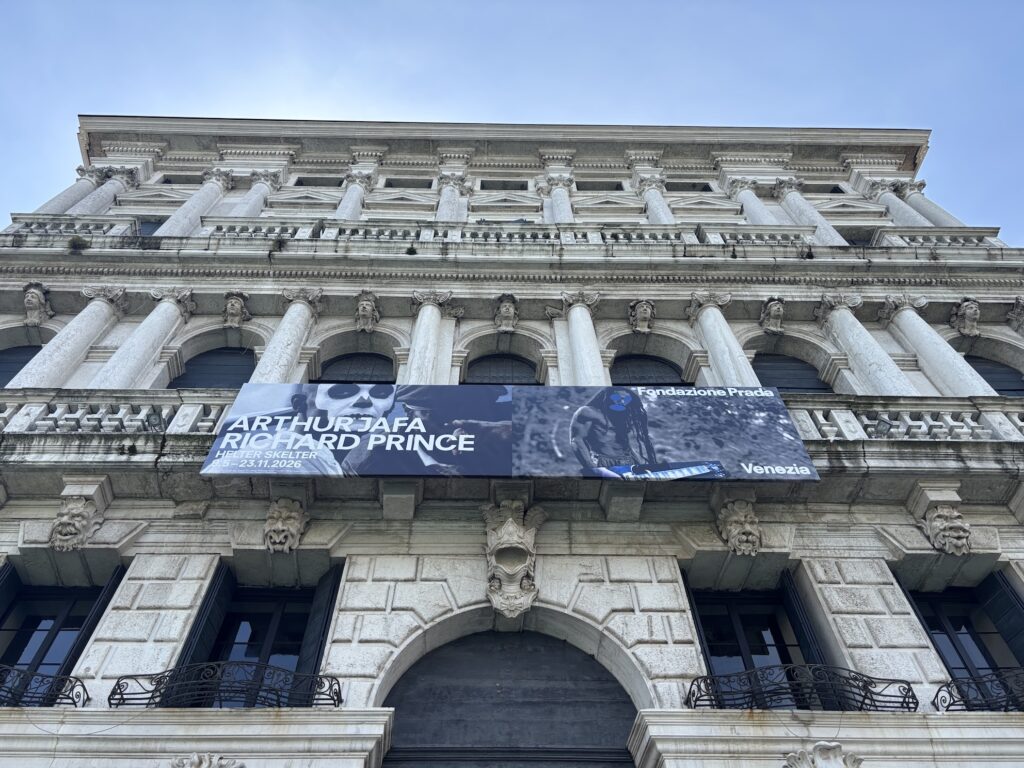
“America is a demonic state – and we love it.” (Arthur Jafa)
Helter Skelter unfolds across the ground and first floors of the Venetian palace through a series of thematic and conceptual juxtapositions, combining works by both artists, their practices, shared themes, and recurring obsessions. It reveals a specific language of everyday life in the United States, where both artists live and work, which, as the curator writes, is “a country forever marked by the history of slavery; a country defined by extraordinary musical traditions rooted in Black culture; a country of survival and improvisation; a country of spirit, prayer, and freedom of expression; a country of protest, subcultures, humor, and celebrities.”
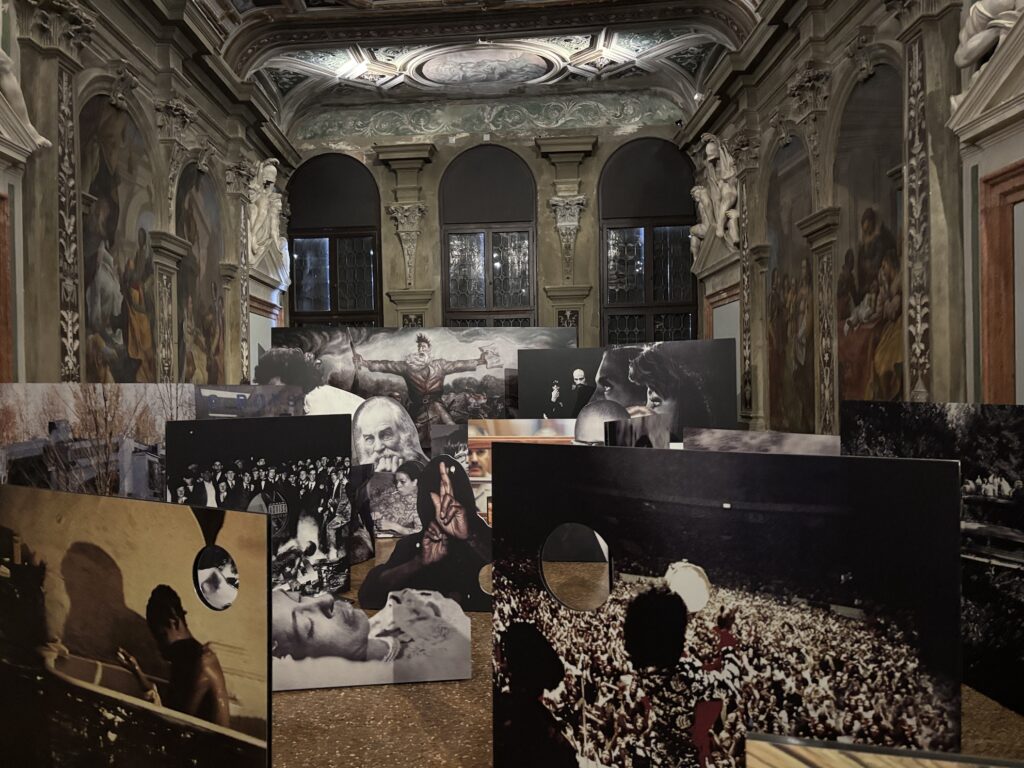
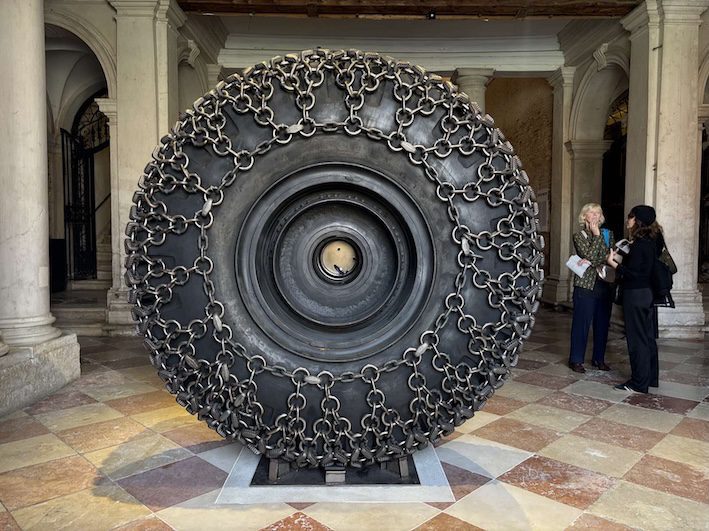
The Helter Skelter exhibition features more than fifty works, including photographs, video works, installations, sculptures, and paintings. It also presents new works by both artists, as well as a collaboratively conceived fanzine that includes images exchanged during the preparation of the exhibition.
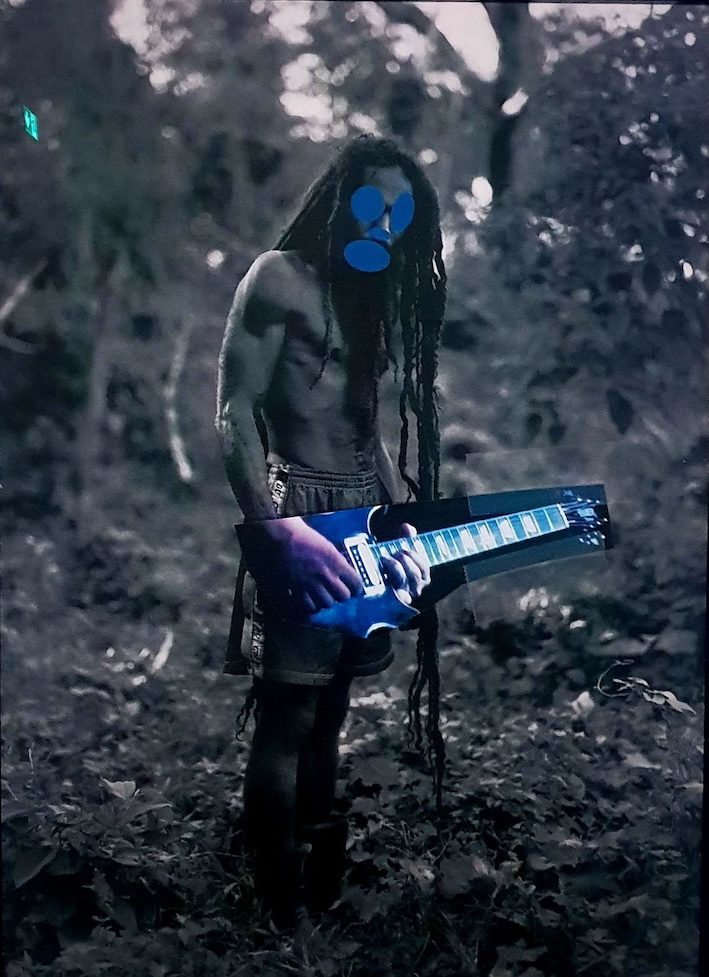
The artistic practices of these two American artists, who belong to different generations, are united by a consistent reliance on appropriation and manipulation. Both draw on materials taken from films, popular culture, the internet, marketing campaigns, comics, record covers, celebrity archives, social media, works by other artists, and widely available public sources. Although they share similar methodological principles, Jafa and Prince approach American visual and ideological reality in different ways, engaging with both its cultural and political heritage and its triviality, consumerism, violence, and spectacle.
The title of the exhibition, Helter Skelter, brings together multiple layers of associations and references, including its misuse in popular culture. Originally, it referred to a fairground ride, while in everyday language it signifies chaos and disorder. At the same time, it is the title of a 1968 song by Paul McCartney, released on the Beatles’ iconic White Album. Later that same year, cult leader Charles Manson appropriated the term and reinterpreted it as a prophecy of an impending apocalyptic racial war between African Americans and white people. Helter Skelter was also the title of a 1992 exhibition held at the Museum of Contemporary Art in Los Angeles, which was criticized for excluding Black visual artists.
Richard Prince, one of the most controversial figures on the contemporary art scene, known for a radical practice of appropriating existing images, dissolves in his work the boundaries between original and copy, authorship and appropriation, art and mass culture. His approach is often marked by irony and ambivalence, simultaneously critiquing American culture while also affirming it through a fascination with its visual language.
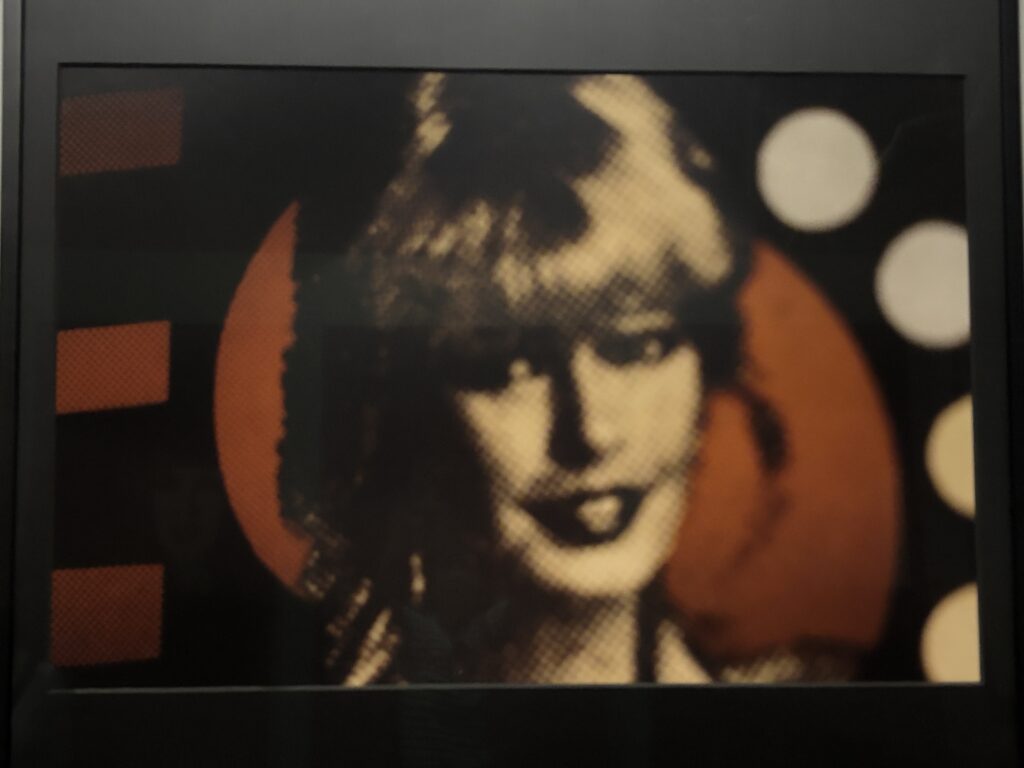
A key concept in his practice is appropriation, as well as re-photography—a process through which, among other things, he re-photographed posters from Marlboro advertising campaigns featuring cowboys, relocating them from the domain of marketing into the space of art, and thereby questioning the construction of American identity, particularly the idealized image of the white male.
Starting from the idea that contemporary society is based on the consumption of images, Prince demonstrates that identities and desires are no longer formed through “authentic experience,” but through advertising, media, and popular culture. In this system, advertising does not merely sell a product, but also a fantasy of identity. His artistic gesture therefore involves the direct appropriation of existing images and their recontextualization, without the need for aesthetic transformation, suggesting that art and advertising share the same visual language, that the “original” loses its canonical meaning in contemporary culture, and that authorship becomes secondary to the circulation of images.
Arthur Jafa maps the complex layers of American society, with a particular focus on the African American experience. Starting from his own identity, he explores the history of racial relations in the United States, from the legacy of segregation to contemporary cultural forms shaped by music, sport, religion, and everyday communal life, which are not only part of American culture but also its key constitutive elements.
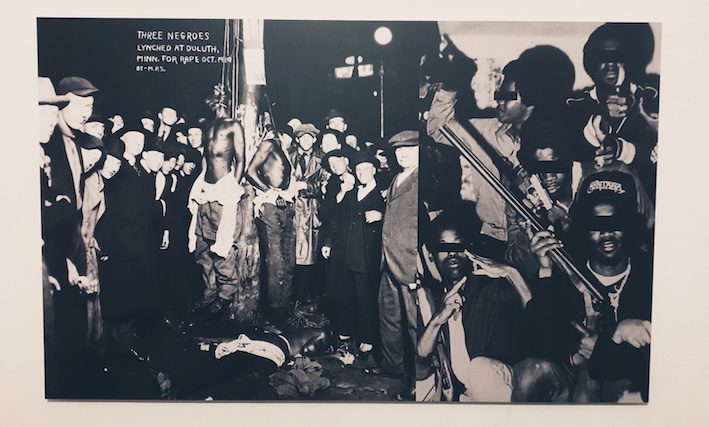
Within the exhibition, Arthur Jafa consistently employs appropriation and montage of archival and contemporary materials—from YouTube footage and television broadcasts to images of violence, sport, music, and religious rituals. His works are created through an intensive editing of fragments into emotionally and politically charged video compositions that move between documentary, essay, and visual poetry.
Central to his practice are Black musical traditions, representations of the body, mediated images of violence, religious ecstasy, the political history of the United States, and everyday gestures within African American culture. Visually, his video works, such as Love is the Message, The Message is Death (2016), appear fragmented and intense, aiming to produce a strong emotional and physical impact on the viewer, while sound, as an equally significant carrier of meaning, shapes the perception of space and time.
Both Jafa and Prince, in their practices, draw on the legacy of Marcel Duchamp and the concept of the readymade—that is, the radical displacement of objects from the real world into an artistic context. In this sense, both use existing images as material, transforming them into art through the very act of selection and recombination.
Leave a Reply