
Ljiljana Maletin Vojvodić //
When people think of libraries in Helsinki, Oodi is usually the first one that comes to mind. The city’s striking central library, with its ship-like silhouette, has become an architectural landmark. Alongside its extensive book collection and reading areas, it offers restaurants, cafés, digital workshops, recording studios, and a wide range of public spaces. However, if you are looking for a place that feels more like the setting of a historical film than a contemporary cultural centre, your destination should be the National Library of Finland (Kansalliskirjasto).

While Oodi represents the future of libraries, the National Library of Finland embodies their memory. As the country’s oldest and largest academic library, it preserves not only books but also the history of Finnish culture and publishing. What makes it particularly remarkable is that its doors are open to everyone—free of charge. Students, researchers, writers, and visitors alike are welcome to explore one of Helsinki’s most magnificent historic buildings.
Its interior is widely regarded as a masterpiece of European Neoclassicism. The main building, completed in 1845 and designed by architect Carl Ludvig Engel, is defined by elegant marble columns, richly decorated ceiling frescoes, and a magnificent domed reading room that evokes the atmosphere of Europe’s great historic libraries.

Eighteen metres beneath the ground, carved directly into the bedrock, lies a remarkable underground “book cave.” Together with the above-ground facilities, it provides an astonishing one hundred kilometres of shelving dedicated to preserving the library’s collections.
As one of the guardians of Finland’s national identity, the library today houses around three million books, journals, maps, posters, manuscripts, and other materials. Thanks to Finland’s legal deposit system, every publication printed in the country since 1488 has found its place here, making the collection an invaluable record of the nation’s cultural history.
At the same time, the library is far from being a monument to the past. It continues to digitise its collections, allowing users around the world to search and access a significant portion of its holdings online. Through close collaboration with libraries, museums, and archives in Finland and abroad, it successfully combines its traditional role as a guardian of cultural heritage with the demands of the digital age.
The library is open to visitors from Monday to Friday. Before entering the reading rooms, visitors are asked to leave their coats and bags in the free lockers at the entrance, silence their mobile phones, and embrace the quiet—a rare luxury today, even in Finland.
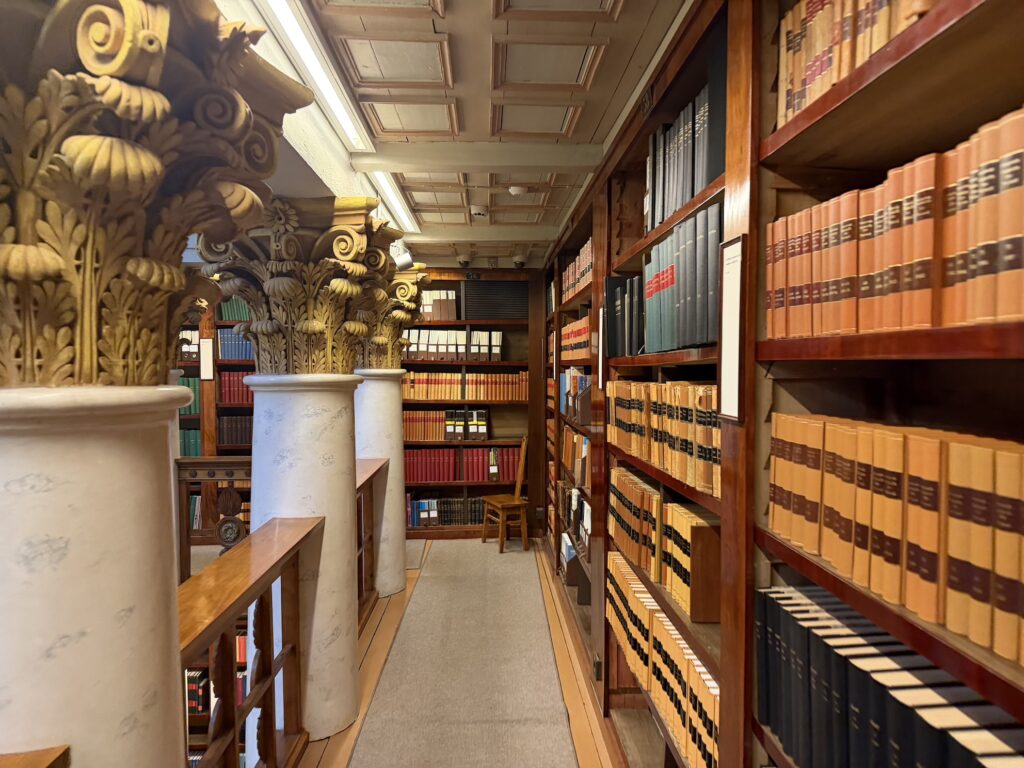
Choosing between Oodi and the National Library of Finland is not really a question of which library is better, but of what kind of experience you are looking for. Oodi is a vibrant public space where books exist alongside contemporary culture, architecture, technology, and the rhythm of everyday urban life. For those who enjoy being surrounded by people, appreciate a variety of cultural activities, and like the idea of taking a break for a coffee or lunch between reading sessions, Oodi is undoubtedly the perfect choice.
The National Library of Finland, on the other hand, remains one of the few places where silence is not merely respected but valued. It is an essential destination for anyone wishing to read without distraction, write with concentration, or devote themselves to serious research. In an age of constant notifications and endless interruptions, its calm atmosphere reminds us that knowledge—and perhaps the best ideas—still flourish in silence.
Leave a Reply