
Art Box portal //
A major and long-anticipated solo exhibition by Anish Kapoor is on view at London’s Hayward Gallery from 16 June to 18 October 2026. One of the most influential artists of our time, Anish Kapoor returns to the Hayward Gallery, where he staged his first major UK retrospective almost 30 years ago. This new exhibition revisits and expands the artist’s long-standing engagement with perception, scale, and materiality, situating his practice within both its historical context and its continued contemporary relevance. As part of the gallery’s 75th anniversary celebrations, the exhibition is curated by Ralph Rugoff and also marks his final show as Director of the Hayward Gallery, concluding a 20-year tenure in the role.
Over the course of his decades-long career, Kapoor has become known for ambitious, monumental works such as Sky Mirror and Cloud Gate in Chicago (commonly known as The Bean).
Kapoor’s exhibition at the Hayward Gallery fills the entire building with a series of immersive works, introducing striking voids, optical illusions, and large-scale installations of polished stainless steel on the external terraces that distort and invert the panoramic view of London.
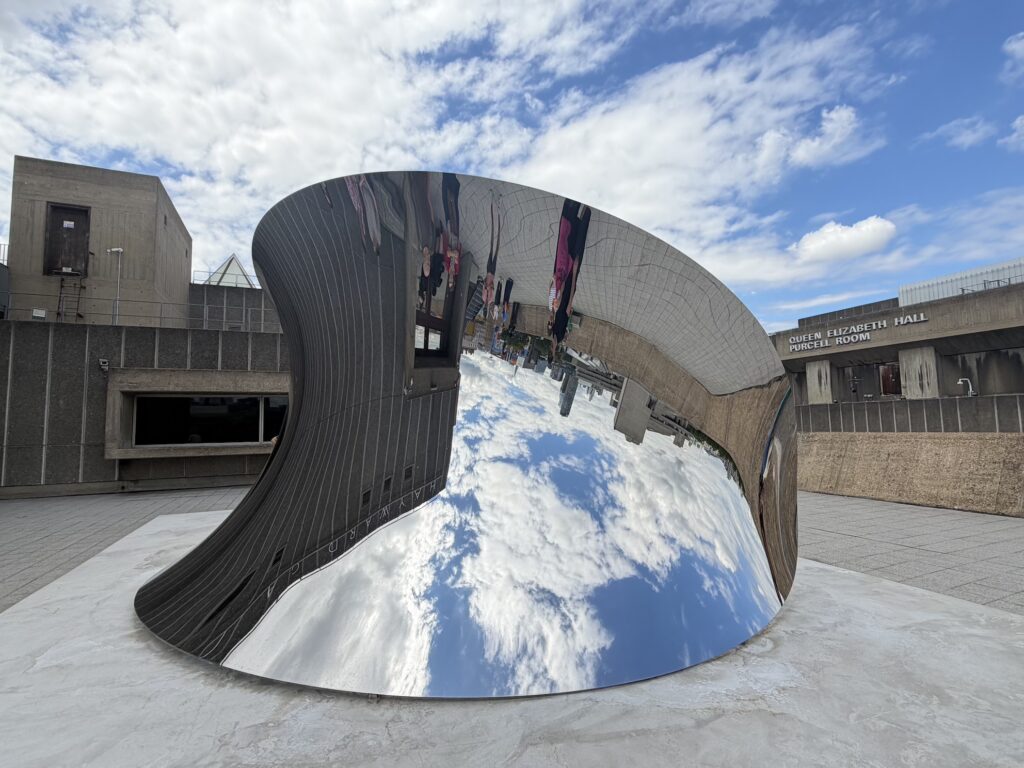
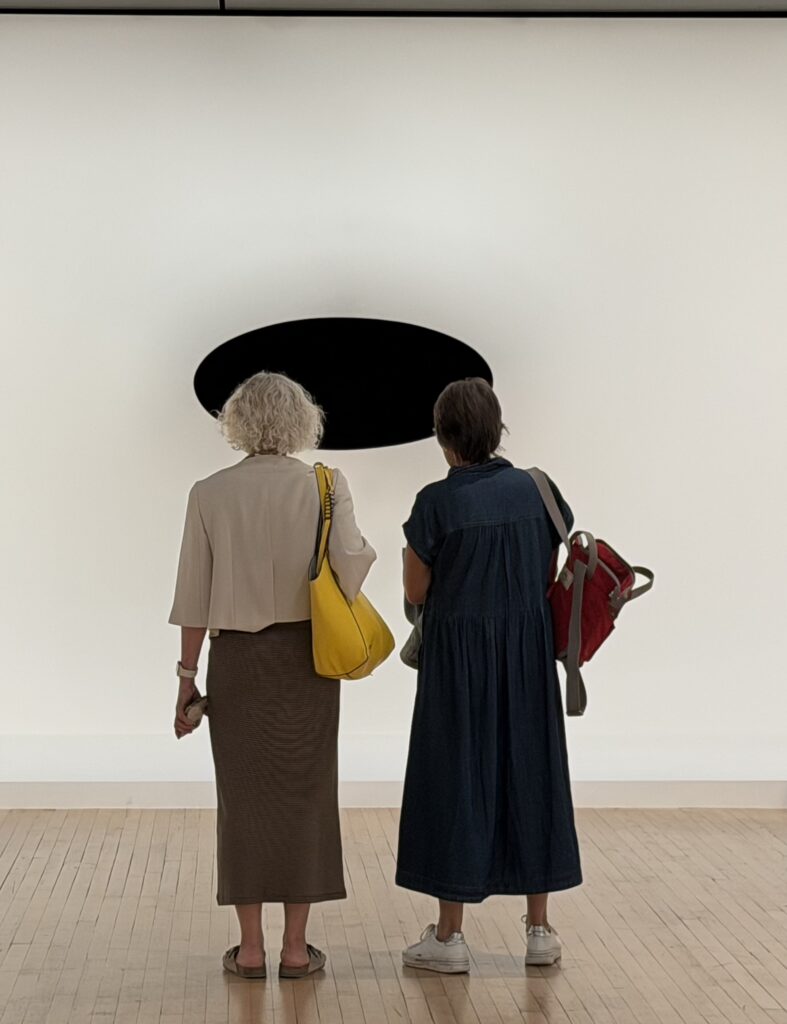
The exhibition features works from many of Kapoor’s most iconic series: mirror-finish steel sculptures that distort, warp, and disorient the viewer; mysterious objects coated in the world’s blackest known substance, which astonish through their extraordinary light-absorbing properties; and seemingly bottomless voids opening within the gallery space.
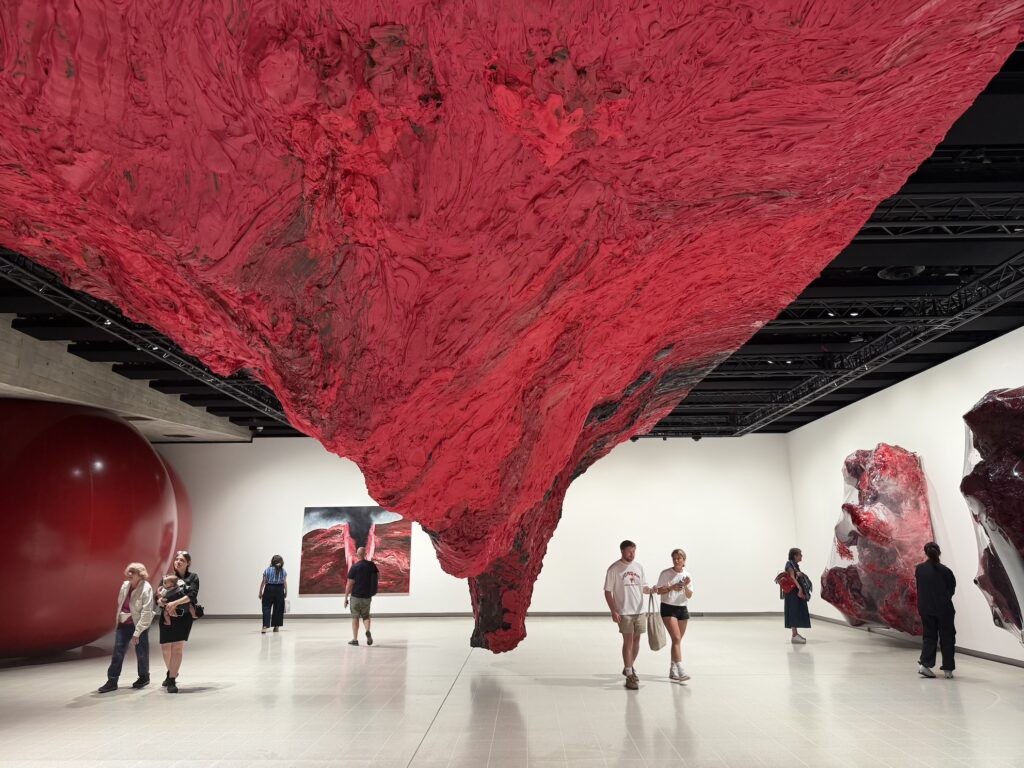
The exhibition also presents dramatic recent works: visceral paintings and sculptures that confront us with the fragility of human existence, including monumental installations in the artist’s signature red, made of silicone and resin, which appear raw and bodily, evoking flesh and blood.
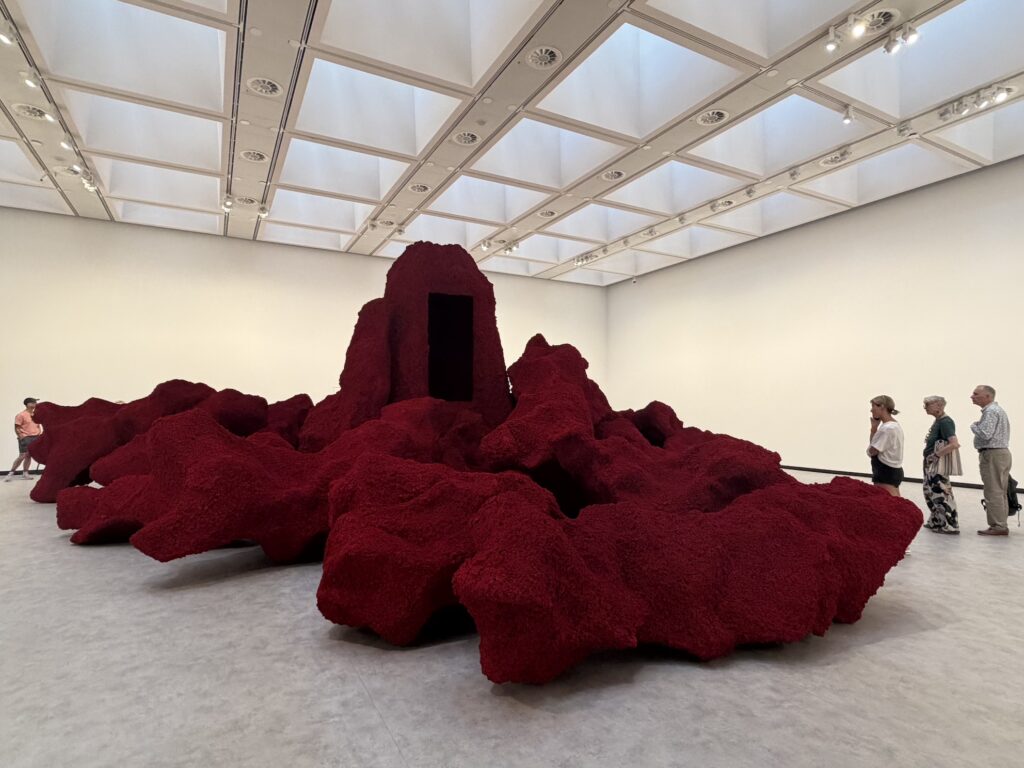
The exhibition as a whole reaffirms Kapoor’s ability to transform architectural space into a site of unstable perception and intense emotional charge, drawing audiences into environments where matter, light, and absence are in constant flux. In doing so, the gallery space is no longer experienced as a neutral framework for display, but as an active field of experience that destabilizes perception and extends it into both physical and psychological sensation.
Leave a Reply