
Art Box portal //
From 5 June 2026 to 3 January 2027, the Museum of Architecture and Design in Helsinki presents the exhibition Aalto Design – Shapes of Wellbeing, inviting visitors to explore the architecture and design of Alvar, Aino and Elissa Aalto through the lens of wellbeing.
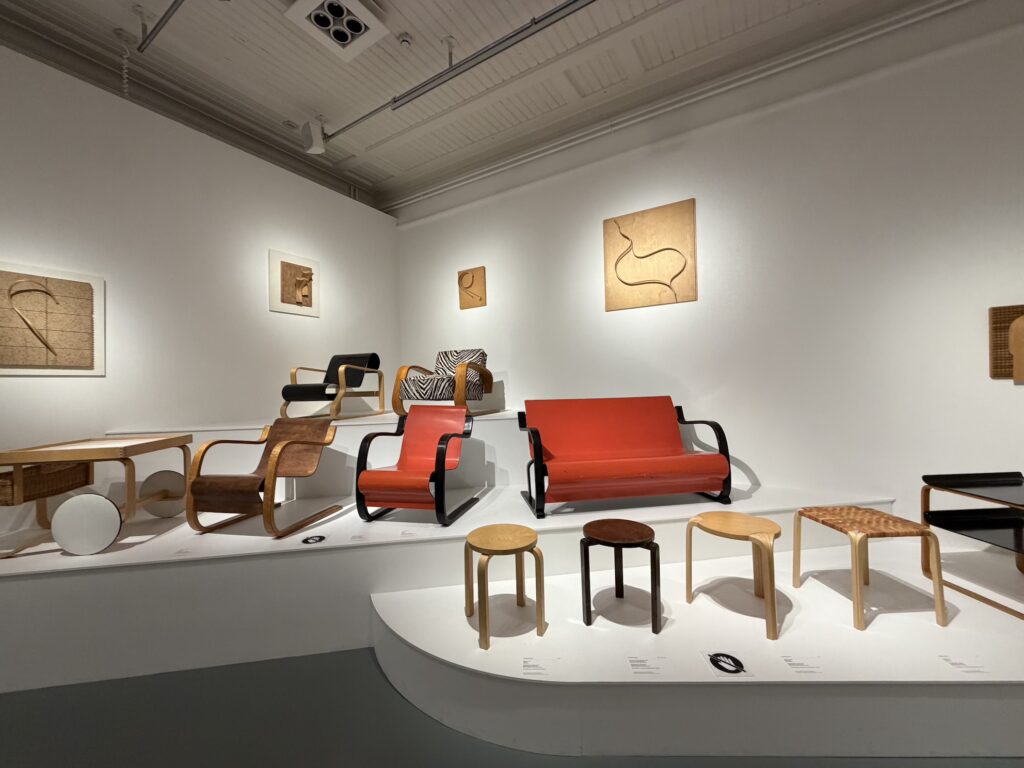
Who was Alvar Henrik Aalto (1898–1976)?
The work of the renowned Finnish architect, urban planner and designer, one of the leading figures of 20th-century modernism, spans a remarkably wide range of disciplines—from architecture and urban planning to furniture, lighting, textiles and glassware design.
Aalto is widely recognised for introducing organic forms and natural materials, such as wood and brick, into modern architecture. He often designed every aspect of a building, including its interiors, door handles, lighting fixtures and furniture. It is also worth noting that his first wife, Aino Aalto, and later his second wife, Elissa Aalto—both accomplished architects and designers—played a significant role in shaping and realising many of his best-known projects.
In 1935, Aalto co-founded Artek, a company that continues to manufacture his furniture today. Among his most iconic designs is the Stool 60, a simple three-legged wooden stool distinguished by its innovative L-shaped bent legs.
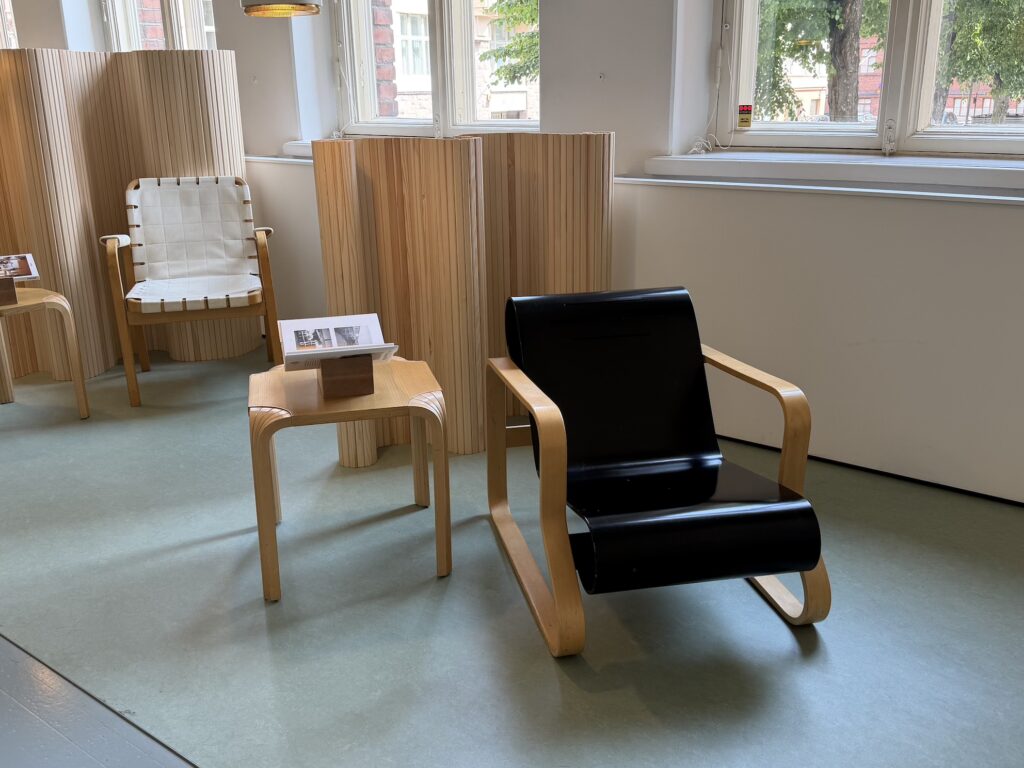
At the heart of Aalto’s philosophy of wellbeing was the conviction that architecture has a direct impact on human health and emotions. Perhaps the finest embodiment of this idea is the Paimio Sanatorium (1933), a tuberculosis hospital designed by Alvar and Aino Aalto, where every detail was conceived with the patient’s wellbeing in mind. The windows were positioned so that patients lying in bed could enjoy views of the surrounding pine forest while receiving as much natural light as possible. Walls and ceilings were painted in calming shades of dark green and grey to reduce glare. The washbasins were designed so that water flowed quietly without splashing, creating a more peaceful environment. The celebrated Paimio Chair, made of bent plywood, was designed at a carefully calculated angle to facilitate easier breathing for patients suffering from lung diseases.
The exhibition Aalto Design – Shapes of Wellbeing at the Museum of Architecture and Design explores wellbeing as one of the Aaltos’ most significant contributions to Western architectural modernism. It examines how their work and philosophy sought to create a balance between people, nature, the built environment and materials. At the same time, the exhibition connects their holistic understanding of wellbeing with contemporary thinking that sees wellbeing not merely as an individual concern, but as a responsibility towards the planet as a whole.
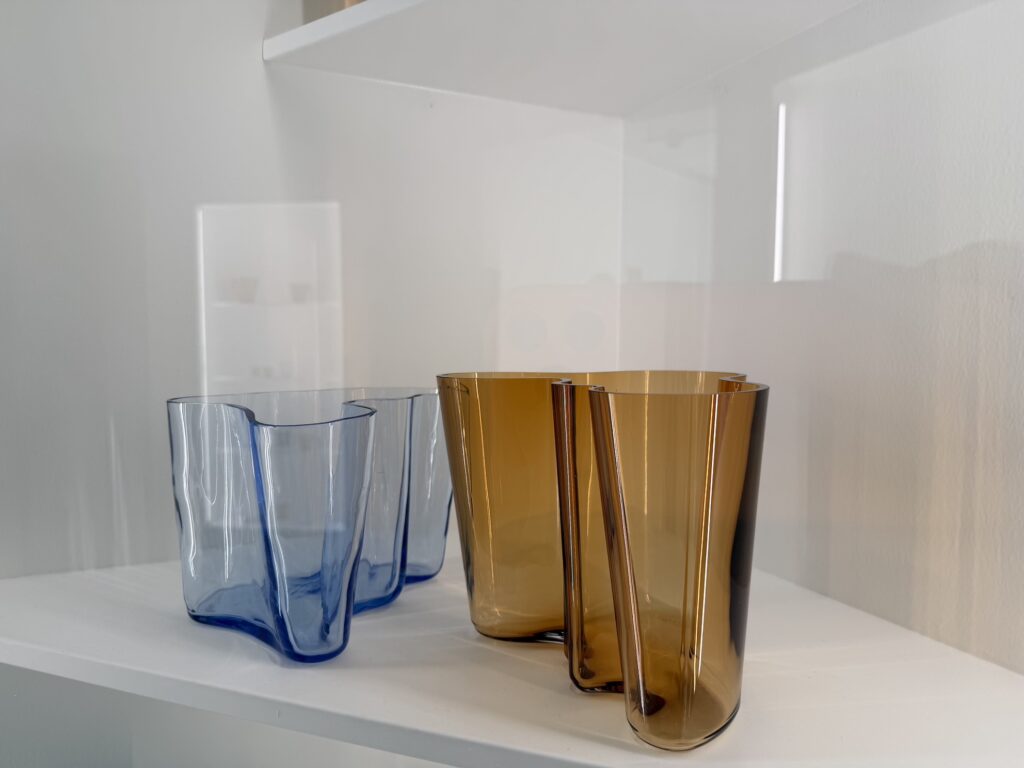
The exhibition brings together a wide variety of media and materials, including drawings, architectural models, furniture, glass objects, material experiments and works of art. Particularly noteworthy are a number of rarely exhibited objects from the museum’s collections. The exhibition was conceived by Pilvi Kalhama and curated by Petteri Kummala and Jutta Tynkkynen, with Carson Chan serving as curatorial advisor.
Among the featured works is Other Actors (2025), a multi-channel video installation by London-based artist and researcher Ilona Sagar. The work explores the relationship between the human body and architecture, as well as the connections between health and the built environment, drawing on the legacy of the Aaltos’ Paimio Sanatorium.
A special feature of the exhibition is the Aalto Lounge, designed by architect Linda Bergroth. Conceived as a space for rest and reflection, it invites visitors to consider how the experience of being in a carefully designed environment influences both body and mind while surrounded by authentic Aalto objects.
The exhibition has been realised in collaboration with the Alvar Aalto Foundation, the Paimio Sanatorium Foundation and Artek, while Ilona Sagar’s installation was produced in collaboration with the Saastamoinen Foundation.
Leave a Reply