
Art Box portal //
What do chairs mean to you, and how conscious are you of their design in everyday life? The Röhsska Museum’s collection includes more than 500 chairs. In the open storage repository, visitors can explore a selection spanning more than 300 years. The chair is an inherently interesting design object, generally expected to be comfortable, practical, and aesthetically pleasing.
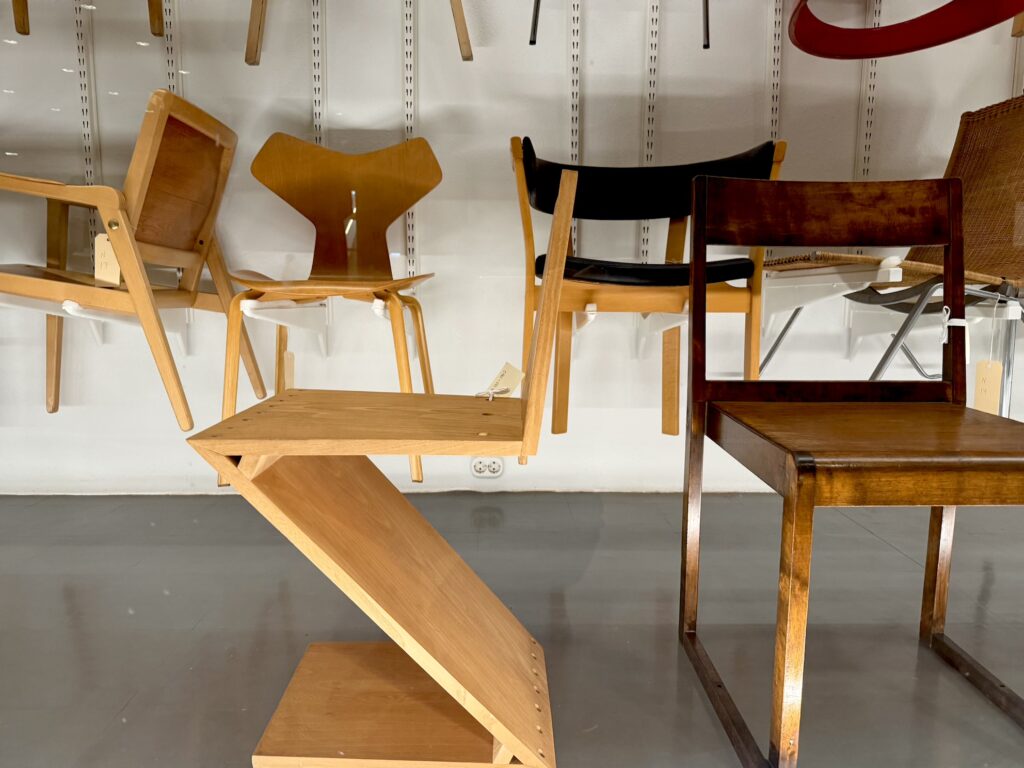
Since its founding, the Röhsska Museum of Design and Craft has acquired different types of chairs to illustrate the prevailing interior design trends and ideals of various historical periods. In the open storage repository in the museum’s auditorium, 144 of the museum’s chairs, dating from the seventeenth century to the present day, are on display.
The chair has alternated between being a utilitarian object and a decorative piece, resulting in a broad variation within the museum’s collection. Visitors will find everything from ergonomic chairs to designs that are practically impossible to sit on.
During booked conferences, the chair storage gallery is temporarily closed to visitors.
A Brief History of the Chair
The seventeenth century brought a transition from chests and built-in benches to movable furniture, leading to rapid development in chair manufacturing. During the eighteenth and nineteenth centuries, different types of chairs were developed in a variety of artistic styles. In the twentieth century, functionalism emerged and became widespread. Ergonomic studies of sitting led to the development of more functional types of chairs.
During the second half of the twentieth century, chair design became an area of experimentation for many designers – an opportunity to let their imagination and playfulness run free.
Among the chairs on display at the museum is Chair 51, designed by the Finnish architect Alvar Aalto in the 1930s. At the time, functionalism was the prevailing ideal in architecture and interior design. It was a radical style and a new design idiom in which furniture and objects were to be designed according to their function, without unnecessary decoration or ornamentation.
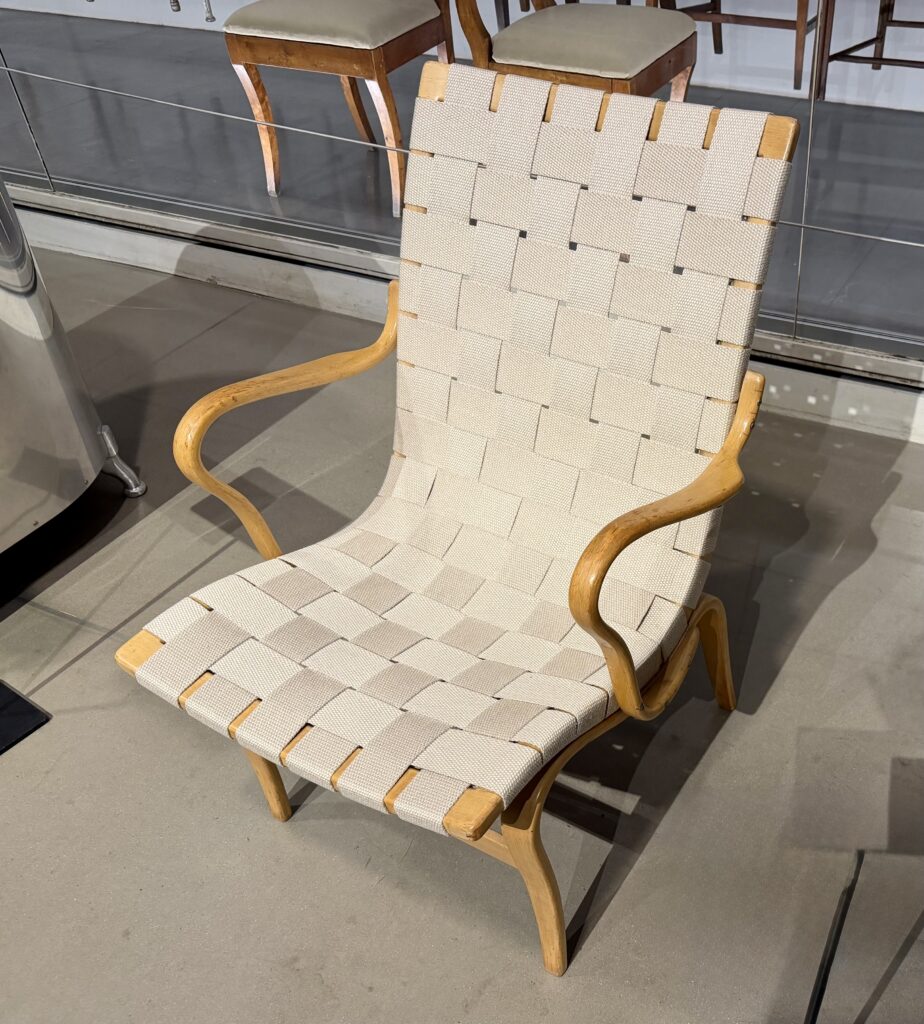
The collection also includes numerous chairs and lounge chairs by the Swedish designer Bruno Mathsson. His Eva armchair is one of his most popular models and is still in production almost eighty years after it was first introduced. It is made of pale bent laminated timber with woven oxhide straps. Mathsson was interested in functionalism and conducted ergonomic studies of sitting.
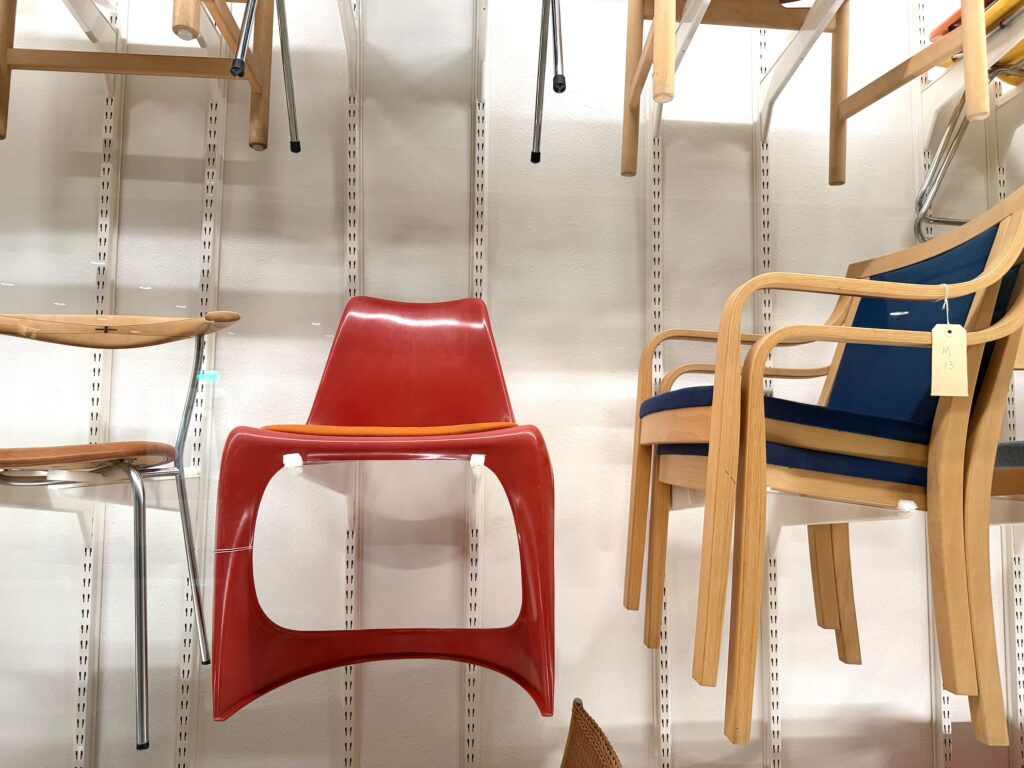
Another notable example is the 290 dining chair by Danish designer Steen Østergaard, the first chair to be entirely injection-moulded in plastic. It was produced in 1966 by injecting fibreglass-reinforced nylon into a large mould.
During the 1960s, plastic was a popular material. It had first come into wider use after the Second World War, when oil once again became more readily available. Initially, plastics were used to imitate other materials and forms, but during the 1950s designers began to explore and exploit their own distinctive design possibilities more consciously.
Today, attitudes towards materials in design are changing once again. Plastic has certainly not disappeared from furniture production – and designers continue to explore, among other things, the possibilities offered by recycled plastics – but sustainability, durability, reuse and the origin of materials have become increasingly important. At the same time, wood is once again playing a significant role in contemporary design, particularly in the Nordic context, where greater attention is being paid to responsible sourcing, recycling and the reuse of wood.
The history of the chair therefore also reflects changing attitudes towards materials, technology and sustainability – from the fascination with the possibilities of plastic in the 1950s and 1960s to today’s growing emphasis on more sustainable and circular approaches to design.
Do you have a favourite chair?
Leave a Reply