
Ljiljana Maletin Vojvodić //
The project Shared Heat / Löyly / Offline Spaces was developed during Ljiljana Maletin Vojvodić’s writing residency at Villa Kivi in Helsinki, as part of the research and artistic programme of KEC Art Box. Its starting point is the sauna—not as an exotic Finnish custom or a wellness practice, but as a space where the body, society, nature and culture intersect.
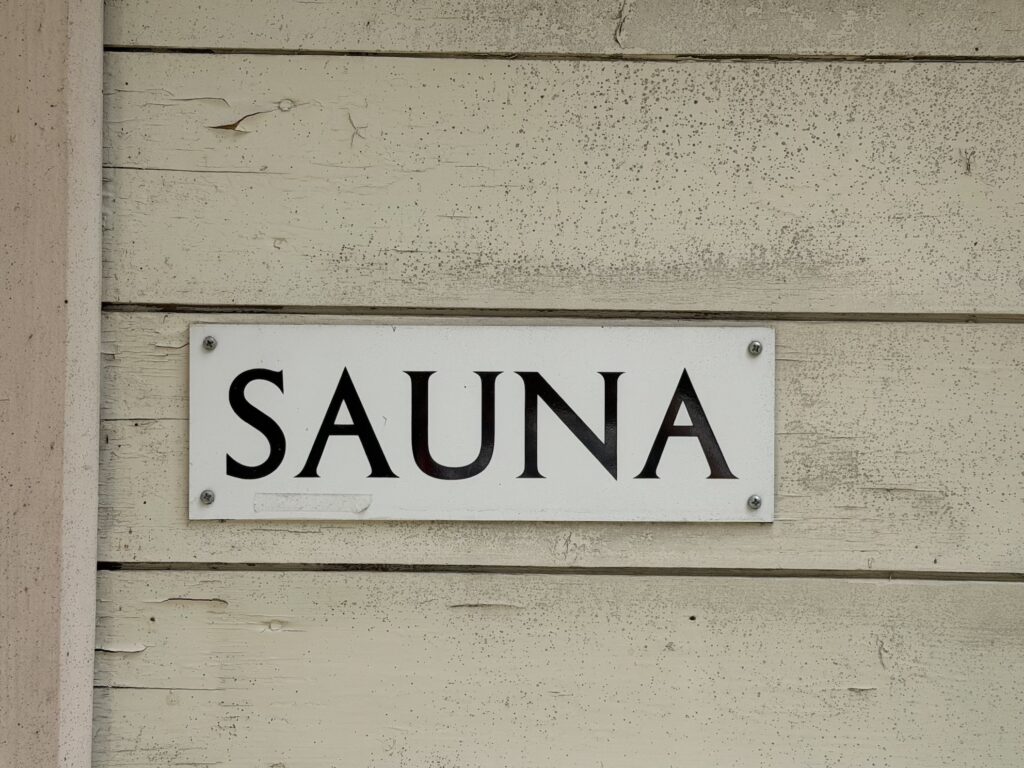
At the centre of the project are simple physical experiences: heat and cold, steam and water, dryness and moisture, breathing and sweating, entering and leaving, interior and exterior. These shifts, experienced directly through the body in the sauna, become a way of reflecting on broader changes in contemporary life. The project connects the physical experience of heat with questions of slowness, loneliness, the need for human connection and the loss of spaces where people can be together.
Sauna as cultural and social space
Finland is a particularly important context for this research because the sauna has a much broader cultural significance there than the one often attributed to it outside the country. It is part of everyday life and social culture. There are private saunas, public and communal saunas, saunas by the sea and lakes, saunas belonging to residential communities, as well as those that have emerged through civic and volunteer initiatives. These different forms of sauna culture became an important part of the research.
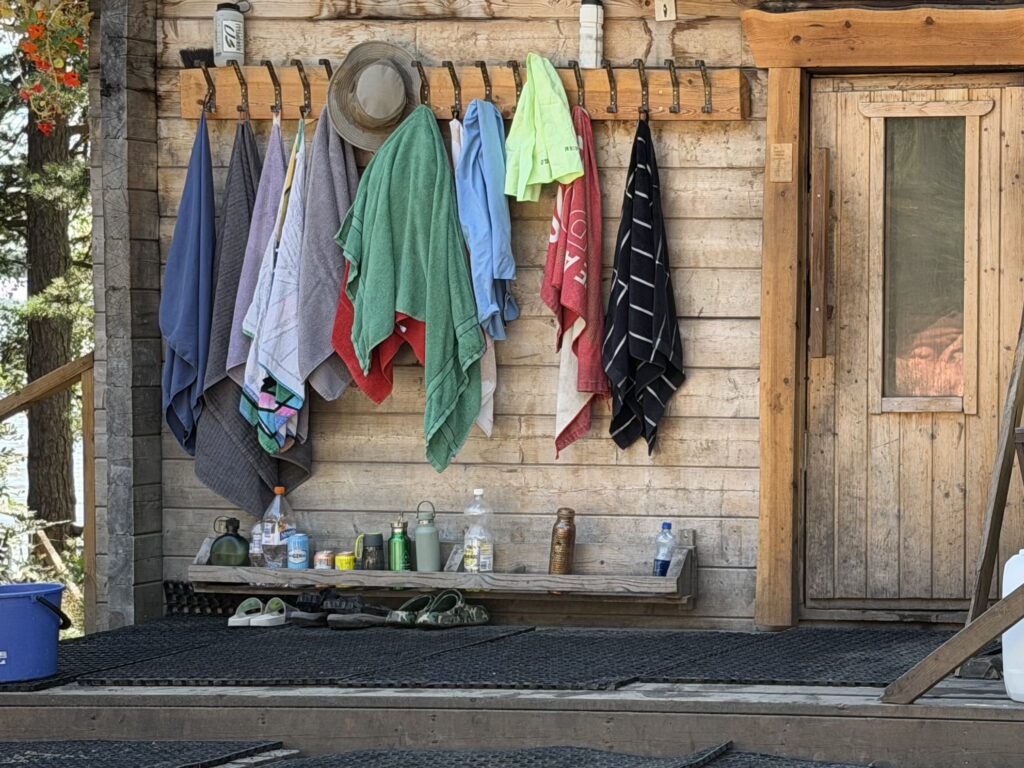
In the sauna, the relationship with the body changes. Clothes are left outside, along with some of the identities we carry with us every day. Professional titles, social status and the need to project a particular image temporarily disappear. The phone remains outside as well. What is left is the body, heat, breath, steam, water, wood and stone.
Yet the sauna is not automatically a space of equality. On the contrary, it raises important questions about what it means to be exposed, what it means to feel safe, and under what conditions a shared space can truly belong to everyone.
Löyly
The Finnish word löyly is one of the key concepts of the project. It refers to the steam and heat generated when water is poured over the heated stones of a sauna stove, as well as to the sensation and atmosphere that emerge in that moment.
Löyly is not something that can be held onto or possessed. It exists in the moment, between water, stone, fire, air and the body. Within the project, the word becomes significant precisely because it describes something that exists through relation and sharing.
Beyond the wellness industry
The project is not concerned with luxury spas or the commercial wellness industry, but with less visible forms of sauna culture: spaces that are part of everyday life, places where people meet without being expected to buy or pay for something, and saunas that exist through shared labour and collective responsibility.
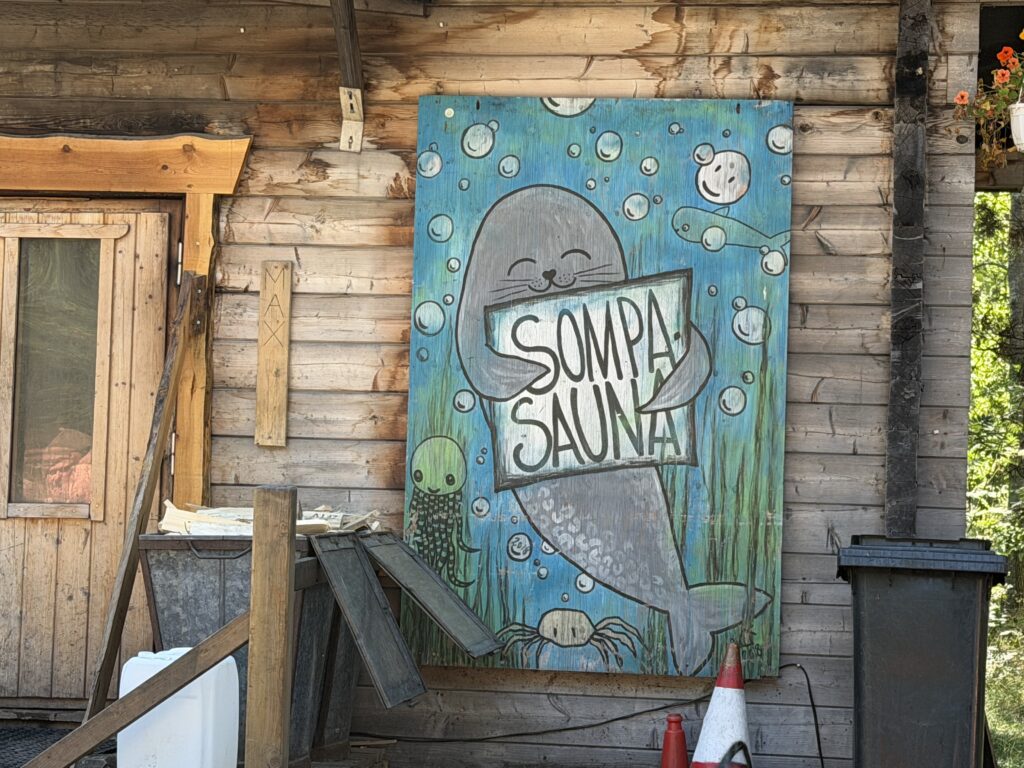
One of the most important examples in this research is Sompasauna in Helsinki. This self-organised sauna emerged from a volunteer-led DIY initiative and continues to be maintained by the people who use it and care for it. It is open to everyone and does not operate as a commercial wellness space. Its significance lies precisely in the fact that it offers a different model of public space—a place where you do not have to be a consumer to belong.
Sompasauna: community as infrastructure
Sompasauna is also significant because it demonstrates how essential a community can be to the existence of a place. Someone lights the fire, someone cleans the space, someone helps others use it. Everything that is taken for granted as a service in a commercial setting here depends on people’s willingness to participate.
Community is not simply an idea; it is something sustained through concrete, everyday work.
For this reason, Sompasauna can also be understood as a form of social infrastructure. It is neither a private home nor a commercial establishment. It is a shared space that exists between people.
At a time when many places of encounter are tied to consumption—from cafés and restaurants to different forms of wellness—such spaces become increasingly important. They allow people to be together without having to buy something or perform a particular identity in order to justify their presence.
Sompasauna therefore also raises questions about public space. Which spaces today genuinely belong to everyone? Where can we be without having to spend money? Where can we spend time with strangers without having to construct a particular image of ourselves? And what happens to a community when such spaces disappear?
Safety as a Shared Responsibility
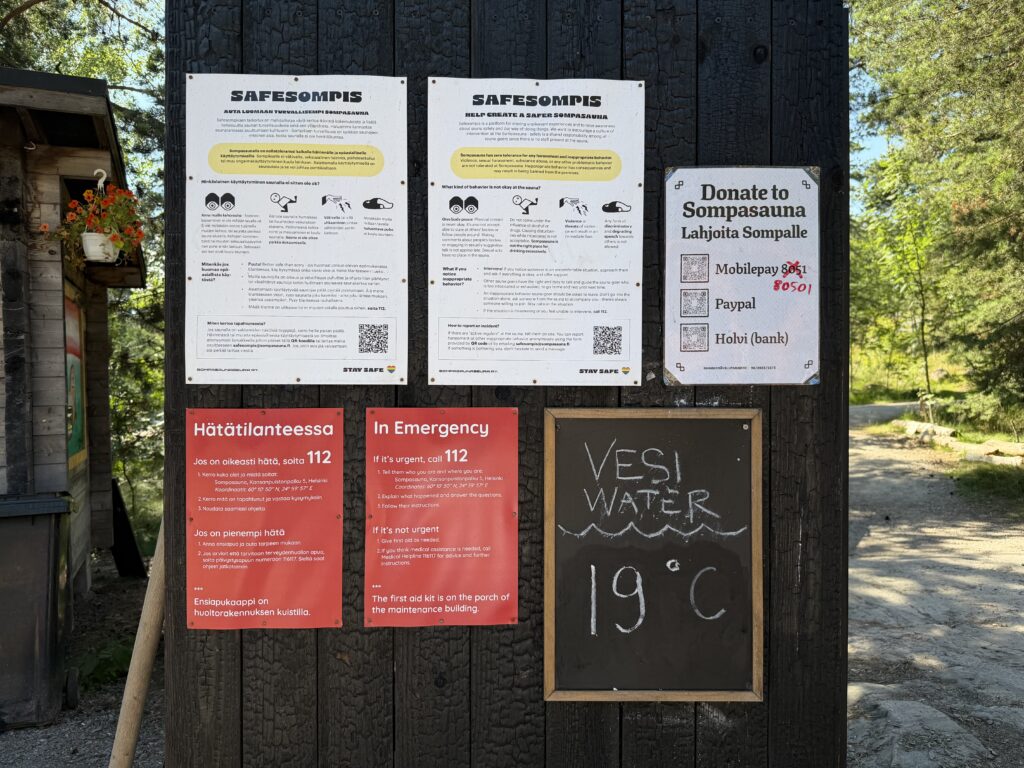
Another important aspect of Sompasauna is the way the community itself approaches questions of safety and responsibility. Since there is no staff at the sauna, responsibility for the space and for the people who use it does not rest with a single institution or individual, but is shared by everyone who visits. The Safesompis platform was created to provide a way of reporting uncomfortable experiences, raising awareness about safety, and encouraging a culture of mutual care and active intervention.
Sompasauna has zero tolerance for harassment and inappropriate behaviour. Violence, sexual harassment, the misuse of alcohol or drugs, as well as discriminatory, offensive or humiliating behaviour, are not permitted. Visitors are encouraged to respond when they notice that someone is feeling uncomfortable, to offer help and, when necessary, to ask a person who is behaving inappropriately to leave the space, together with others.
This system demonstrates that community is not only about keeping a space open and accessible, but also about the community’s ability to take responsibility for how that space functions. In this sense, safety is not something imposed from outside through the presence of staff or institutional authority; it is built from within, through mutual care, trust and a willingness to intervene.
This dimension of Sompasauna further complicates the idea of the sauna as a space of freedom and belonging. If a shared space is genuinely intended for everyone, then the community must be both open and responsible. Freedom does not mean the absence of rules, but the possibility of feeling safe, respected and protected from violence and harassment.
Sompasauna thus becomes an example of a community that involves not only sharing space and resources, but also actively participating in their maintenance. Care for others becomes part of the infrastructure of the space itself.
The body, vulnerability and safety
Within this research, the sauna emerges as a place where different bodies and different life experiences meet. Nudity is not presented as spectacle. It is, above all, a fact of bodily presence.
The body is imperfect, vulnerable, tired, sweaty and subject to heat and cold. In this sense, the sauna can offer a temporary break from a culture of constantly looking at and judging the body, a culture intensified today by social media and digital images.
Yet the project does not idealise this situation. The sauna is not outside society. It too has rules, boundaries and questions of power. One person may feel free in a shared space, while another may feel exposed. Safety in the sauna therefore has to be built through mutual respect and responsibility.
It is precisely this tension between vulnerability and safety that makes the sauna a compelling space for artistic research.
Heat, nature and slowness
The project also pays particular attention to the relationship between the sauna and nature. In Finland, moving from the intense heat of the sauna into cold air, water or snow is part of an experience defined by a continuous movement between opposing states.
The body warms up, steps outside, cools down and returns to the heat. This cycle slows time. There is no need to achieve anything. There is only the repetition of simple actions and an attentiveness to one’s own body.
This is also where an ecological dimension emerges. Nature is not a backdrop to the experience but an active participant. Cold, water, wood, stone, fire and air determine what happens in the sauna. The body is not separate from its surroundings; it is constantly exchanging heat with them.
This relationship is particularly significant in Finland, where the sauna has historically been connected to life among forests, lakes and the sea.
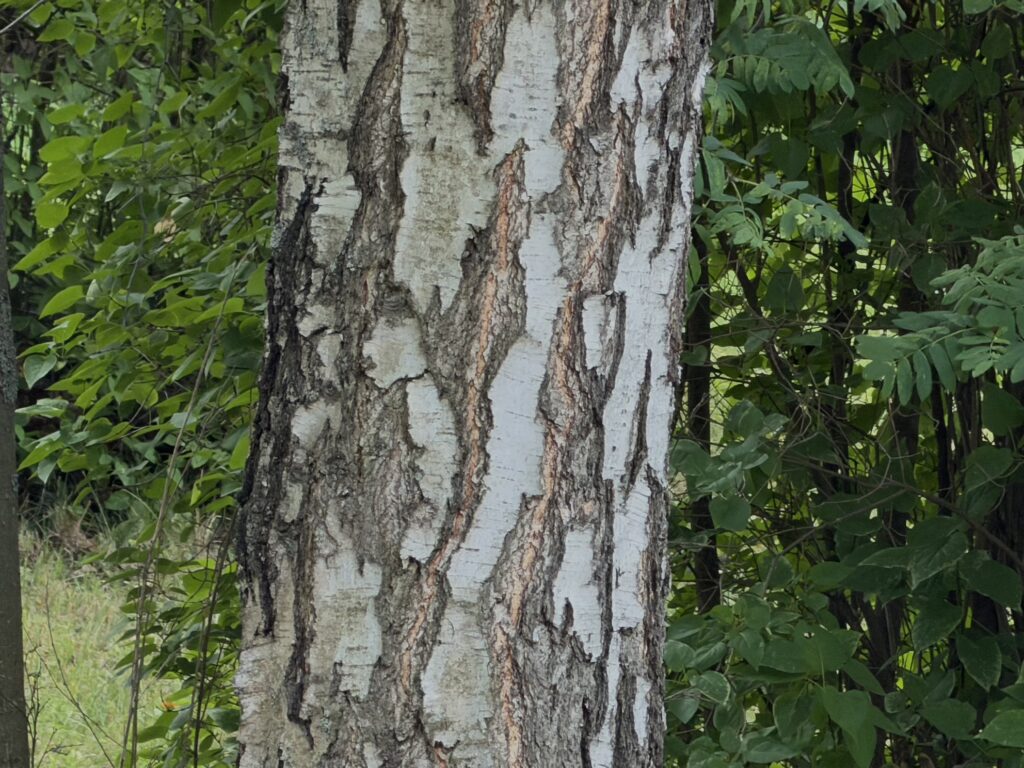
The sauna as a threshold
In Finland, the sauna has also been a place of birth, healing and the ritual preparation of the dead. Its history is therefore connected to some of the most significant transitions in human life.
The dark interior of the sauna, its heat, steam and silence carry something ritualistic, almost archaic. It is a space where the body and nature, the everyday and the sacred, life and death meet.
Offline spaces
The project Offline Spaces connects this historical dimension with the contemporary experience of digital life. The sauna is one of the few places today where the phone is naturally left behind. For a moment, one becomes unavailable. There are no messages to answer, no photographs to take, no posts to publish, no screen to follow.
This absence of digital connectivity opens up the possibility of another kind of presence.
This is why offline in the project means more than simply being without technology. It describes a space in which attention returns to the body and to immediate experience. People talk, remain silent, watch the fire, listen to one another or simply sit together.
Connection is created not through the exchange of information, but through the sharing of time and space.
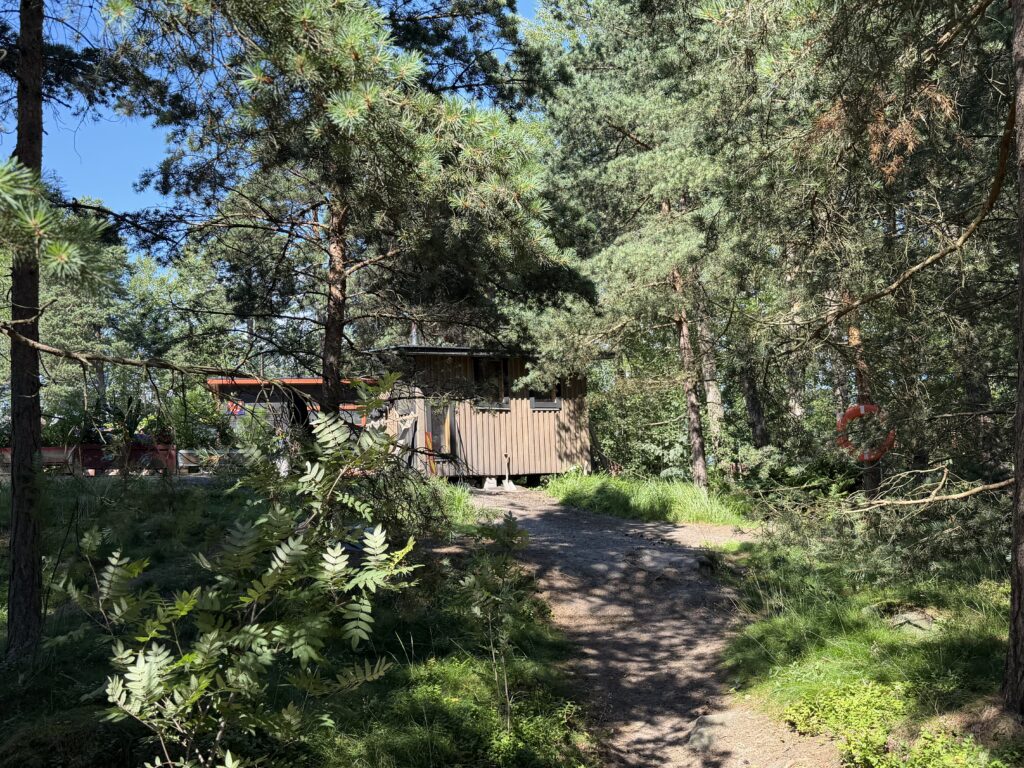
The artistic dimension
The artistic dimension of the project emerges from this experience. The work does not begin with the assumption that art must produce an object. Instead, it explores what happens when artistic research turns towards atmosphere, bodily sensation and social relations.
Heat, steam, breath, sweat, water, sound and silence become materials of inquiry. The sauna can be understood as a space that generates its own images, sounds and rhythms, while the body becomes both observer and participant.
In this sense, Shared Heat is not a documentation of sauna culture, but an attempt to use one particular practice as a lens through which to consider broader questions of contemporary life. The sauna becomes a place from which to think about loneliness, the need for community, our relationship with the body, the loss of public spaces and the increasing commercialisation of experiences that once belonged to communities.
From communal practice to lifestyle product
This points to one of the paradoxes of contemporary sauna culture. While traditional communal saunas are becoming increasingly difficult to find, the sauna is spreading globally as a luxury wellness and lifestyle product.
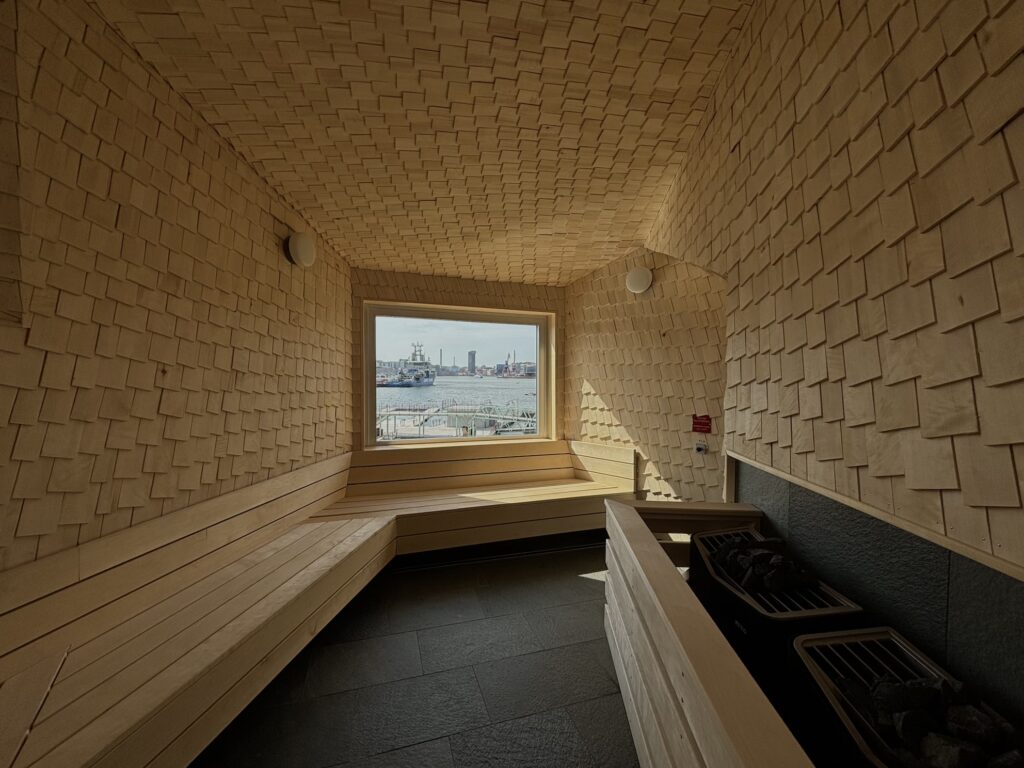
What was once part of everyday life and shared culture is increasingly becoming a service to be purchased. The question is not only what happens to the sauna when it becomes a commodity, but what happens to community when spaces not based on consumption disappear.
Sompasauna is important precisely because it demonstrates that another model still exists. It is a small but concrete example of a space sustained through collective responsibility. Its significance lies not only in the sauna itself, but in the relationships that form around it.
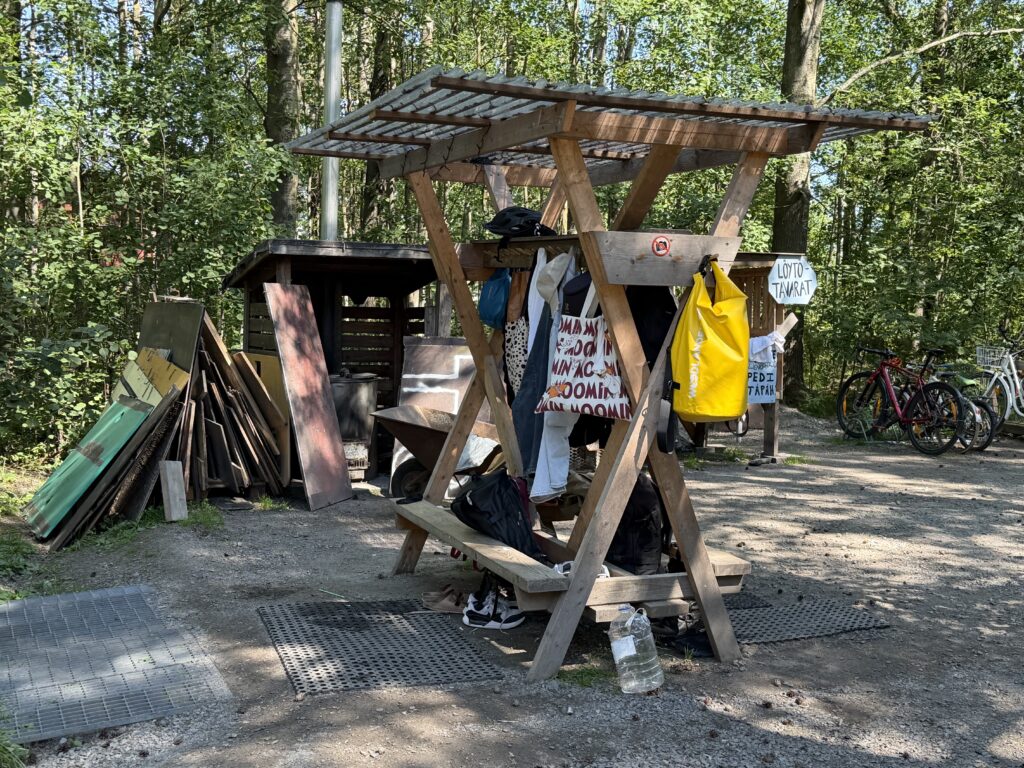
Shared heat
For KEC Art Box, this project continues an ongoing exploration of spaces where art, everyday life and social questions intersect.
Shared Heat / Löyly / Offline Spaces begins with a local Finnish experience, but does not end there. It raises questions that extend far beyond Finland: Where can we still be together without consuming? How do we create a sense of safety among strangers? What does it mean to be present in a time of constant digital availability? And how can small, everyday practices help restore a sense of belonging?
The shared heat in the title is therefore not simply the heat bodies experience together in a sauna. It suggests the possibility of sharing space, time and attention with others.
Something emerges from that act of sharing that cannot be bought and cannot belong to any one individual. Perhaps this is what is increasingly missing: a space in which we do not have to be anything other than present, together with others.
Leave a Reply