
Art Box Portal //
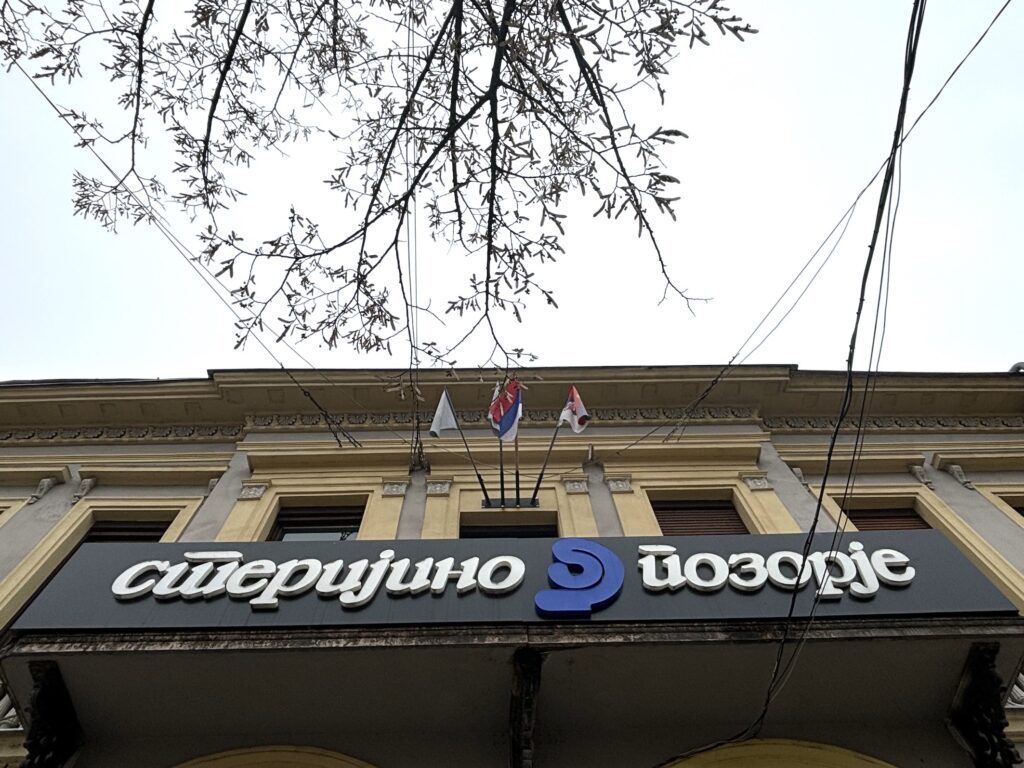
The 70th edition of the Sterijino Pozorje theatre festival will be held in Novi Sad from May 26 to June 3, under the slogan Creating History / Changing the Future. This year’s competition program includes nine plays, while three more will be shown as part of the international section called Circles. The selector of the festival, theatre scholar and critic Dr Ana Tasić, chose performances that deal with important social and political topics. How does she explain her curatorial concept?
„Despite deep social crises and dramatic upheavals that have fundamentally shaken and are continuing to shake our social stage – or perhaps precisely because of them – the selection of performances for this festival has been more artistically challenging than the previous year. In other words, it was easier to select nine performances for the Competition Selection and three for the ‘Circles’ Selection, even though the overall production was not more prosperous.
Since March, I have watched seventy-five performances as this festival’s selector – fifty-five for the Competition Selection and twenty for the “Circles” Selection. Based on this, the selection was made, consisting of nine performances in the Competition Selection and three in the international ‘Circles’ Selection.
Over the past year, around ten performances based on domestic plays were staged outside of Serbia, confirming our previous thesis of a shared regional cultural space. The thematic orientations of our writers’ plays are closely related to works created in other countries in the region. Furthermore, the Sterijino Pozorje Festival significantly contributes to the promotion of Serbian plays beyond Serbia, partly because theaters in the region value participation in this festival.
The 70th Sterijino Pozorje Festival Competition Selection includes four performances from the former Yugoslav region—three premieres of works by our authors: Football Boot Tongue by Filip Grujić and Ivan Ergić from the Zagreb Youth Theater, Back by Boris Liješević from the Montenegrin National Theatre, and The Belgrade Trio by Goran Marković from the theater in Novo Mesto. Additionally, it features a new interpretation of a classic by Branislav Nušić, People’s Deputy, performed by the Macedonian National Theater in Skopje.
In addition to these international productions, the Competition Selection includes five performances from Serbia – premieres from Sombor (The Excluded, based on a play by Đorđe Petrović, directed by Mia Knežević), Lazarevac (Dimitrije Tucović Addressing the Serbian Youth, written and directed by Zlatko Paković), Novi Sad (Atonement, based on the novel by Branimir Šćepanović, directed by Veljko Mićunović), and Belgrade (Nobody Is Forgotten and Nothing Is Remembered, based on the novel by Mirjana Drljević, directed by Bojana Lazić, produced by Atelje 212). It also includes a new interpretation of a contemporary classic, St. George Slays the Dragon by Dušan Kovačević, directed by Milan Nešković and performed by the Yugoslav Drama Theater ensemble.
From the nine selected performances, critical meanings stand out vividly – or, to put it more precisely and expressively, they surge forth – depicting the unwavering and intense struggles of characters wanting social justice, the eradication of corruption, the deep-seated systemic decay, and the cleansing of criminal structures from society (Back, The Excluded, Dimitrije Tucović Addressing the Serbian Youth, Nobody Is Forgotten and Nothing Is Remembered, Atonement, St. George Slays the Dragon, People’s Deputy, The Belgrade Trio).
Additionally, a common characteristic of the program as a whole is the presence of thriller elements, as narratives often unfold through investigations, characters’ efforts to uncover truths about crimes, unearth long-hidden secrets and mysteries, or defend their honor and dignity (Back, The Excluded, Nobody Is Forgotten and Nothing Is Remembered, Atonement, The Belgrade Trio).
Given these thematic elements, it can be said that theater has once again taken a step forward, anticipating reality or even foreseeing our dramatic sociopolitical events – the surge of struggles against injustice and corruption (most of the selected plays were created just before the tragedy in Novi Sad and the unprecedented nation-wide protests that followed).
The subtitle of the 70th Sterijino Pozorje Festival, “Creating History / Changing the Future”, reflects these thematic directions in the performances, as well as the social circumstances mirroring the intense battles for truth and justice. In times of sociopolitical crises, the role of theater is unique. As the sociologist Jean Duvignaud wrote, theater is the art form that, more than other forms, senses the tremors that shake society – the difficult, gradual struggle for freedom, from its slow and arduous progress, through various constraints, to its sudden, forceful manifestation. Theater is art deeply woven into the living fabric of collective experience, and throughout history, it has consistently represented rebellion against injustice and the grotesque nature of power, guiding us toward the future, toward what has yet to be realized.
The plays in the Competition Selection are thematically connected in their confrontation with systemic corruption. However, their directorial approaches and stage poetics vary, from the restrained, psychologically delicate realism of Egon Savin (People’s Deputy), Boris Liješević (Back), and Mia Knežević (The Excluded), through the subtle stylization of Bojana Lazić (Nobody Is Forgotten and Nothing Is Remembered), Veljko Mićunović (Atonement), and Milan Nešković (St. George Slays the Dragon), to the Brechtian political theater of Zlatko Paković (Dimitrije Tucović Addressing the Serbian Youth) and the more complex multimedia expressions of Matjaž Berger (The Belgrade Trio) and Borut Šeparović (Football Boot Tongue).
Besides the selected performances, two other choices were shortlisted, with only the finest nuances determining the final choice – either the overall strength of the stage expression or the superior aesthetic value of the selected productions. These were Death Is Not a Bicycle (to Be Stolen from You) by the National Theater in Belgrade and The Widow of a Living Man by Zvezdara Theater.
The ‘Circles’ Selection includes three performances that thematically and stylistically mirror aspects of the Competition Selection: The Father, the Daughter, and the Holy Spirit, based on a play by Mate Matišić and directed by Janusz Kica; Wooden Birds by Lidija Deduš, directed by Ivan Plazibat; and Struggle at the Sinkhole, based on a novella by Prežihov Voranc and directed by Jernej Lorenci.
These plays also contain significant thriller elements, introduced as a means of confronting ontological evil (The Father, the Daughter, and the Holy Spirit, Wooden Birds). All three subtly explore the relationship between nature and civilization, searching for ways to preserve life’s essence amid society’s brutal challenges, where human actions are often driven by vanity, envy, and greed. The performances also feature intricate, carefully crafted stage expression, striking visual richness, and powerful symbolic directorial techniques, collectively fostering a fertile ground for genuine aesthetic excitement.“ (Selector’s Report)
Leave a Reply