
Interview by Ljiljana Maletin Vojvodić //
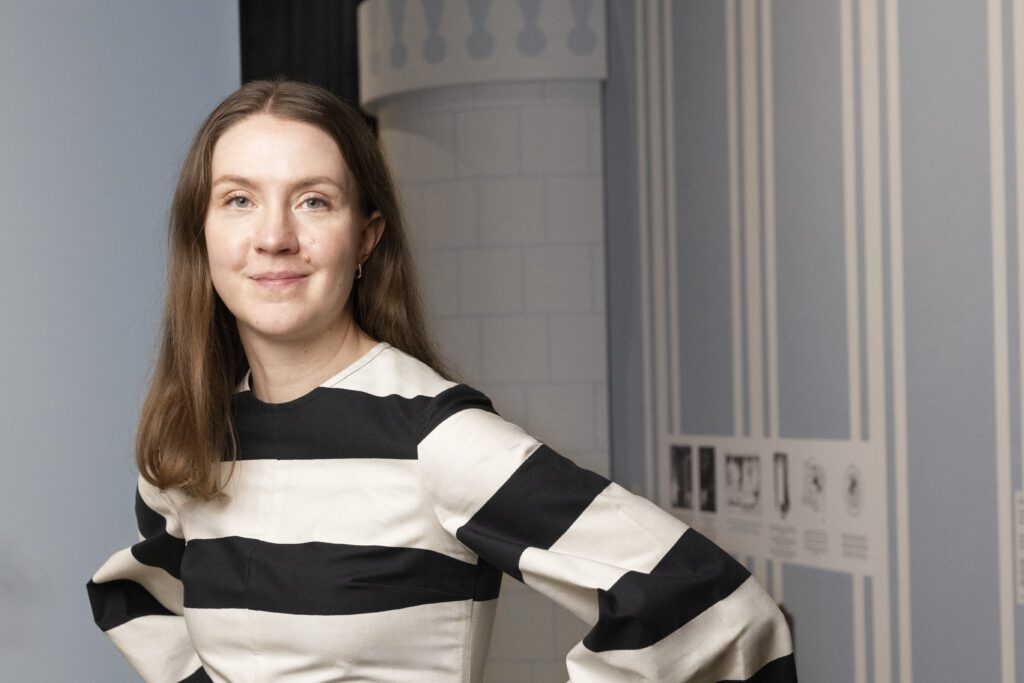
“Escape to Moominvalley”, the major exhibition at Helsinki’s Architecture & Design Museum (10 October 2025 – 6 January 2027), presented as part of the global celebrations marking the 80th anniversary of the Moomin stories, explores the relationship between Tove Jansson (1914–2001), the celebrated Finland-Swedish author, novelist, painter and illustrator best known worldwide as the creator of the Moomins, and the worlds of space, design and the built environment. The exhibition also turns to the places Jansson inhabited and made her own: her Helsinki studio, where she lived and worked for decades, and the small cottage on the remote island of Klovharun, which she designed with architect Raili Pietilä and shared with her lifelong partner, artist Tuulikki Pietilä. We had the pleasure of speaking with Jutta Tynkkynen, curator of Escape to Moominvalley, about Jansson’s studios and retreats, the architecture of Moominvalley, the gendered dimensions of her life and work, and why the exhibition feels particularly relevant at a time when questions of safety, belonging and freedom have once again become urgent.
Tove Jansson moved into her Helsinki home and atelier in late 1944, at the age of 30, as the war between Finland and the Soviet Union was drawing to a close. You have said that “moving into the atelier marked the beginning of the most creative period of Tove’s life”. What did having this particular studio mean to Jansson, both personally and artistically?
Moving into the Helsinki studio in 1944 was a turning point in Tove Jansson’s life. After years of temporary workspaces and the uncertainty of wartime, she finally had a place that was truly her own: a large, light-filled studio where she could live, work and entertain friends under the same roof. She described being overwhelmed by happiness when she first entered the space, despite its war damage and poor condition.
Artistically, the studio provided the stability that allowed her most productive period to begin. Many of the Moomin books were created there, alongside paintings, illustrations and commissions. In a sense, the studio gave physical form to what she called her “studio utopia”: the dream of a place where artistic work could occupy the center of life.
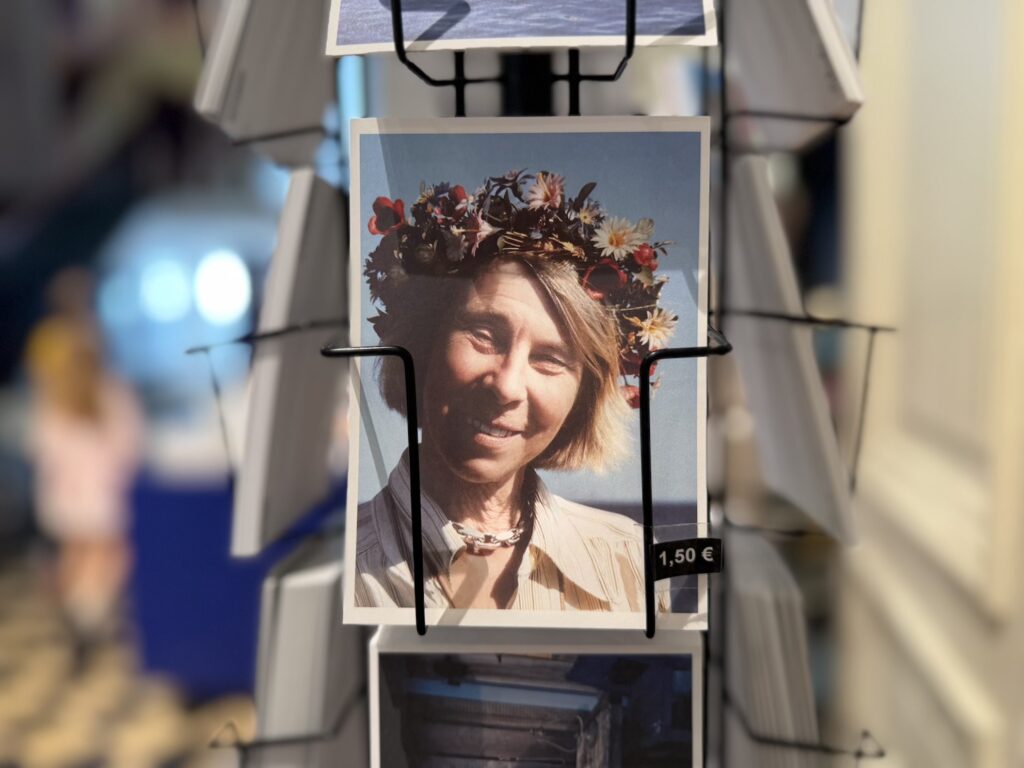
The idea of having a space of one’s own immediately brings to mind Virginia Woolf’s A Room of One’s Own, and her argument that women need both material independence and a private space to create. Do you see a connection between Jansson’s artistic life and Woolf’s idea — particularly in relation to space, privacy, independence and the conditions necessary for women’s creative work? How important is a gender perspective when we look at Tove Jansson’s life and work today?
I think there is a strong connection. Like Virginia Woolf, Jansson understood that creative work requires both material conditions and personal freedom. The studio gave her exactly that: independence, privacy and enough space to pursue her work on her own terms. It also enabled her to earn a living as an artist and eventually to buy the apartment herself, which further strengthened her autonomy.
A gender perspective remains important, although I would argue that today the key issue is often less about access to physical space than access to uninterrupted time. The unequal distribution of domestic labor, childcare and the invisible work of planning and organizing everyday life continues to shape the conditions under which many women create. In this respect, Woolf’s argument can be expanded: creative freedom requires not only a room of one’s own, but also time of one’s own.
Jansson’s real-life spaces of refuge seem to have a parallel in Moominvalley itself. How closely are the homes and landscapes inhabited by the Moomins connected to her own understanding of home, shelter and belonging?
Very closely, although I would say that the connection is emotional and philosophical rather than strictly autobiographical. In Jansson’s work, home is a place of safety, identity and belonging, a place where people can say, “This is my place in the world.” That idea is embodied most clearly in the Moominhouse, which becomes a refuge for all kinds of visitors, regardless of their background or circumstances.
The Moomin stories repeatedly return to questions that are still relevant today: the right to a home, the need for shelter, the search for roots, and the desire to belong to a community. The Moominhouse is open to strangers, those in need of protection, and those who feel out of place elsewhere. In that sense, Moominvalley is a vision of an inclusive society, where belonging is created through hospitality, mutual care and acceptance.
At the same time, Jansson was fascinated by very different ways of inhabiting the world. Some characters seek permanence and rootedness, while others prefer movement, independence and temporary forms of dwelling. Together, they reflect her understanding that people need different kinds of spaces to flourish. What unites them is the idea that everyone deserves a place, whether it is a house, a tent, an island, a garden, or a community that welcomes them.
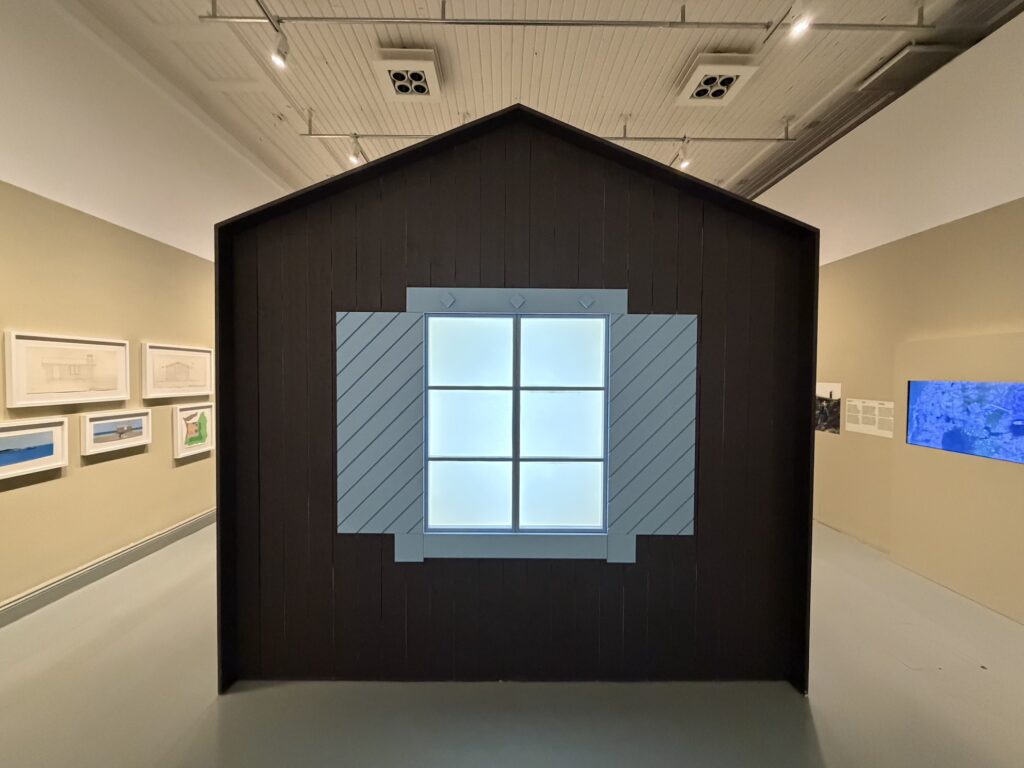
There seems to be a progression in Jansson’s life from the Helsinki studio to the cottage on Klovharun — from a room, to a house, to an island. Could Klovharun be understood as a perhaps more radical version of the “room of one’s own”: a space removed from everyday social expectations?
Yes, I think it can. If the studio represented a room of one’s own within the city, Klovharun was almost a world of one’s own. The archipelago had been a place of retreat for Jansson and her family throughout her life, and later it also offered refuge from the attention that came with international fame. There, she and her partner Tuulikki Pietilä could organize their lives around work, nature and companionship rather than outside expectations. The cottage remains remarkably simple, with no electricity or running water even today. Having spent time there myself as a summer resident last year, I was struck by how powerfully the island encourages concentration and reflection. Klovharun embodies an idea that was important to Jansson: that creativity flourishes when there is peace, solitude and freedom from distraction.
The exhibition includes The Rainbow Path, which approaches Tove Jansson’s life and work through a queer perspective, drawing attention to queer identity, gender and sexuality, as well as to the different forms of belonging represented in Moominvalley. How important is space as a place where queer identity and other forms of identity can be shaped, protected and expressed, and where ways of living beyond traditional social norms can become possible?
Space is absolutely central. During much of Jansson’s lifetime, same-sex relationships were not socially accepted, which made private and protected spaces especially significant. What makes Moominvalley so interesting from a queer perspective is that it presents belonging as something flexible rather than fixed. The extended Moomin family is made up of individuals who are different from one another and who live in a variety of ways. The exhibition highlights how spaces, whether homes, islands, studios or imaginary valleys, can become places where identities are explored and affirmed. Such spaces allow people to imagine forms of life beyond conventional norms and expectations.
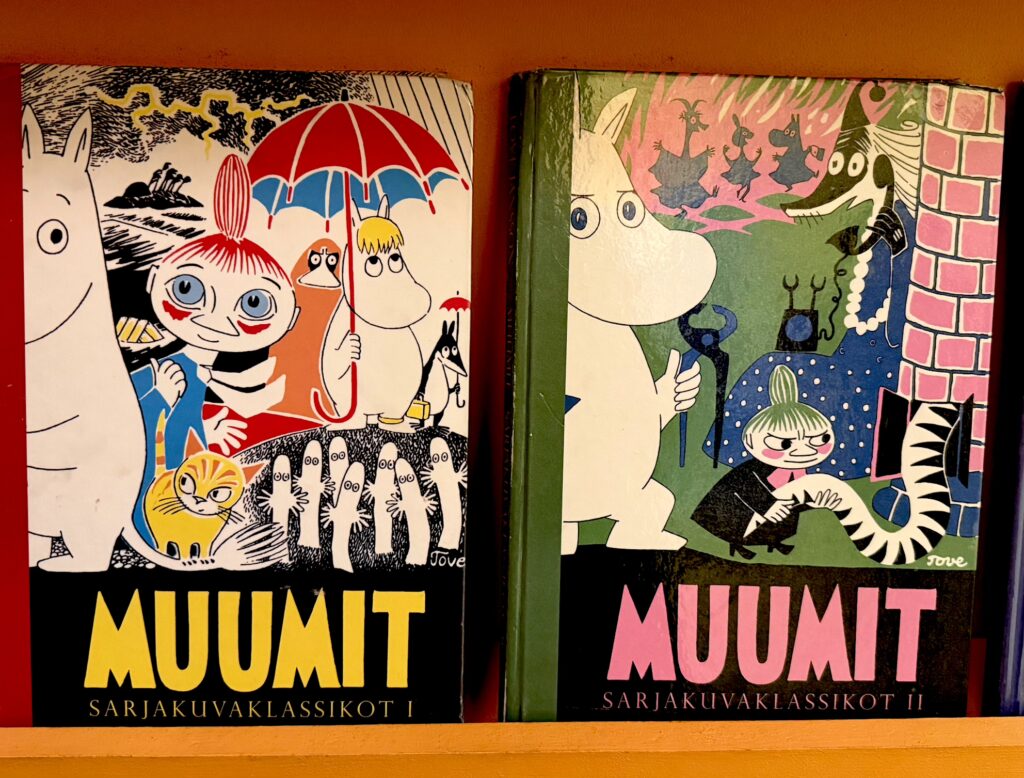
I have noticed that the exhibition attracts a remarkably broad audience, from children to adults, and that visitors seem to engage enthusiastically with its interactive elements. Why do you think this exhibition matters now, beyond marking the 80th anniversary of the Moomin stories?
I think the exhibition resonates because it speaks to concerns that feel very contemporary. Questions about belonging, creativity, identity, sustainability, home and the need for refuge are highly relevant today. Visitors recognize something of their own lives in Jansson’s search for places where she could work, live and be herself.
The exhibition also reveals a side of Jansson that is perhaps less familiar. Many people know the Moomins, but fewer know about her relationship to architecture, her interest in building and designing spaces, or the role that specific environments played in her creative life.
Finally, the exhibition invites visitors of different ages to participate rather than simply observe. That combination of playfulness, reflection and historical depth helps explain why it appeals to children and adults alike, and why Jansson’s work continues to feel so meaningful today.
Leave a Reply