
Art Box portal //
At a time when social crises and a growing sense of collective insecurity are increasingly framed as inevitable, contemporary feminist authors warn that the consequences of such processes do not affect everyone equally. Black women and women from other marginalized communities experience these conditions in particularly specific ways, as their position cannot be understood solely through gender, but through the intersection of race, class, gender, and other social identities. It was precisely from the need to explain these overlapping forms of discrimination that the concept of intersectionality emerged, revealing how systems of power operate simultaneously and in relation to one another. Contemporary writers, therefore, increasingly examine the ways in which the internet, popular culture, and political discourse shape ideas of femininity, privilege, and belonging, raising questions about who today has access to visibility, safety, and voice in the public sphere.
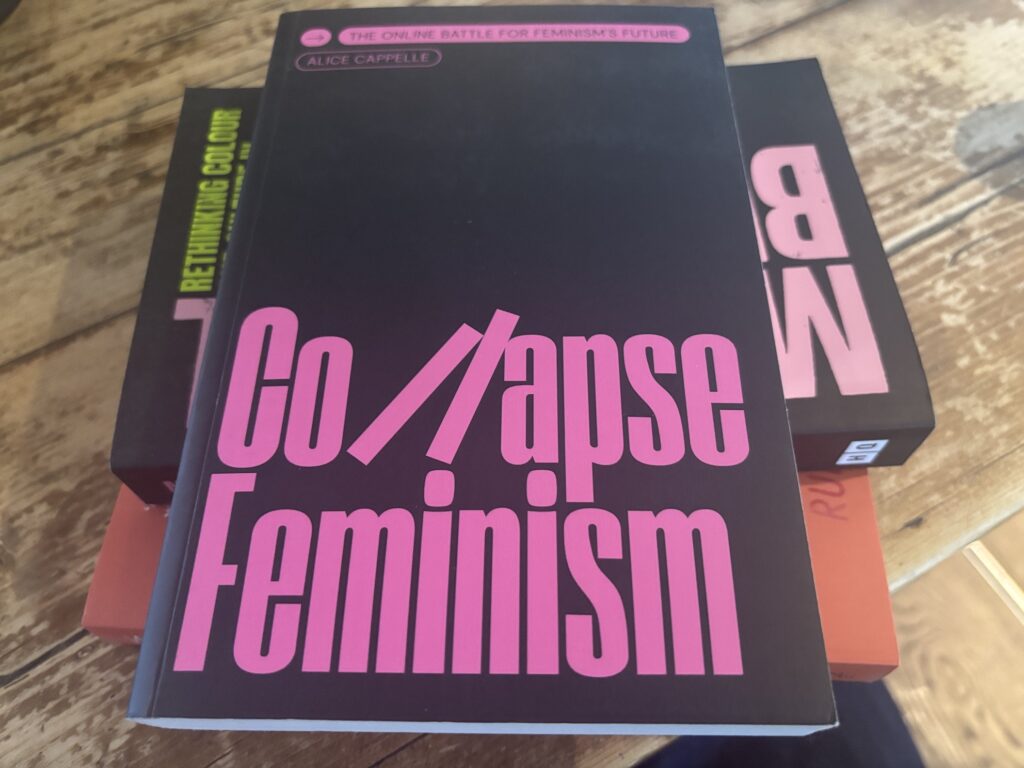
In Collapse Feminism, Alice Cappelle analyzes how conservative backlash is shaped through phenomena such as the “manosphere,” the self-help industry, and contemporary models of femininity. Rather than accepting a catastrophic worldview, Cappelle calls for a different kind of imagination — one capable of envisioning a more just society grounded in care rather than domination.
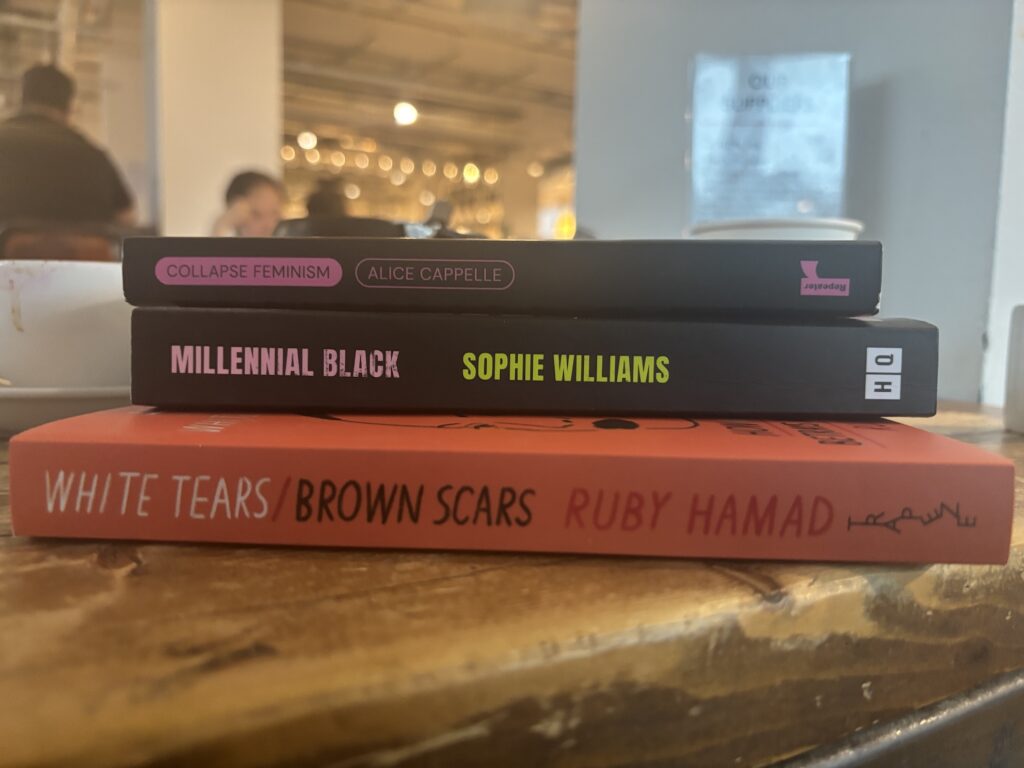
Similar themes are explored by other authors as well. In Millennial Black, Sophie Williams writes about the experiences of Black women in the workplace, pointing to structural inequalities while also offering concrete strategies of empowerment. Meanwhile, in White Tears/Brown Scars, Ruby Hamad exposes how white feminism has often functioned in service of racial and social hierarchies, emphasizing the importance of an intersectional approach.
What these approaches share is the insistence that race and gender are not merely identity categories, but political structures that determine access to power and privilege. The internet, as a space where identities and communities are continuously shaped, simultaneously offers possibilities for liberation while also reproducing inequalities — particularly through algorithm-driven content and the commercialization of self-help culture. The central challenge, therefore, is not only to critique existing conditions but also to imagine new models of solidarity, collective care, and social transformation.
From the crisis of democracy and the rise of right-wing ideologies to algorithmically shaped digital communities, today’s atmosphere of insecurity generates new forms of social division while intensifying existing inequalities. In this context, it becomes increasingly important that contemporary feminist theory and authors continue to examine the ways gender, race, and power intersect within contemporary culture, pointing not only to mechanisms of exclusion but also to possibilities of resistance, solidarity, and alternative social imaginaries.
Leave a Reply