
Art Box portal //
In 1965, at the Helkama factory in the Finnish town of Hanko, a bicycle was made whose name carried the idea behind its design. Jopo comes from the Finnish JOkaisen POlkupyörä — “everyone’s bicycle”.
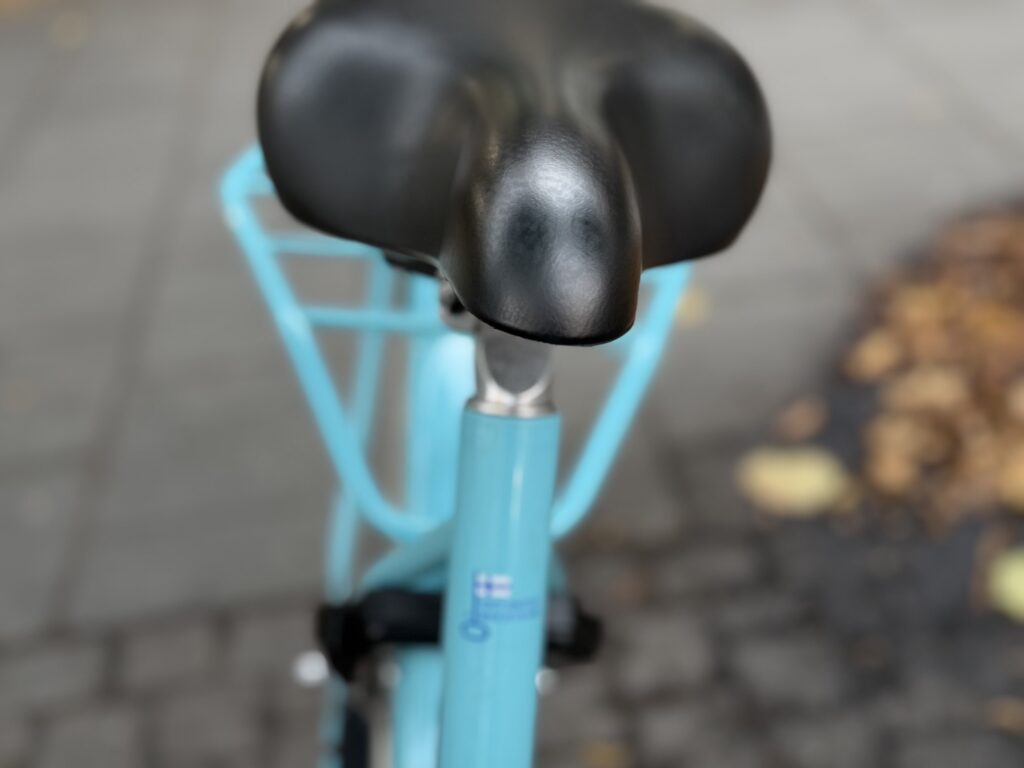
It was more than a name. Jopo expressed a simple social idea: an everyday object should not make distinctions between the people who use it.
The bicycle was designed in Finland in the 1960s, at a time when post-war modernisation was accompanied by a strong belief in social equality, public accessibility and narrowing the gap between different groups in society. Design was not expected to be a statement of status. It was part of everyday life — practical, uncomplicated and available to as many people as possible.
Jopo was therefore designed without a particular type of rider in mind. Its frame, adjustable seat and high handlebars made it suitable for people of different heights and ages. It was not intended for a particular profession, social group or lifestyle. The idea was almost literal: one bicycle, for everyone.
Its appearance follows the logic of minimalism. The steel frame is simple and sturdy, without decorative excess. Jopo was not designed to show how much its owner could afford, how much money they had, or where they stood socially. Its looks come from what it does.
Seen this way, Jopo is a small object that tells a much larger story — the democratisation of everyday life. Design was moving beyond representative interiors, luxury goods and privileged users and into schools, neighbourhoods, shops and streets. It became part of ordinary routines: a way of getting to school, visiting the local shop or cycling to work.
Jopo also became part of growing up in Finland. A bicycle made for “everyone” crossed boundaries of age and generation. For many Finnish children, learning to ride began on a child-sized Jopo with training wheels. Its longevity points to another aspect of its design philosophy: a product that is simple, durable, and easy to repair can remain useful for years.
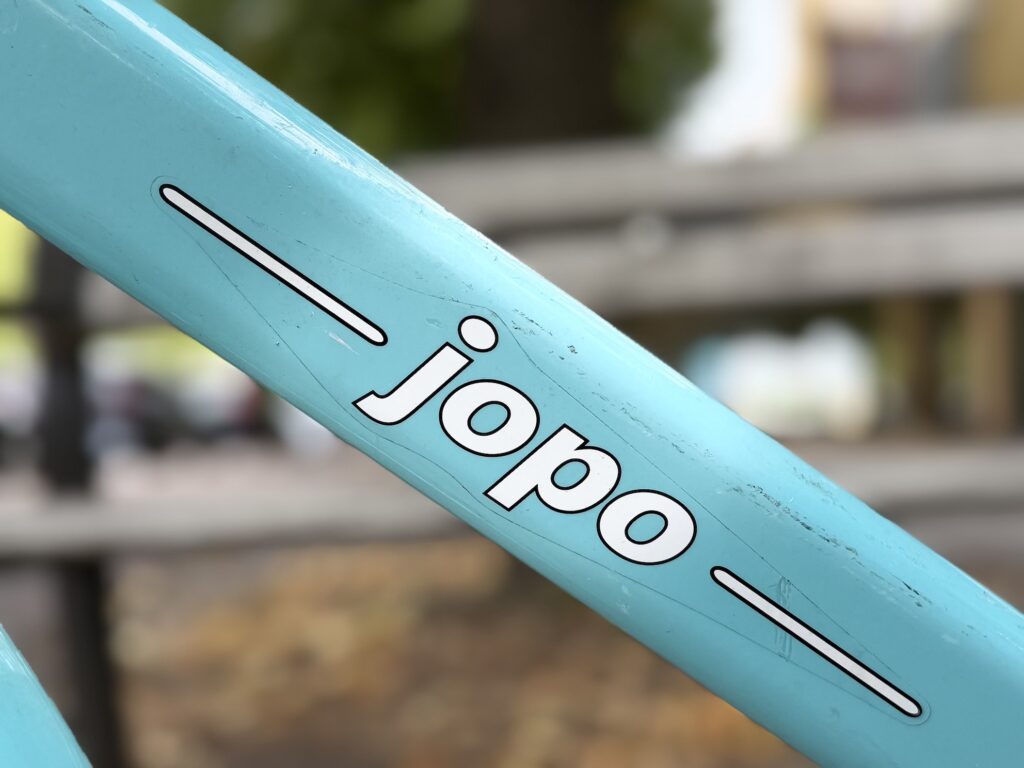
Today, Jopo is recognised as one of the icons of Finnish design. Its distinctive retro look and uncomplicated construction have made it a cultural object as much as a means of transport. The classic model has no gears, cables or hand brakes; you simply brake by pedalling backwards. With very few parts, it is remarkably reliable and well suited to everyday urban cycling, whatever the weather.
Its high handlebars allow the rider to sit upright and relaxed, giving a clear view of the street and making the ride easier on the back. Its popularity, recognisable design and strong resale value have also made Jopo a target for thieves — it has become known as one of Finland’s most frequently stolen bicycles. New models therefore come with a lock built into the frame.
But the most interesting thing about Jopo is not its appearance.
It is the idea built into it.
In a society that placed a high value on equality, the bicycle was designed not to ask who you were, how old you were, how tall you were, or where you belonged socially.
You simply sit down and ride.
And perhaps that is where Jopo’s most radical idea lies: in making an everyday object that, quite literally, is for everyone.
Leave a Reply