
Ljiljana Maletin Vojvodić //
From 31 May to 20 September 2026, Icelandic artist and musician Björk presents an exhibition in her hometown of Reykjavík at the National Gallery of Iceland. Curated by Pari Stave, Chief Curator of the National Gallery of Iceland, Echolalia not only brings together multimedia works by Iceland’s most internationally recognised artist, but also enters into a dialogue with Metamorphlings, the first museum retrospective of British-Icelandic artist James Merry.
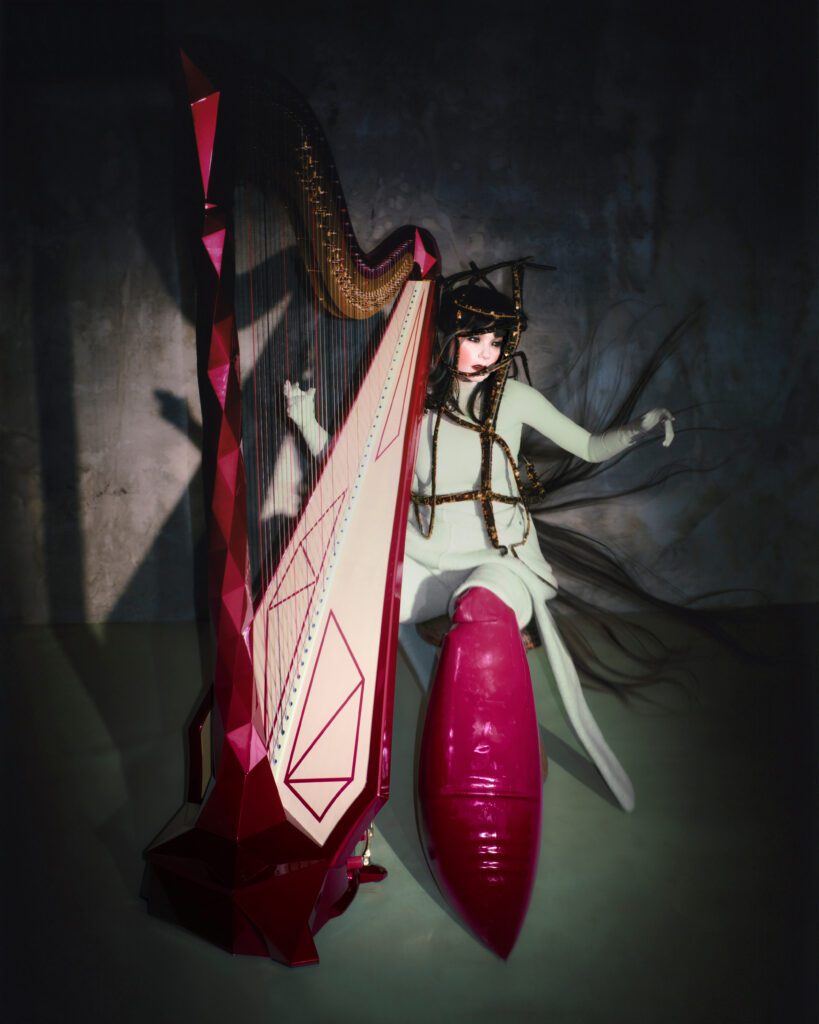
As one of the most distinctive figures in contemporary culture, Björk (Björk Guðmundsdóttir) has developed an artistic practice in which music exists not only as sound, but also as space, image, and narrative. Her projects rarely remain confined to the format of an album; instead, they unfold as complex artistic worlds where music, installation, performance and technology continuously intersect.
Echolalia, conceived as an immersive environment, continues this long-standing exploration of artistic forms that transcend the boundaries of individual media. Presented simultaneously with James Merry’s exhibition, it also opens up a broader conversation about transformation, ecology, imagination, and the shifting relationships between the human and non-human worlds.
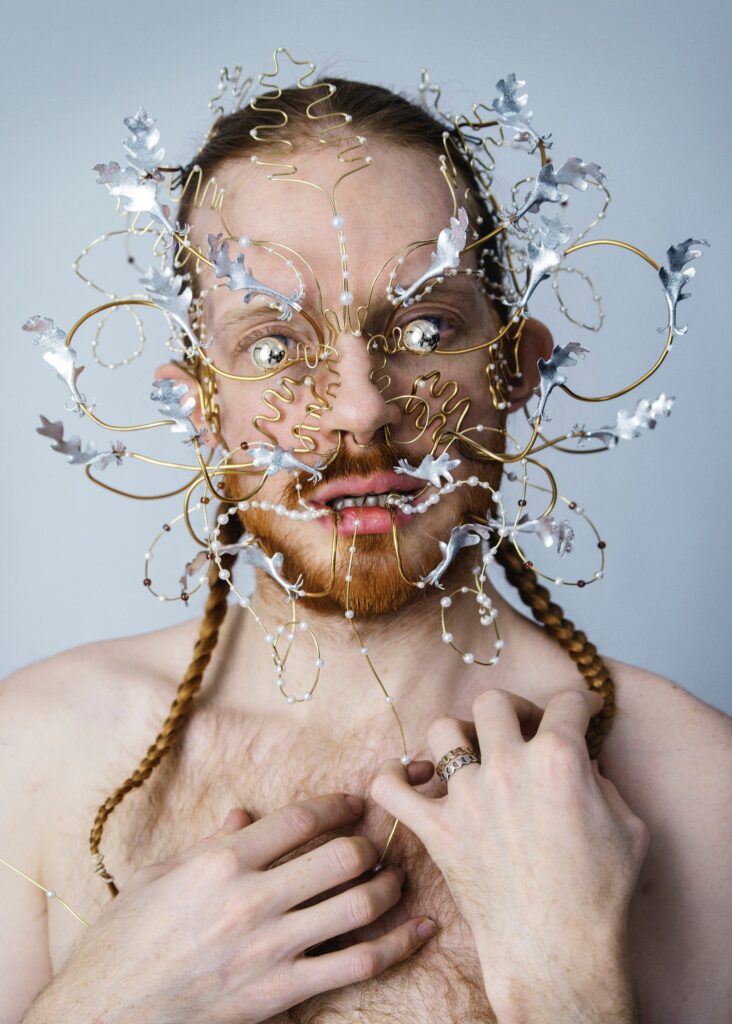
Bringing together more than eighty works, James Merry’s Metamorphlings includes the now-iconic pieces created for Björk, as well as works associated with Tilda Swinton and Iris van Herpen. At the same time, the exhibition traces the development of Merry’s visual language through handcrafted masks and headpieces that inhabit a space between the organic and the fantastical.
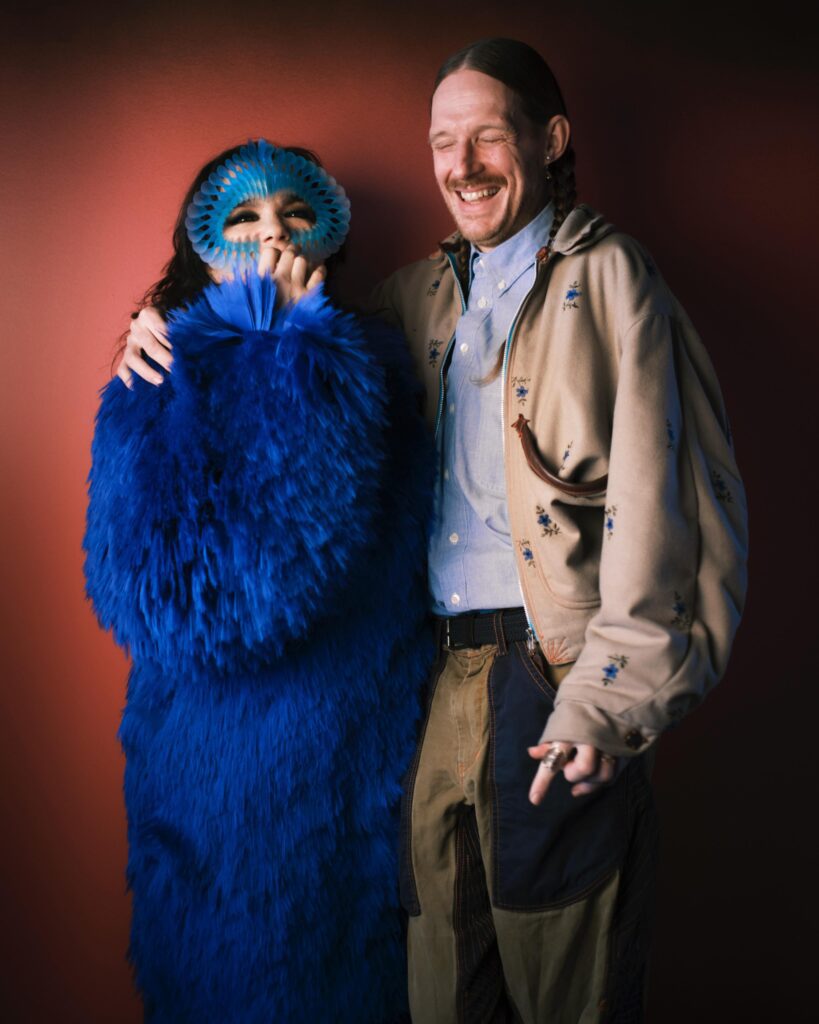
Bjork-and-James-Merry-2026-©Vidar-Logi.
What Do We Know About Björk?
Björk’s artistic journey began remarkably early. At the age of eleven, she recorded her first album in Iceland. By the late 1980s, she had become the lead vocalist of the alternative rock band The Sugarcubes, before relocating to London and launching the solo career that would make her one of the most influential artists of her generation.
Björk first gained international recognition through her unconventional music videos, distinctive visual identity, and genre-defying approach to pop music. Albums such as Debut, Post, and Homogenic established her global reputation and redefined the possibilities of contemporary music.
Throughout her career, she has consistently pushed artistic boundaries. She created Medúlla, an album built almost entirely from human voices; developed Biophilia, widely regarded as the world’s first app-based album and later acquired by the Museum of Modern Art in New York; and won the Best Actress Award at the Cannes Film Festival for her leading role in Lars von Trier’s Dancer in the Dark (2000). The film’s soundtrack also earned her an Academy Award nomination.
While visitors can currently experience her multimedia works in Echolalia at the National Gallery of Iceland, Björk continues to expand her creative practice. She is reportedly preparing a large-scale rave event to coincide with an upcoming total solar eclipse and has confirmed that her eleventh studio album is scheduled for release in 2027.
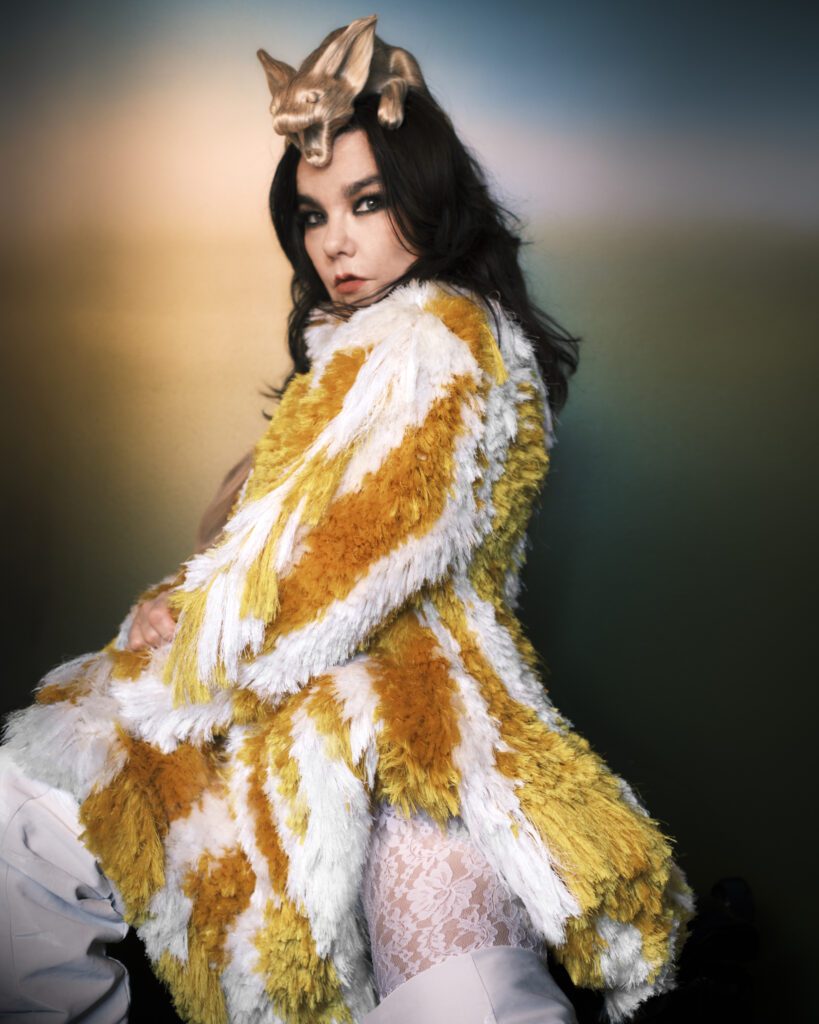
Who Is James Merry?
James Merry is a British-Icelandic artist who has lived in Iceland since 2009. The artistic practice presented in Metamorphlings at the National Gallery of Iceland is centred on the motif of the mask as a tool of transformation, blurring the boundaries between the human, the animal, and the imagined.
Working across embroidery, sculpture, costume, and wearable art, Merry has developed a distinctive visual language inspired by nature, mythology, and Iceland’s unique environment. His handcrafted masks and headpieces often resemble hybrid beings, occupying a space between the organic and the fantastical.
Through his long-standing collaboration with Björk, Merry has created some of the most memorable visual identities in contemporary music. His work has also been exhibited internationally, including at the Victoria and Albert Museum in London, and is widely recognised for its exploration of metamorphosis, embodiment, and the transformative potential of artistic expression.
Over the years, Björk and Merry have built a shared visual narrative in which bodies, landscapes, and imagined beings are in a constant state of transformation and entanglement. While Merry’s masks explore moments of becoming and change, Björk translates similar questions into the realms of sound, performance, and moving image.
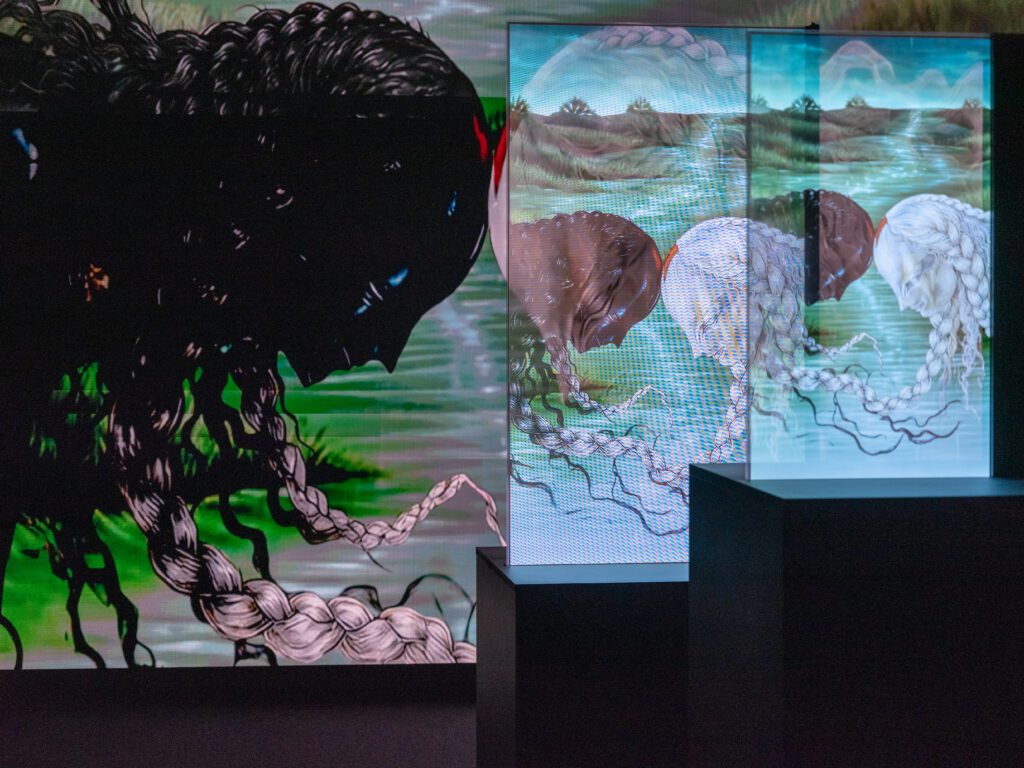
At the centre of Echolalia are three large-scale audio-visual works. Two pieces, Ancestress and Sorrowful Soil, were composed and arranged by Björk in memory of her mother, while the third presents material from her forthcoming album.
Set within an isolated Icelandic landscape, the installation Ancestress “reflects on the cyclical nature of life through a ritual procession of musicians and dancers. Grief is transformed here into a collective act, blurring the boundaries between mourning, celebration, and renewal,” according to the exhibition’s conceptual statement.
Equally striking, Sorrowful Soil is shaped as a nine-part choral requiem. Thirty individual speakers carry the separate voices of the Hamrahlid Choir, conducted by Þorgerður Ingólfsdóttir, creating a dense sonic structure in which individual voices gradually merge into a powerful collective resonance.
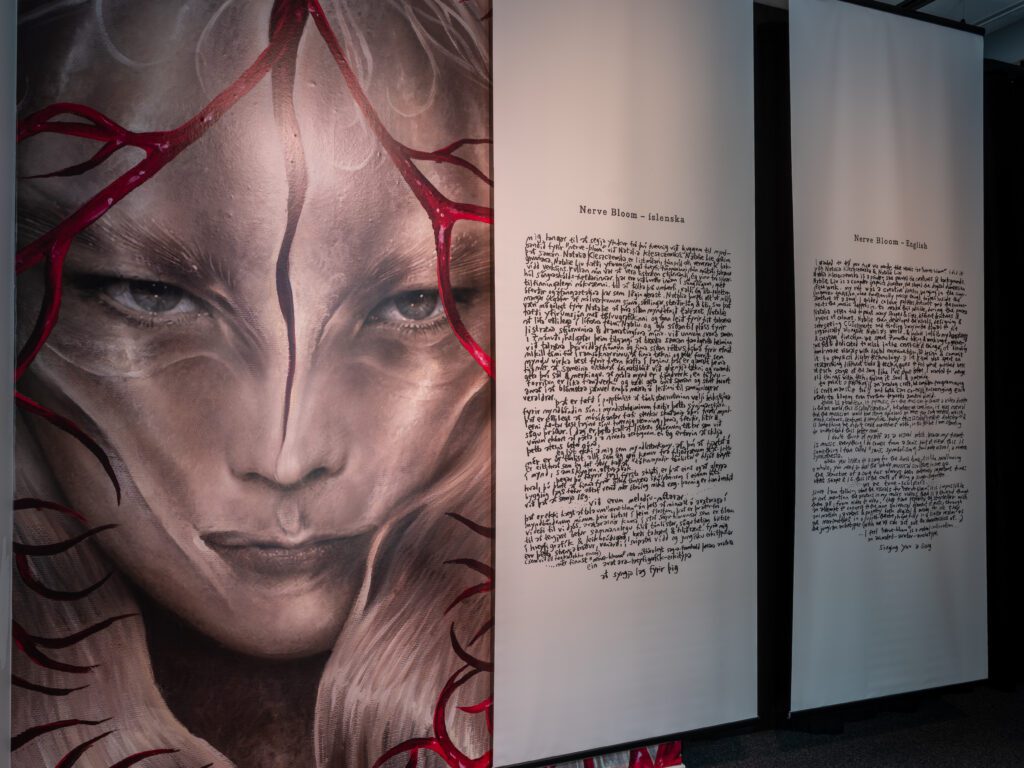
Although emerging from different artistic practices, Metamorphlings and Echolalia meet on common ground—through their shared interest in transformation, hybridity, and the shifting of boundaries. Together, they open up questions about how we understand identity today, our relationship to nature and technology, and the very nature of art itself.
Leave a Reply