
By Ljiljana Maletin Vojvodić //
I knew nothing about Siri Hustvedt until I came across her book Ghost Stories in Foyles, a London bookshop. It was not the title that caught my attention, but the author’s name. I assumed she was Norwegian. That was not entirely wrong: Siri Hustvedt is an American writer, born in Minnesota in 1955, of Norwegian descent. As she has said, she spoke Norwegian before English.
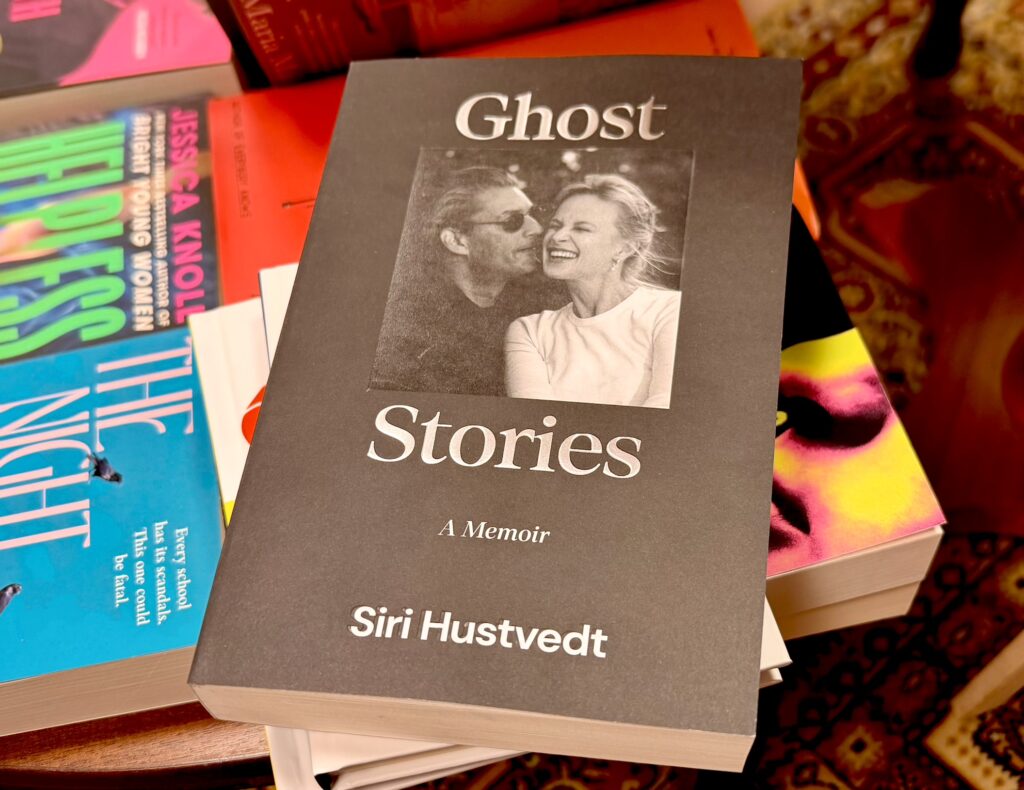
I would read Ghost Stories in the original a few months later, after watching the documentary Siri Hustvedt – Dance Around the Self, directed by German filmmaker Sabine Lidl, at Gothenburg’s film and music festival Way Out West. In the film, Hustvedt talks about herself and her literary work, as well as her interests in feminism, psychology, and visual art, and about her husband, the American writer Paul Auster, who also appears in the film.
Ghost Stories: A Memoir, published by Simon & Schuster in May 2026, is Siri Hustvedt’s most personal book to date. It is about Paul Auster, their literary and intimate relationship, his illness and death, but also about what happens to everyday life, memory and our sense of time after the loss of someone close.
Ghost Stories has been warmly received by critics, who have described Hustvedt as “an artist of extraordinary intelligence, deep sensuality and wisdom” and called her “the Virginia Woolf of the 21st century”. The book has received praise from The Literary Review, The Independent, Salman Rushdie and many others. For Ghost Stories, published in France by Gallimard, Hustvedt was also awarded the 2026 Lucien-Barrière Prize for American Fiction.
Ghost Stories is both a memoir and a philosophical reflection on grief and memory; a book about an emotional and intellectual relationship, marriage, loss and mourning, but also about the ways in which a person changes after someone’s death.
Siri Hustvedt begins Ghost Stories with the sentence: “I am alive. My husband, Paul Auster, is dead.”
Auster died on 30 April 2024, at 6:58 p.m., in their Brooklyn home, where Hustvedt writes these words. He was diagnosed with lung cancer in January 2023. But as early as November 2022, when he underwent a CT scan at the emergency department of Mount Sinai West, a radiologist noticed a mass in his right lung and noted that it could be cancerous.
She recalls how, faced with Auster’s diagnosis, she began to imagine what life without him might look like. After his death, those imaginings become her everyday reality.
“We all die, but only some of us know that their lives may soon be over,” she writes.
She begins making lists and calendars that remain scattered around the house. She worries that she will forget household tasks, appointments, and bills that need to be paid. “I remember what day it is, and then I forget. I remember that it is May, and then I forget. The hours leap ahead, while the minutes often move slowly.”
Trying to reconstruct their shared time through diaries, letters, notes, conversations and texts, Hustvedt builds Ghost Stories from memories of forty-three years of life together, of Auster’s illness and the struggle for his life they faced together. She moves away from chronology and linear narration: diary entries about illness and grief alternate with medical reports, lists of medication, emails she sent to those close to her from what she calls “Cancerland”, and letters she wrote to Auster. She also writes about the family tragedies that marked their later years, above all the deaths of Auster’s son from his first marriage, Daniel, and their granddaughter, Ruby.
Ghost Stories also includes notes and messages Auster sent her during their relationship, as well as letters he wrote to his grandson, knowing that he would not have the chance to see him grow up. The book therefore contains the last texts Paul Auster wrote — the unfinished manuscript Letters to Miles, letters addressed to their grandson, who was born only a few months before Auster’s death.
It is important that Ghost Stories brings together the writings of Siri Hustvedt and Paul Auster. Hustvedt writes about how, over the decades of their marriage, sentences, quotations, and ideas passed from his books into hers and from hers into his. Their relationship was also a literary dialogue, and the presence of his writing in her book shows that this dialogue continues after Auster’s death.
The other therefore remains within the text, despite his physical absence.
Leave a Reply