
Intervierer: Ljiljana Maletin Vojvodić //
Finnish author Eeva Maria al-Khazaali explores the space between poetry, visual art, and performance. Her practice brings together the written word, video, live performance, and interdisciplinary artistic forms. For Art Box portal, we talk with Eeva Maria al-Khazaali about literature, video poetry, performance, feminism, and the ongoing need to rethink the boundaries between different artistic disciplines.
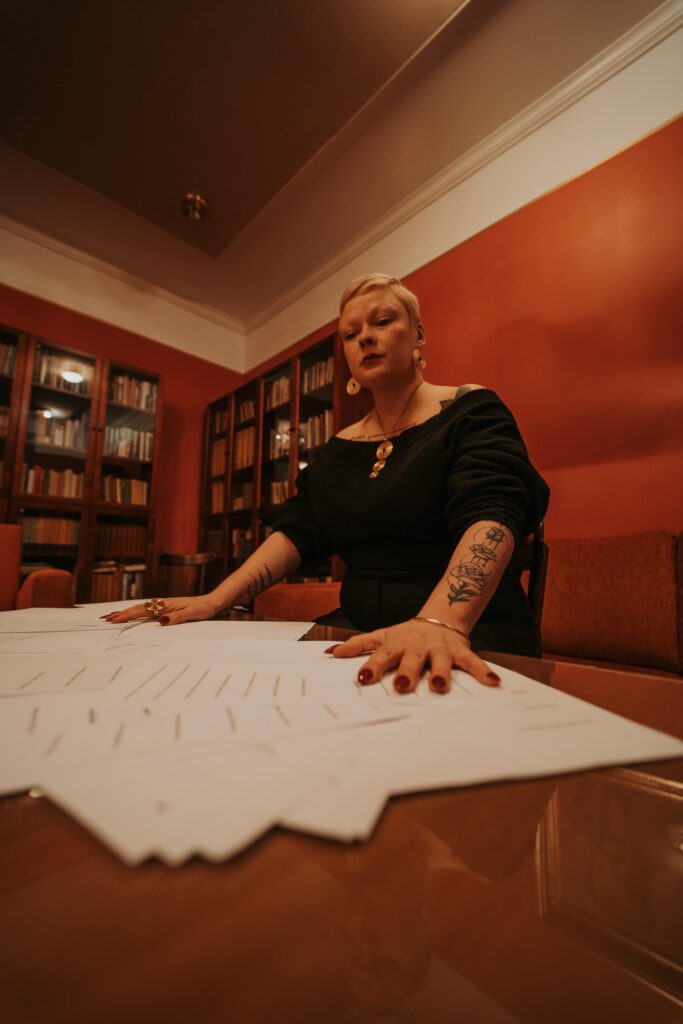
How would you describe yourself as a writer creating from within the Finnish cultural context? Do you think there is still such a thing as a distinct “Finnish literary position” today, or should we rather speak about the identity of individual authors within the global literary space?
I don’t view myself via my nationality. Over being called Finnish, I’d rather be called European. Over being called European, I’d rather be called a human. I don’t believe in man-made territories and artificial borders. My thinking in this might be provoking to some. As a poet, I do understand the value and love the Finnish language per se, but I wouldn’t let a specific cultural context, language, or citizenship define my human experience on this Earth.
You work with poetry and video, which is an interdisciplinary form connecting literature and visual art. Is there a tradition of video poetry or similar hybrid artistic practices in Finland? How do you see the place of this form within contemporary art?
I have produced and written a few poetry videos, but by no means is it my current or ongoing practice. I enjoy the idea of visualising my poetry through collaborations in which several videographers and media professionals have helped me bring the cinema of poetry to the screen.
I see video poetry as not only being on the rise due to the video format being favourable content on social media, but I also acknowledge that this format could be enjoyed and viewed in any gallery or contemporary art museum.
I, among many others, have also worked with poetry accompanied by visual jockeys, DJs, musicians and a myriad of other forms. In Finland, I have seen many aspiring poets, especially, bring soundscapes or music into their readings and performances.
Your artistic practice often begins with a desire to redefine the boundaries between poetry and art. Why is it important for you to question and expand these boundaries?
Contemporary visual culture inspires me immensely: all our time spent online is predominantly based on still or moving images. We are surrounded by them at every corner. A photograph, for example, is often a great prompt for creative writing.
I see poets and authors as artists, regardless of the format they work in. We would also have a lot to learn from the digitalisation of the music industry. If poetry is often viewed as “difficult” or “hard to approach”, perhaps bringing the visual aspect or sound into play could help. Why not make poetry videos similar to music videos, to bring in new readers and audiences and raise curiosity? It could help people understand that text and language are at the heart of all other forms as well.
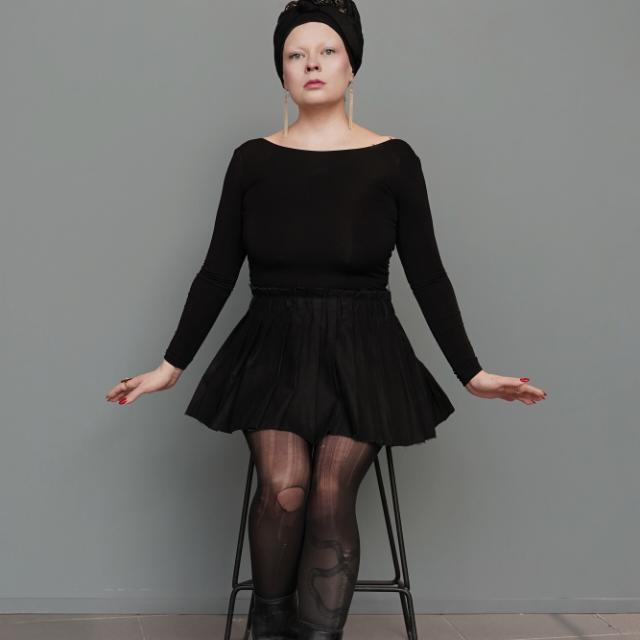
In what ways does feminism appear in your writing and artistic practice? Do you see it primarily as a political, social or personal position?
I believe in the second-wave feminist slogan and quote by Carol Hanisch: “The personal is political.” I use it almost like a mantra. A lot of my writing digs deep into the inner world, the intimate, the private, dreams, memory and identity. These concepts cannot be separated or isolated from society and the world itself.
Since the second wave of feminism, nowadays talking about intersectional feminism includes the human experience as a whole and places us on the map as a whole. Feminism, and for me, my personal experience as a woman, is all of the above: political, social and personal.
You are a member of The Union of Finnish Writers. How important is it to be part of such a professional community in Finland, and what role does it play in supporting writers today?
Being accepted into The Union of Finnish Writers has been the most important achievement of my whole career. The professional community offers legal services (also to non-members), grants, residencies, some writers’ apartments and other essential support systems — and above all, works as a bridge between authors and decision-makers at the highest level.
This membership has finally established my footing on the ground. At the same time, I am not naive about being a member, since there is a lot of groundwork to do in renewing processes and practices in any union or members-only club. Overall, though, I also wish that writers residing in Finland who write in a foreign language could be accepted as members.
Finland is known for its strong relationship with education, reading and culture. What is it like today to live and work as a writer or poet — especially as a woman writer — in Finland? Do society, cultural institutions and the literary system provide sufficient support for contemporary (woman) authors?
Writing is and always will require solitude. This is not synonymous with isolation. National organisations, such as The Reading Center, promote literacy. That being said, literacy and interest in reading should be supported even more. We, as writers, cannot climb up to ivory towers and think the rest of the world will take care of itself: promoting reading and finding new ways to reach audiences is what keeps literature alive.
Personally, I’ve received a lot of support as a writer and performer, even in times of crisis such as COVID and government funding cuts. I must say the focus should be on who even wants to read anymore.
How do you see the role of poetry today, in a time shaped by digital communication, accelerated lifestyles and profound social changes?
Poetry has never lost its meaning or value. Even more so, younger generations and new readers are finding poetry through social media quotes and aspiring new writers online.
Leave a Reply