
Art Box portal //
Ljiljana Maletin Vojvodić is a Serbian writer, artist, educator, and cultural researcher whose creative work has continuously built bridges between the Balkans and the North. Through a wide range of literary texts, artistic projects, and international residencies, she has played a vital role in promoting the literature, visual arts, identity, and ecological concerns of Scandinavian and Northern European cultures.

Scandinavian Stories: Literature, Identity & the Visual North
Ljiljana has critically explored key figures of contemporary Scandinavian autofiction, including Karl Ove Knausgård, Nina Lykke, and Linda Boström Knausgård. Through her art-related research, she reflects on themes of selfhood, memory, and female subjectivity. Her essays and texts also engage with ecological concerns, the concept of home, and the formation of identity—particularly from the perspective of women artists.
She has published a series of nonfiction and hybrid literary works that guide readers through the cultural landscapes of the region:
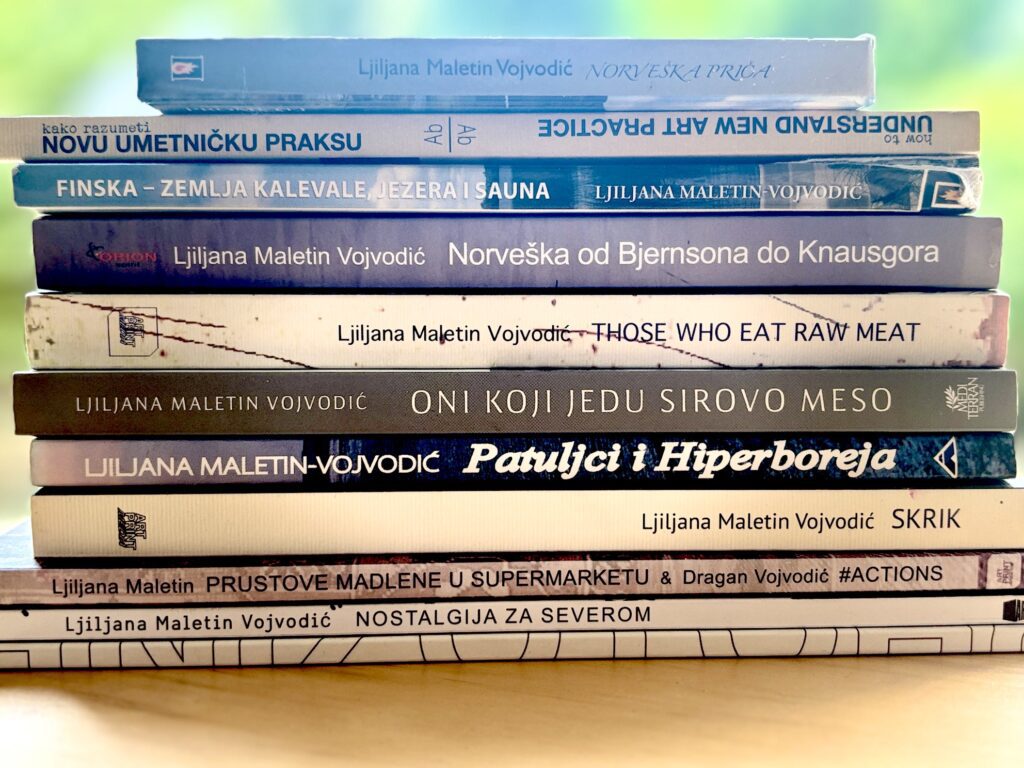
Norveška priča and Norveška od Bjernsona do Knausgora — explore Norwegian identity through literature, history, and personal travel.
Ljiljana Maletin Vojvodić Norveška priča
Finska: zemlja jezera, Kalevale i sauna — presents a layered portrait of Finnish mythology, landscape, and cultural traditions.

Ljiljana Maletin Vojvodić Finska
Islandski bedeker — created during her Reykjavik residency — offers a poetic and observational lens on Icelandic art and literature.

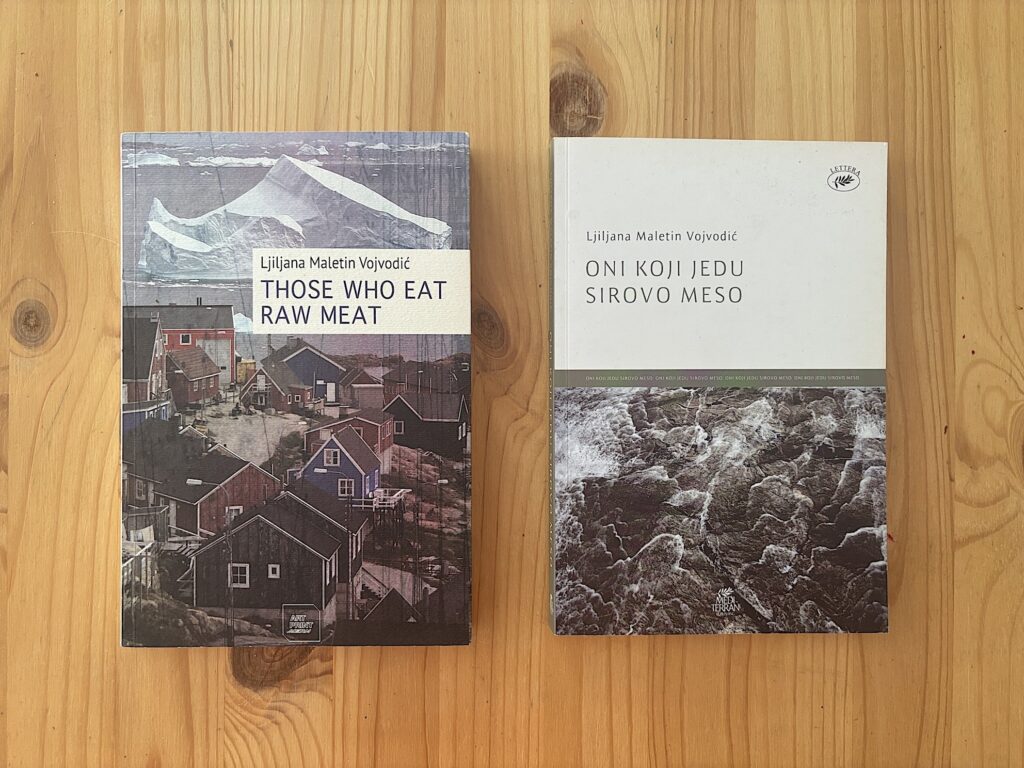
Those Who Eat Raw Meat (Oni koji jedu sirovo meso) — a novel set in Greenland’s Upernavik Museum — weaves myth, displacement, and cross-cultural experience into a fictional narrative.
roman-oni-koji-jedu-sirovo-meso-ljiljane-maletin-vojvodiccc81-od-sada-i-na-engleskom-jeziku
Residencies Across the North
Ljiljana’s in-depth engagement with Northern cultures was shaped through numerous artist residencies from 2012 to 2025, where she researched, wrote, and created:
Norway: Residencies at Spitsbergen (Svalbard), USF Verftet (Bergen), KH Messen (Ålvik), and Frida Hansen Hus offered her firsthand insight into contemporary Norwegian life and artistic movements.
Finland: At KulttuuriKauppila Art Centre (Ii) and Erro Nelimarkka Museum, she developed projects around Finnish literature, environmental narratives, and female creative spaces
Sweden: A residency at Konstepidemin in Gothenburg allowed her to explore feminist curatorial practices and gender in contemporary Nordic art.

Greenland: A transformative residency at the Upernavik Museum directly inspired her novel Those Who Eat Raw Meat and deepened her exploration of Northern identity and isolation.
She also connected with the Academy of Creative Writing in Bergen, exploring how Scandinavian literary institutions shape modern narrative form.
Institutional Support & Literary Advocacy
Her Northern-focused work has been recognized and supported by several cultural bodies, including:
The Norwegian Embassy in Serbia
The Finnish Embassy in Serbia and the Finnish Ministry of Foreign Affairs
NORLA (Norwegian Literature Abroad)
Through these grants, Ljiljana has not only written but also actively shared and promoted the North in Serbia and across Europe.
Art Box: Platform for Cultural Dialogue
As editor-in-chief of Art Box, a portal and residency program based in Petrovaradin, Serbia, Ljiljana curates content that explores feminist art, gender identity, and intercultural dialogue. Art Box regularly hosts artists and curators from Scandinavia, further strengthening North-South cultural exchange.
A Unique Perspective on the North
Ljiljana Maletin Vojvodić’s work offers a rare and necessary perspective on the North — not from within, but from a deeply engaged, critically reflective position. Her writing and projects:
Reframe Scandinavian literature and art through a Balkan lens
Illuminate ecological, feminist, and existential themes in Northern culture
Blend literary, visual, and performative practices into a distinctive form of artistic research
Whether through essays, residencies, or fiction, her commitment to “writing the North” invites broader audiences into the richness and complexity of Scandinavian and Arctic cultural life.
Leave a Reply