
Art Box Portal //
Just Keep Quiet, Let It Go / Ma ćuti, pusti / Tais-toi, laisse tomber is an art and research project by Marija Kalafatić and Ljiljana Maletin Vojvodić (KEC Art Box, Novi Sad) that explores silence as a personal experience, a social mechanism, and a cultural pattern.
The artists, who come from different generations and professional backgrounds and live and work in France and Serbia, draw on their personal experiences and family patterns to examine the mechanisms of silencing within a broader social and cultural context.
The project aims to create a space for speaking, listening, and sharing experiences, and to bring women’s individual stories into a wider public discourse.
The responses collected through this questionnaire will become part of an anonymous research archive, which will be further explored and interpreted through various artistic forms and public presentations.
“Today, I can say it without shame, without hesitation, and without sugarcoating the truth, because I know that this truth is not my shame to carry.”
“It is not just advice. It is an entire pattern: stay quiet so you don’t cause problems, stay quiet so you don’t spoil appearances, stay quiet so things don’t get worse, stay quiet so people won’t talk.”
“I became the ‘black sheep’ early on — not because I was bad, but because I couldn’t and wouldn’t stay silent.”
“Violence is not just a physical blow. Violence also means shouting, insults, humiliation, intimidation, constantly shifting the blame, and cornering a woman until she feels compelled to justify her very existence.”
“When a woman stays silent, everything is taken for granted. When she speaks up, she is often labelled ‘difficult’, ‘conflict-prone’, or ‘problematic’.”
“If a woman is quiet, she is not strong enough. If she speaks up, she is aggressive. If she worries, she is overreacting. If she sets boundaries, she is cold or selfish.”
“To me, consent means that my ‘no’ must be enough. I should not have to constantly justify myself, explain myself, prove myself, and fight for my boundaries to be respected.”
“Maybe I am still the black sheep of my family because my path is unconventional and because I refuse to stay silent in the face of injustice, but I no longer see that as something to be ashamed of.”
“What matters to me most, on a deeply personal level, is how a woman can break free from family patterns, protect her children while also protecting herself, and finally stop living to preserve other people’s image of her and start living for truth, peace, boundaries, and dignity.”
Participation is anonymous and voluntary.
Information about the next stages of the project and its outcomes will be available on the project website.
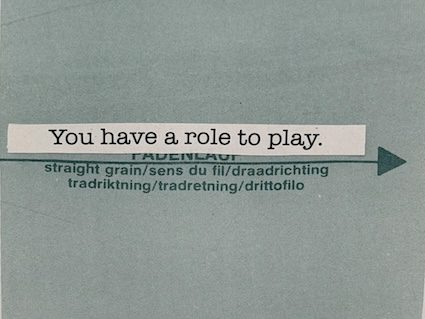
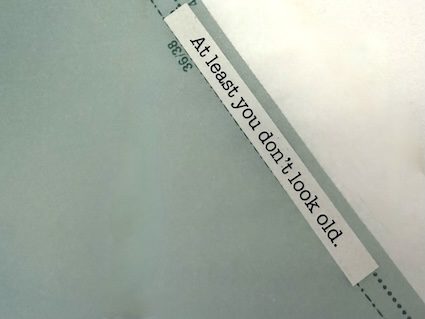
Ljiljana Maletin Vojvodić, How We Are Cut, found object, 2026.
Open Studio, Konstepidemin, Gothenburg, Sweden
In How We Are Cut, Ljiljana Maletin Vojvodić works with second-hand Burda dress patterns purchased from Saronkyrkan Second Hand in Gothenburg. These vintage patterns become surfaces on which she inscribes everyday narratives directed at women — narratives that, consciously or unconsciously, seek to shape women’s lives, leaving little room for identities that are fluid, unfinished, or yet to be defined.
If you would like to contribute to the ongoing research through a conversation, a personal story, or an artistic work, you can contact us at:
Leave a Reply